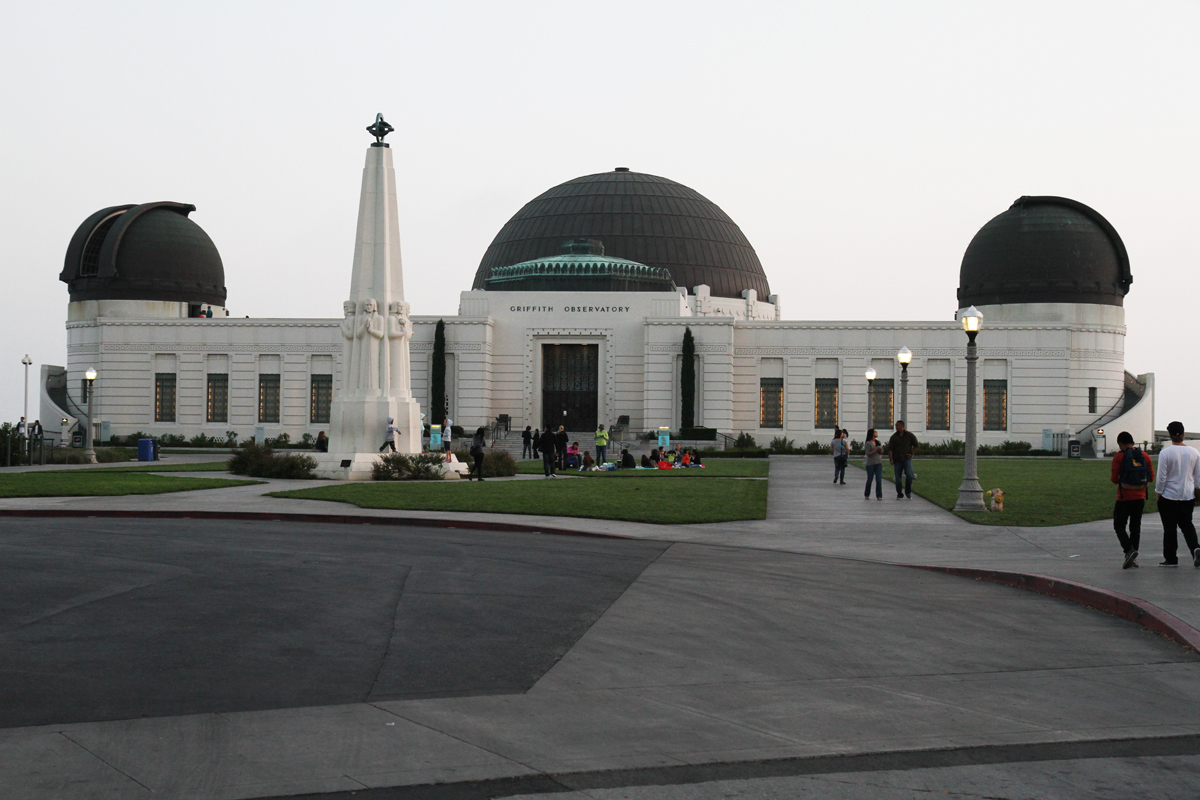
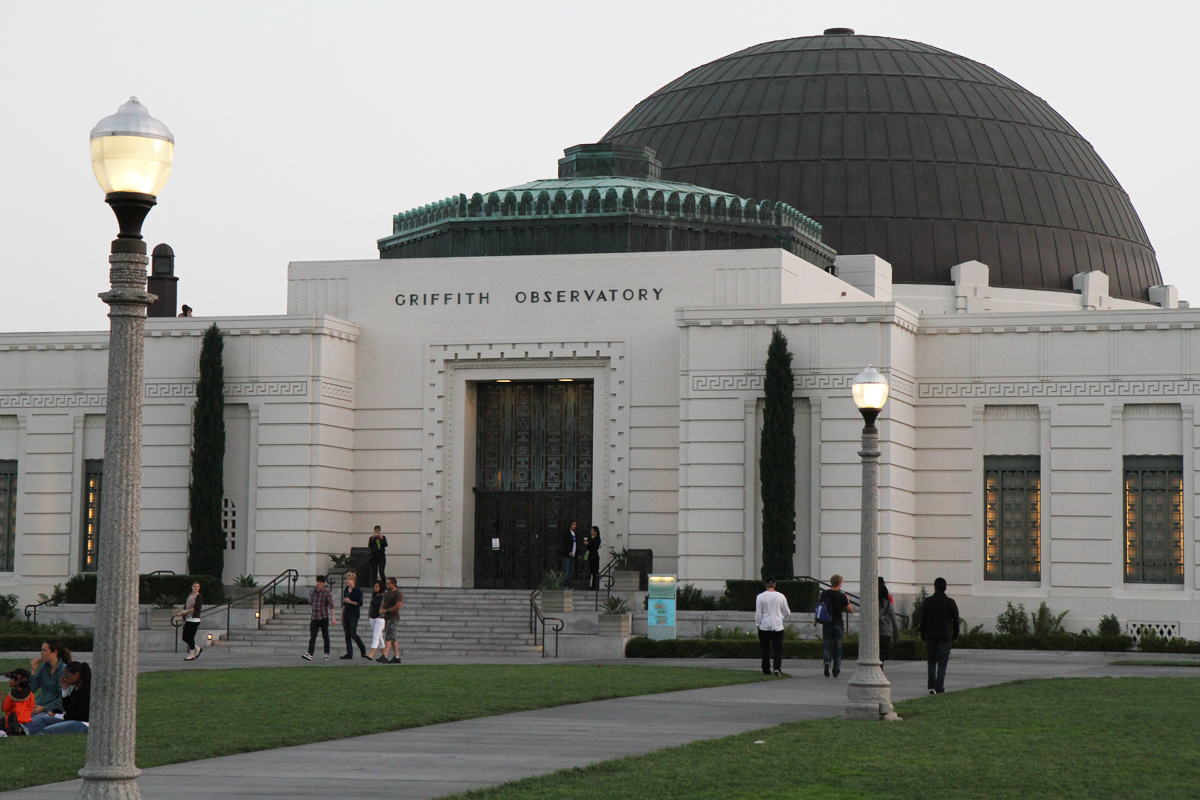
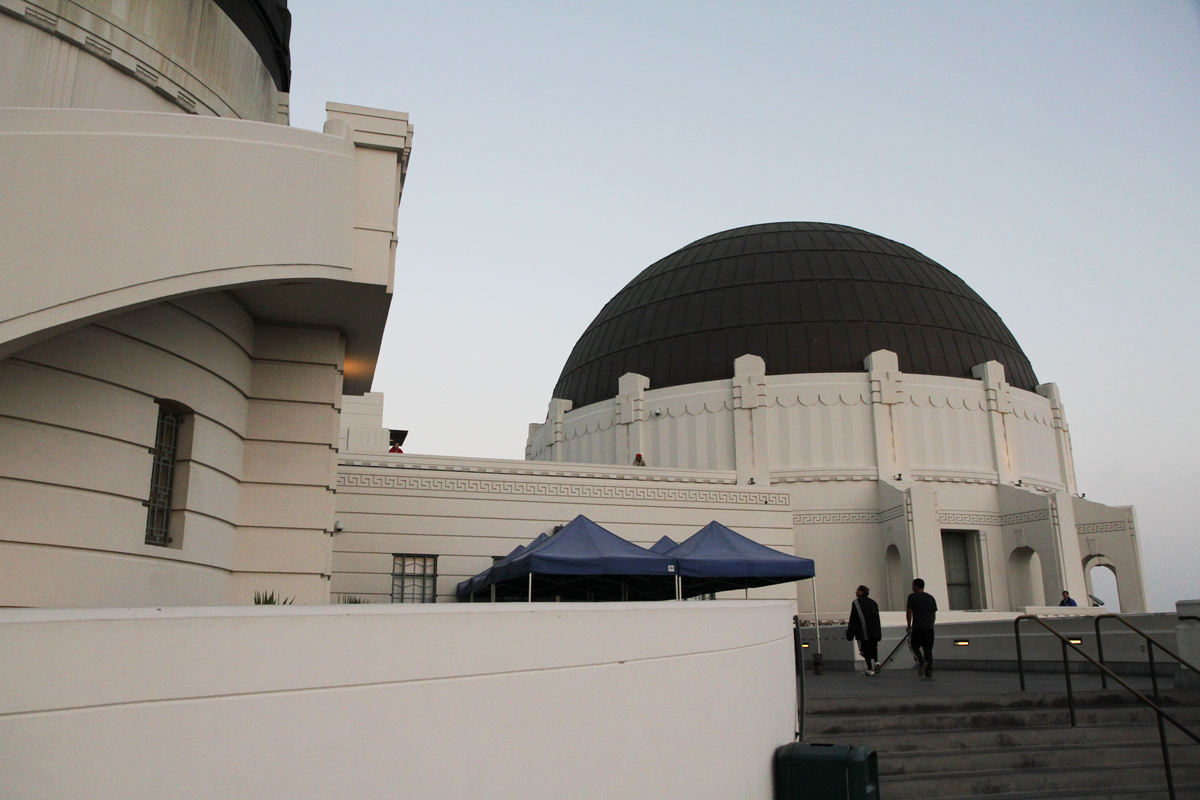
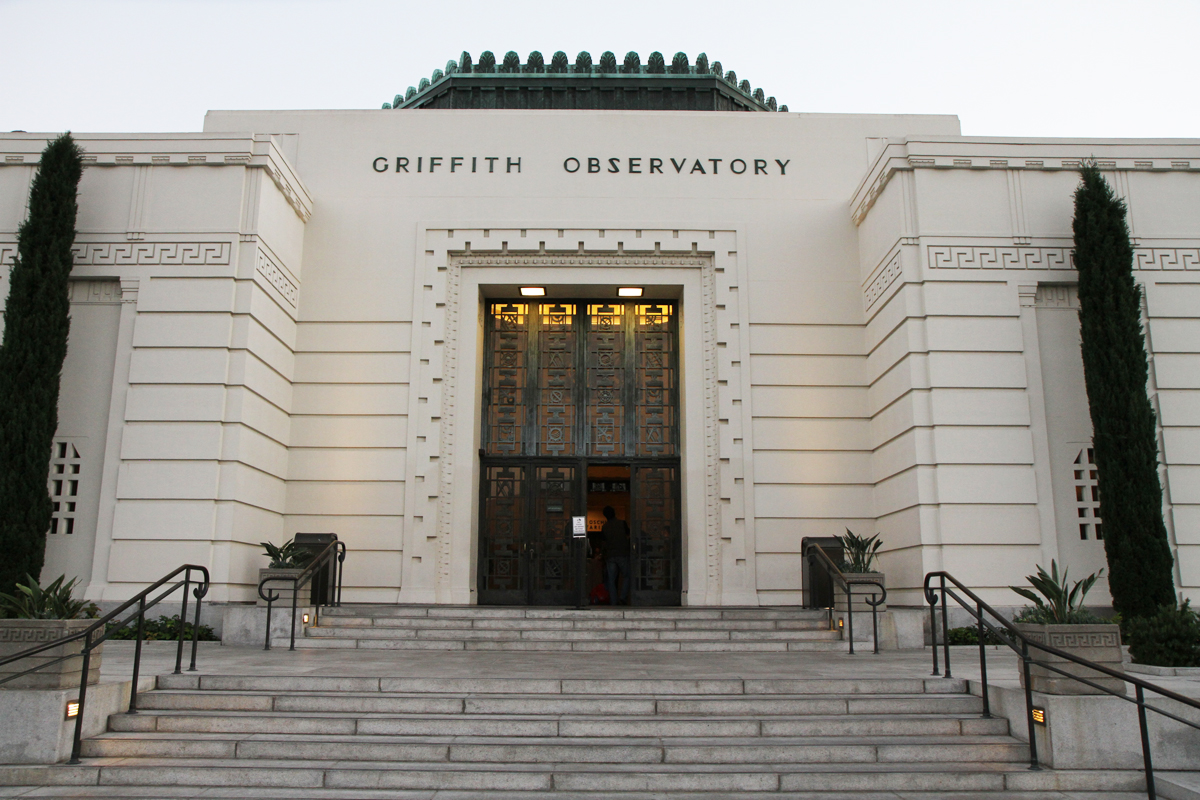
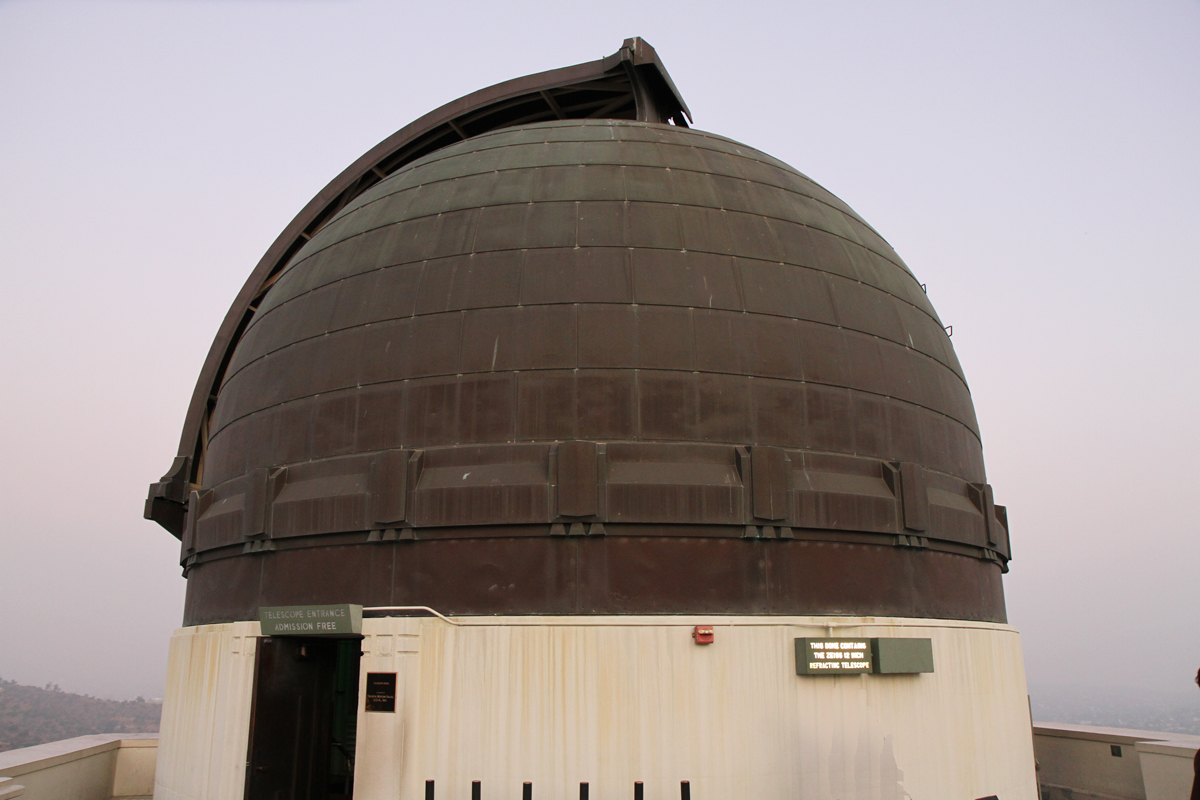
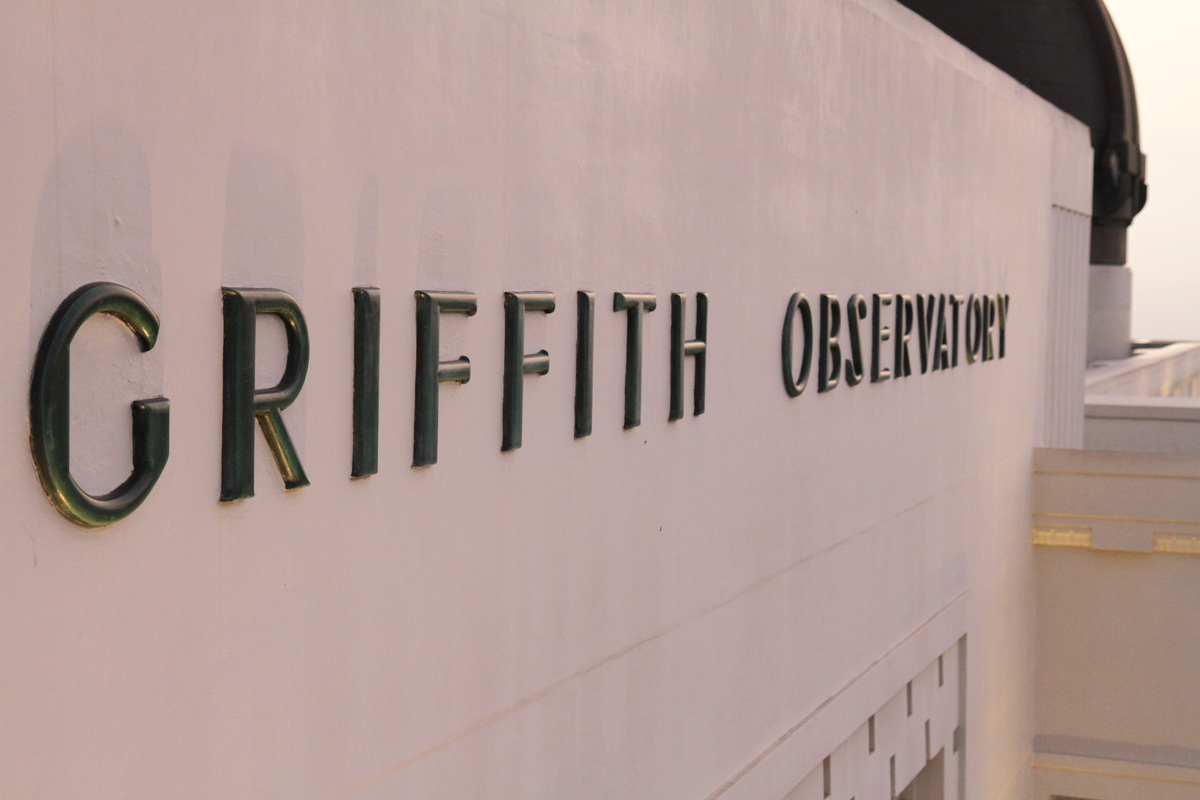
The Griffith Observatory is one of the most iconic locations in Hollywood, perched atop the Hollywood Hills. It offers spectacular views of the surrounding mountains, Downtown Los Angeles, Hollywood and even the ocean. The building opened in 1935 and has remained free and open to the public every since. It has been seen in so many films, we felt it deserved an entire article unto itself.
The observatory is perhaps most famously know for it’s use in the 1955 James Dean film, “Rebel Without A Cause.” However, the grounds have also been seen in such films as “The Terminator,” “La La Land,” “Back To The Future” and dozens more. It has also appeared in countless television shows, such as “Beverly Hills, 90210,” “The Wonder Years,” “24” and even “The Simpsons” (as the “Springfield Observatory”). The observatory has also appeared in music videos, such as Paula Abdul’s “Rush, Rush,” video games, such as “Grand Theft Auto V” and on album covers, for bands such as The Byrds.
Here we’ll take a look at some of the sights of Griffith Observatory.
LOCATION: 2800 E Observatory Rd, Los Angeles, CA 90027
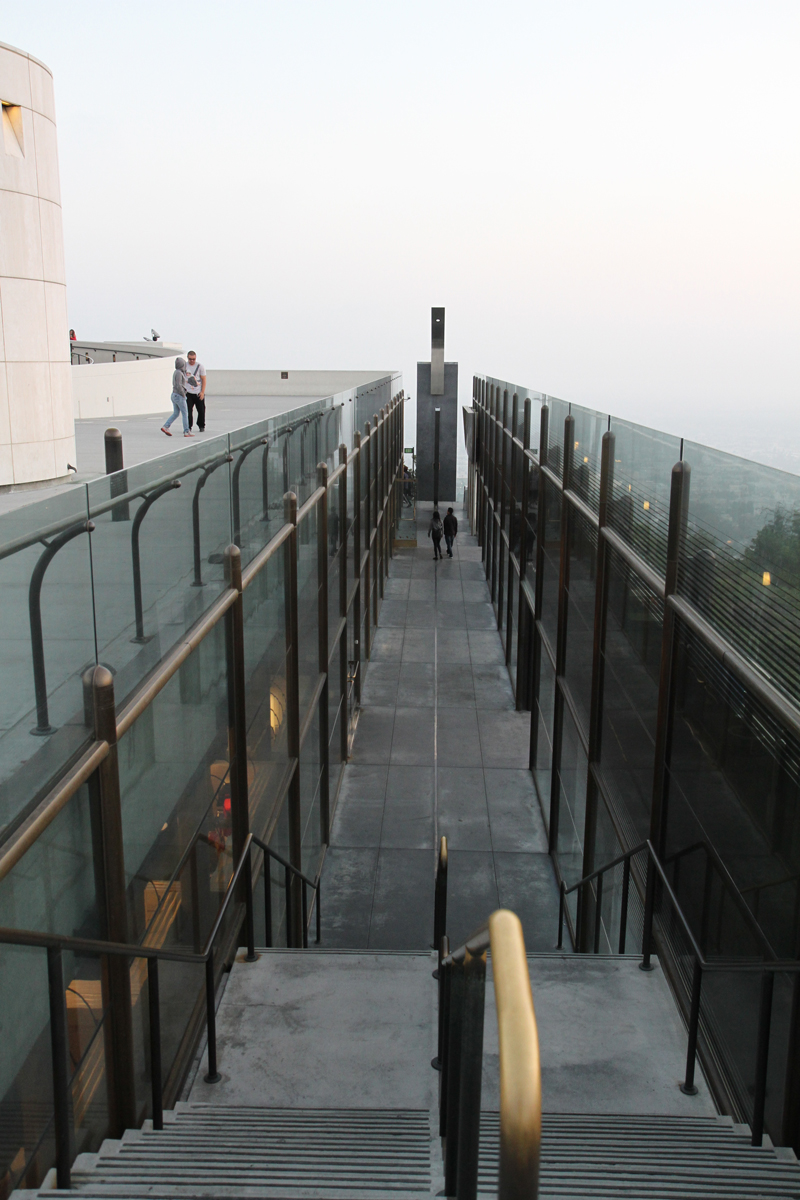
Arnold Schwarzenegger could be seen walking nude in the original “The Terminator” film on the sidewalk to the right. He is approached by some street thugs, including one played by Bill Paxton, before the Terminator makes short work of them. The scene has also been recreated in some of the film’s sequels.
Ryan Gosling drives his convertible, with Emma Stone in tow, down the sidewalk on the right in “La La Land.”
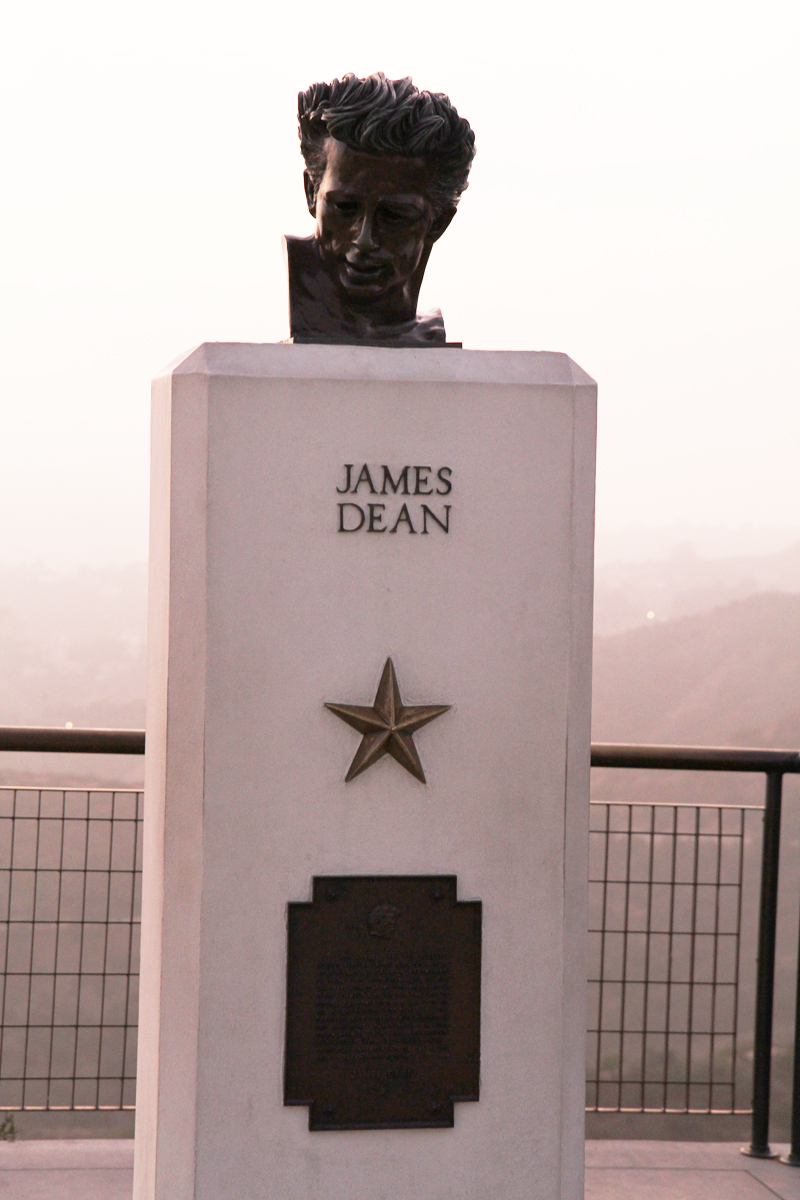
A bust of James Dean can be found at the observatory, in honor of Deen’s classic performance in “Rebel Without A Cause,” where the film shot a memorable knife fight scene.
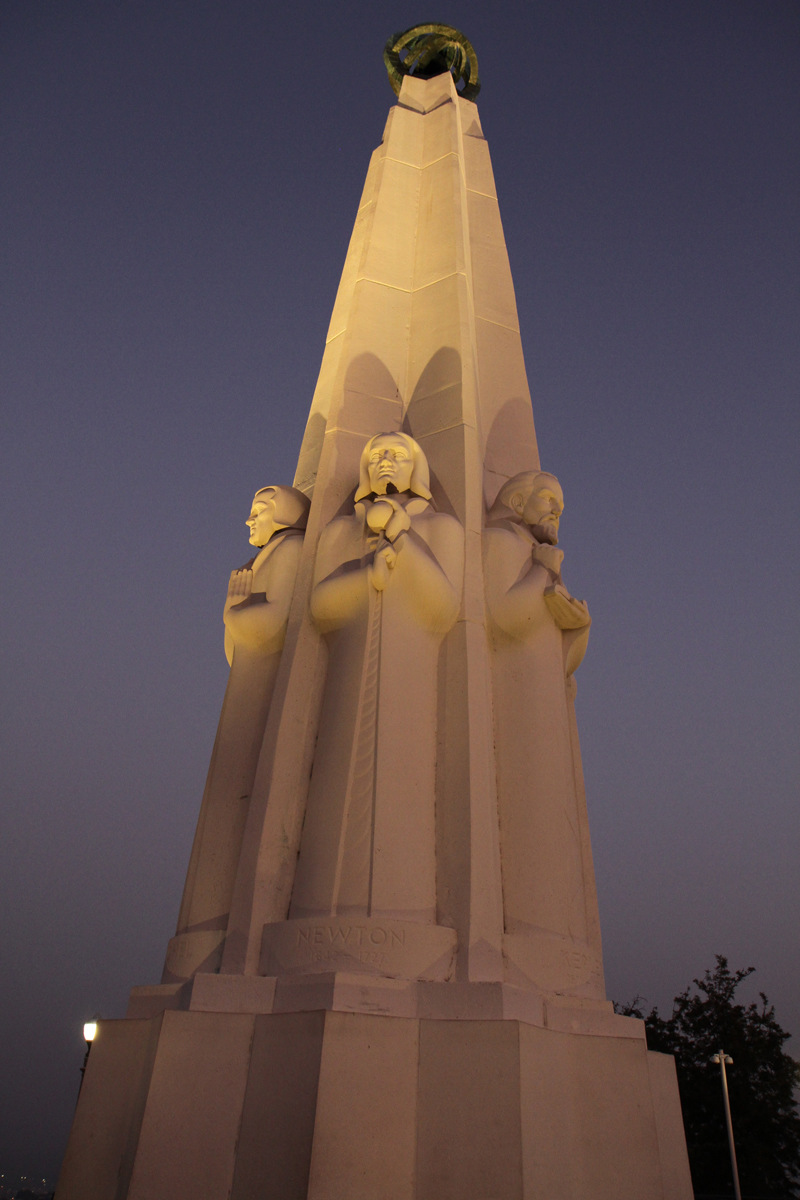
The best views of the observatory are of course at night.
The inside of the observatory has several interesting sights as well. Ryan Gosling and Emma Stone can be seen dancing around this pendulum in “La La Land.”
In the same film, the two gaze up at this mural on the ceiling of the observatory.
The two also pause and look at this Tesla Coil.
Overall, whether you’re a movie lover, a tourist, a science fan, or someone who simply enjoys beautiful views, the Observatory has something to offer almost anyone.
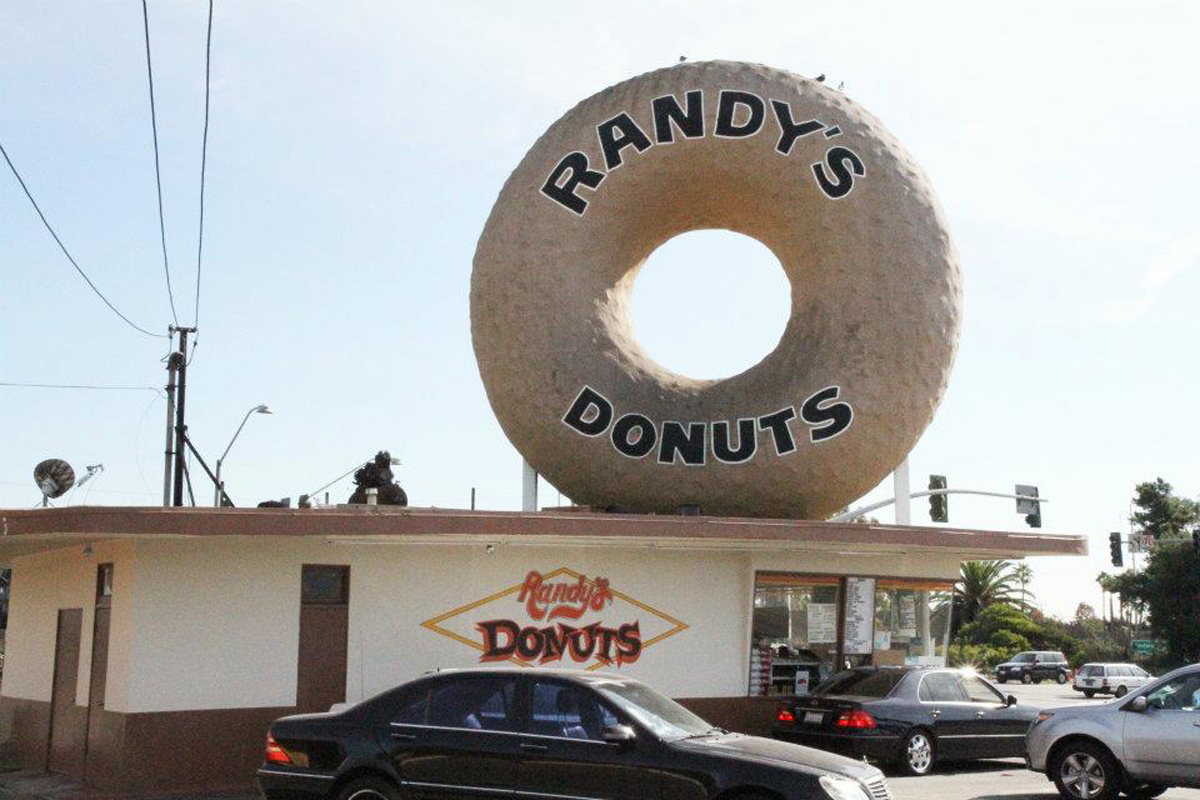
Arguably the most famous donut shop in movies, Randy’s Donuts has been featured in countless television shows and films. Robert Downey Jr. famously sat inside the building’s giant donut hole in “Iron Man 2.” Even “The Simpsons” famously depicted a donut shop in their fictional town of Springfield, which strongly resembled Randy’s Donuts.
There are actually several donut shops which use the giant donut atop a drive-thru, however Randy’s is by far the most well-known of the bunch. The building was built in 1953 and has been going strong since. It’s been seen in such films as “Get Shorty,” “2012,” “Crocodile Dundee In Los Angeles,” “Dope” and “The Golden Child,” as well as television shows such as “Californication,” “Arrested Development,” “Entourage” and many more. It’s worth mentioning as well that their donuts are quite good!
LOCATION: 805 W Manchester Blvd, Inglewood, CA 90301
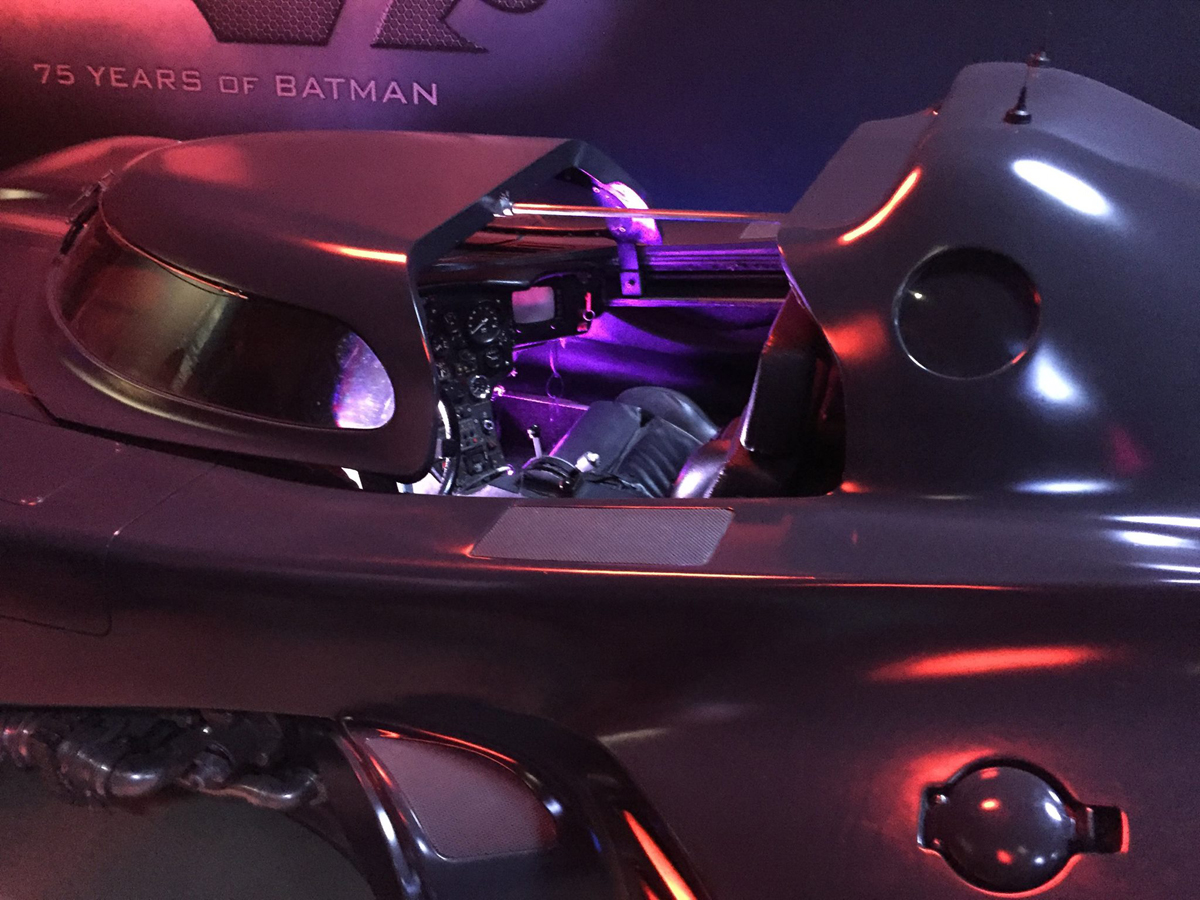
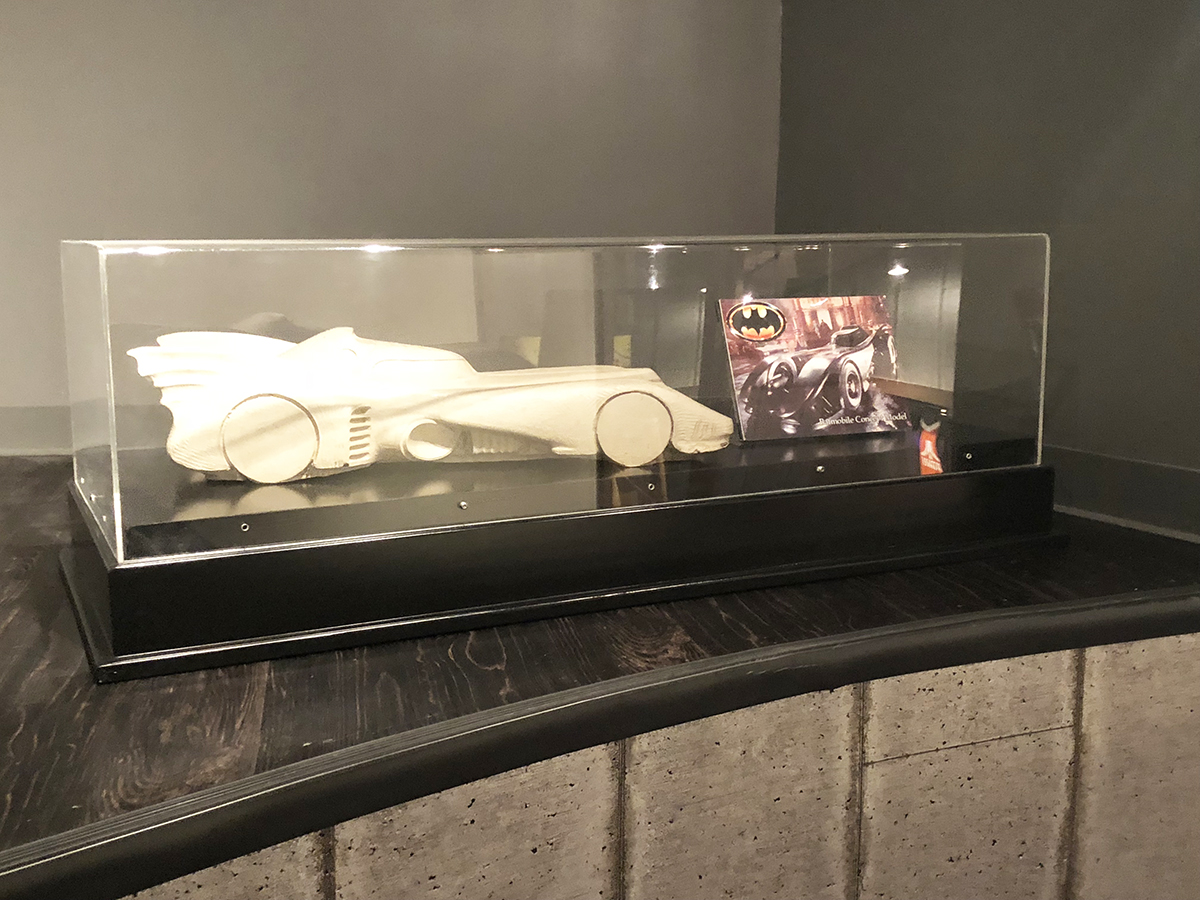
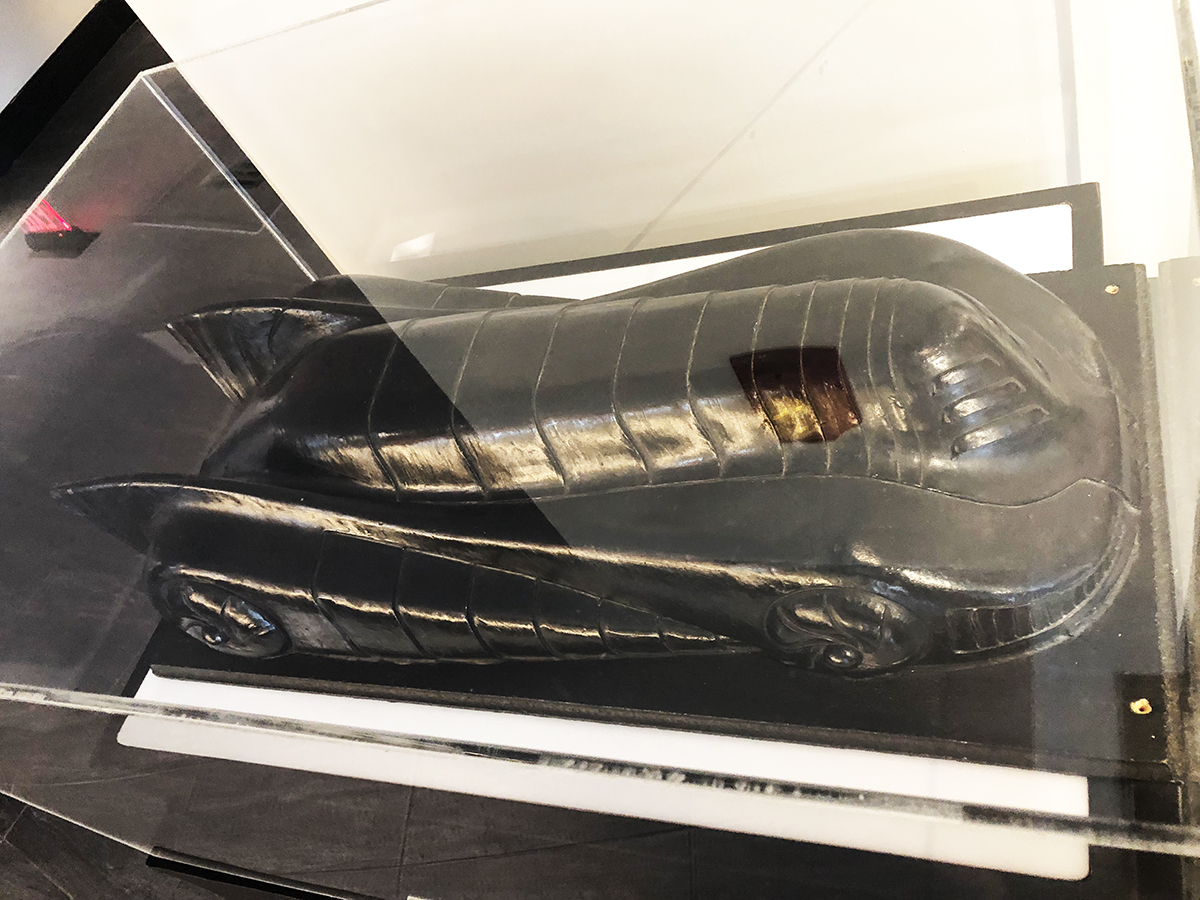
While Tim Burton’s 1989 “Batman” film was originally considered to be shot at Warner Bros. Studios, the film instead primarily shot at Pinewood Studios, just outside of London, England. However, the Batmobile from the original film can today be seen at the Warner Bros. lot, as part of their studio tour.
LOCATION: 4000 Warner Blvd, Burbank, CA 91505
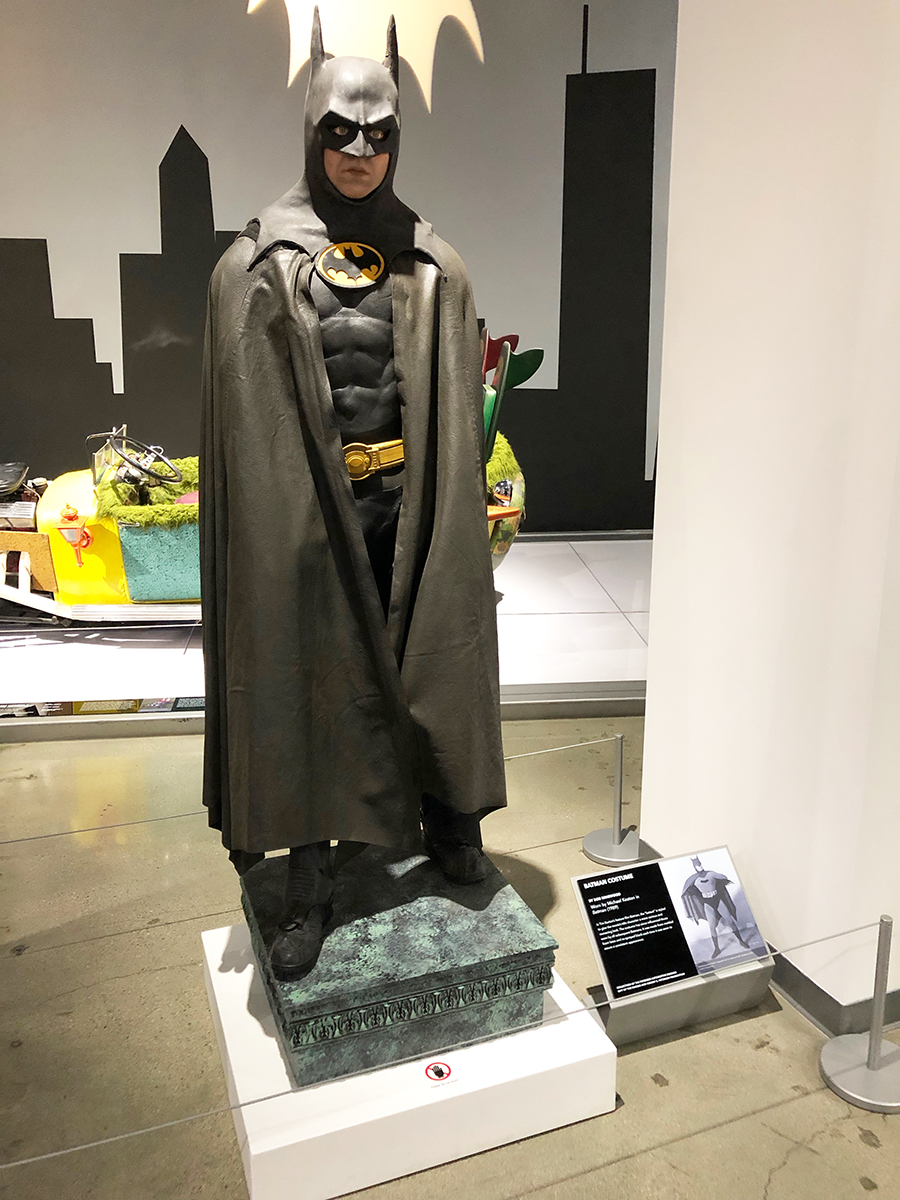
In 2019, the Peterson Automotive Museum in Los Angeles held a limited exhibition called “Hollywood Dream Machines: Vehicles of Science Fiction and Fantasy,” which featured one of the original, screen-used costumes worn by Michael Keaton in the film.
LOCATION: Peterson Automotive Museum, 6060 Wilshire Blvd, Los Angeles, CA 90036
A couple models of the Batmobile can be found on display at Planet Hollywood in Florida.
LOCATION: 1506 E Buena Vista Dr, Lake Buena Vista, FL 32830
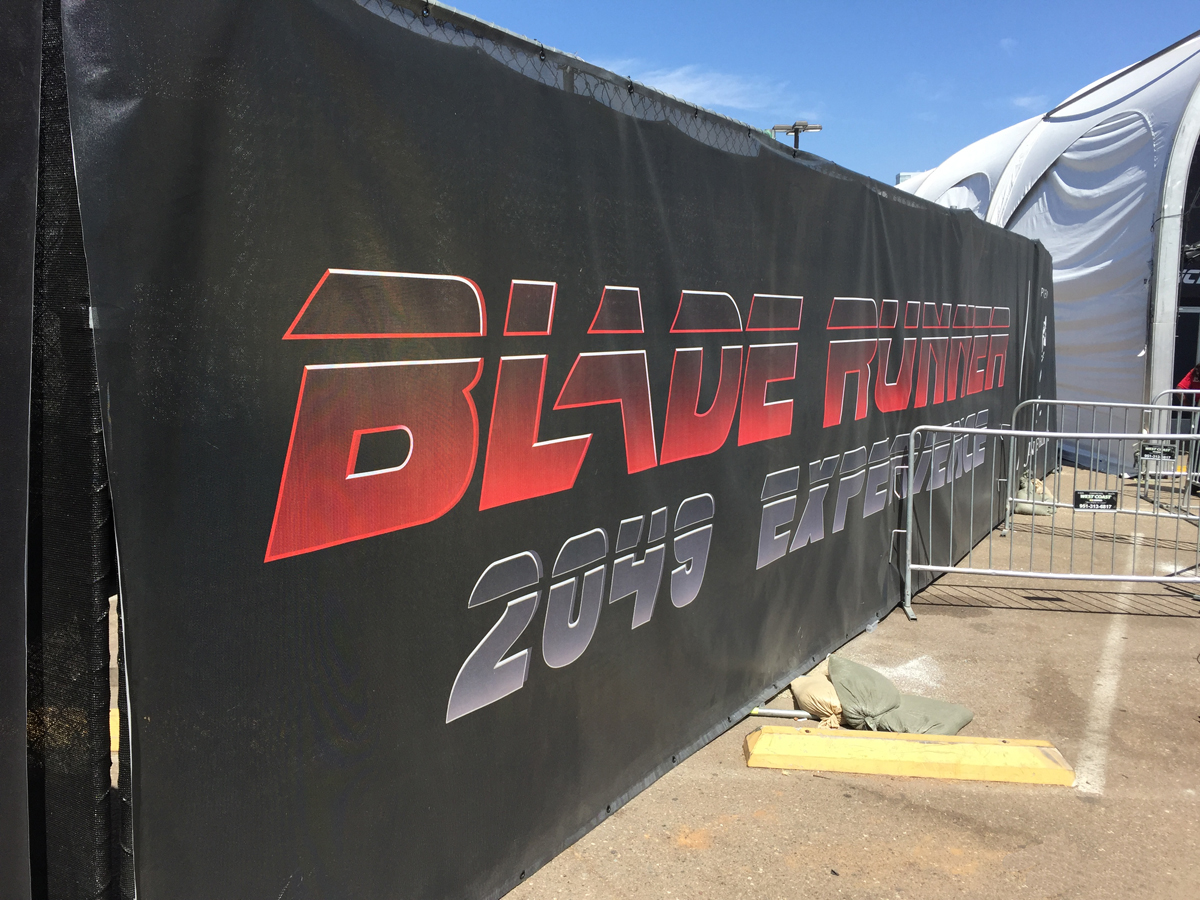
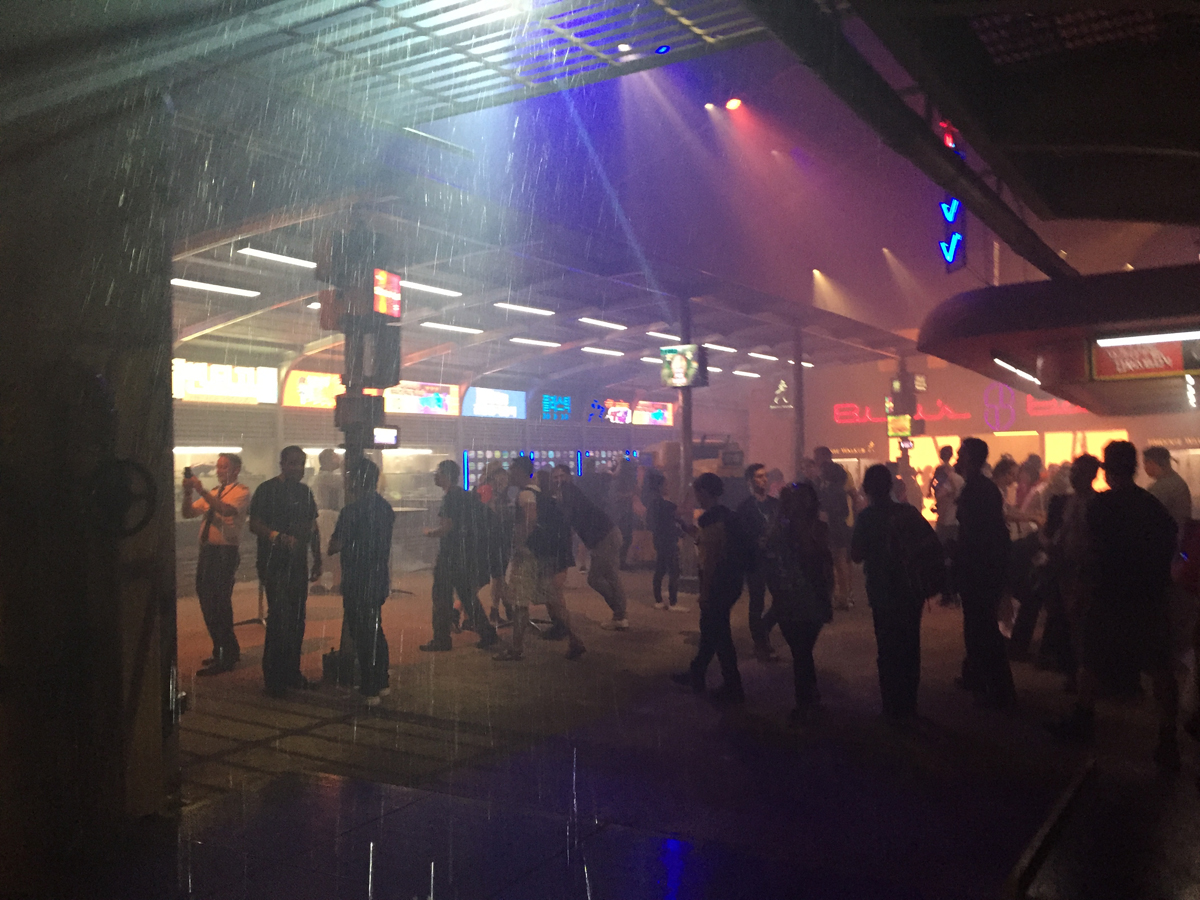
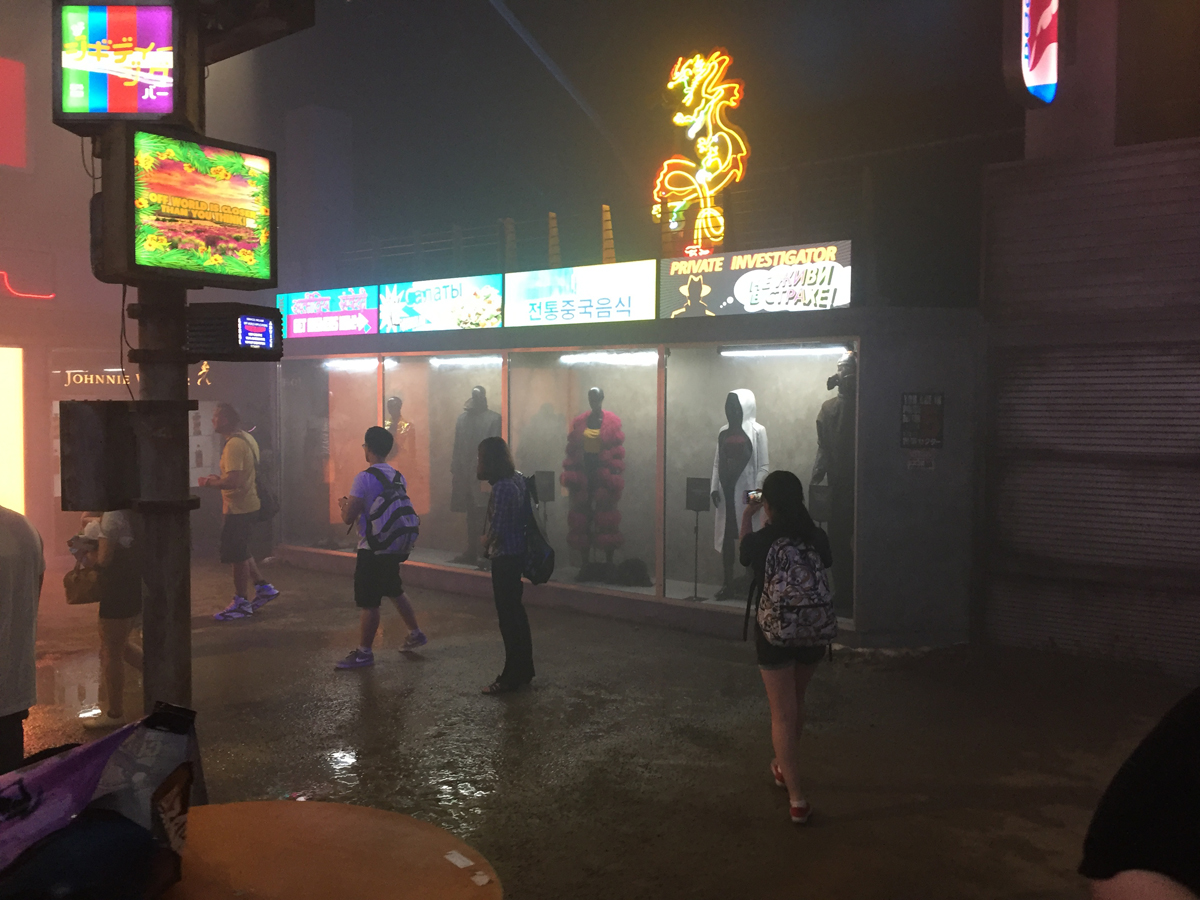
At the 2017 San Diego Comic-Con, Warner Bros. hosted a “Blade Runner 2049 Experience.” Visitors were invited to experience a VR tour of the futuristic world, as well as a set recreation, with props and actors interacting with you. Here we offer some photos of the special exhibition.
First up, a view of the full structure, as seen from outside.
The entrance to the building.
Once inside, there is some concept art from the film on display.
One of the actual Spinner vehicles used in the film.
A recreation of the film set, featuring the streets of a futuristic Los Angeles.
Vending machines, in which visitors were distributed free t-shirts for the film.
Bibi’s bar, in which visitors could actually go inside for a free drink.
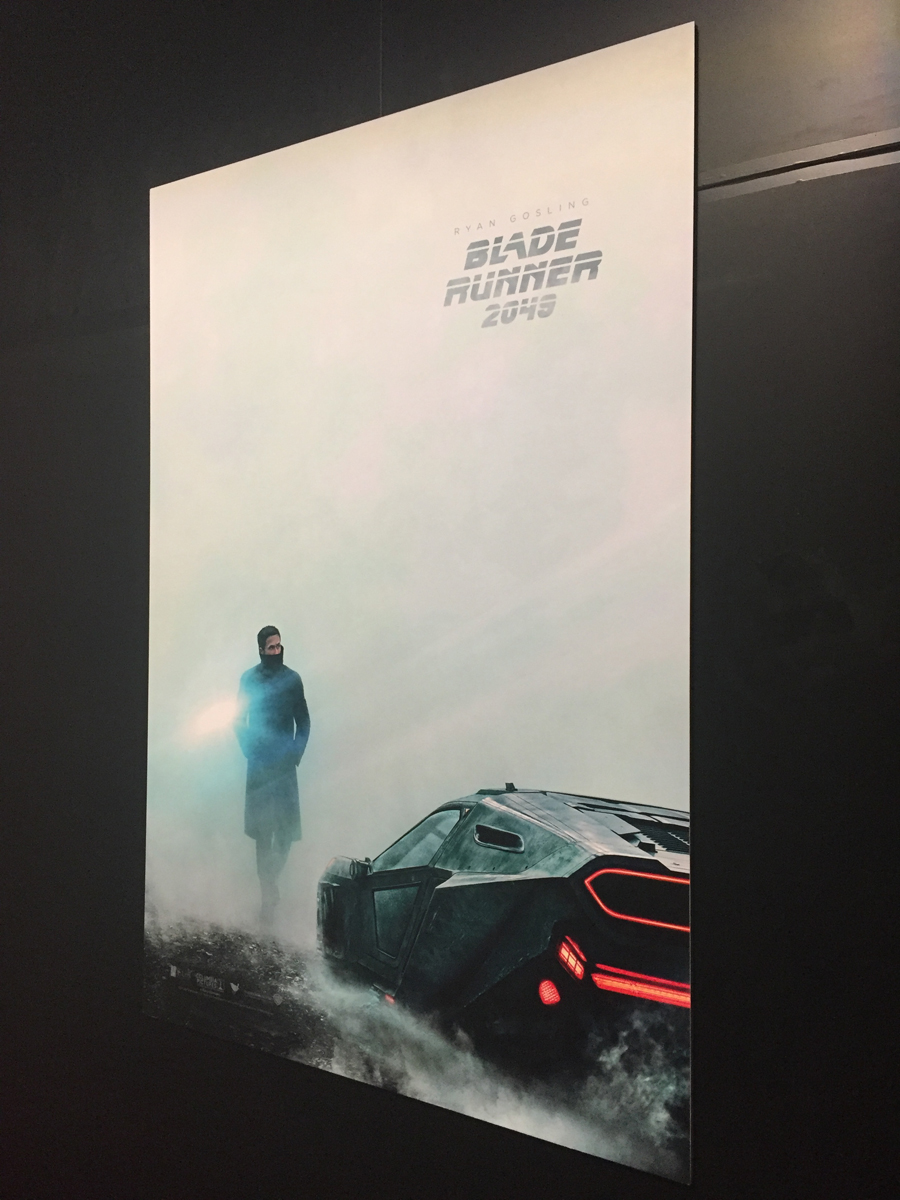
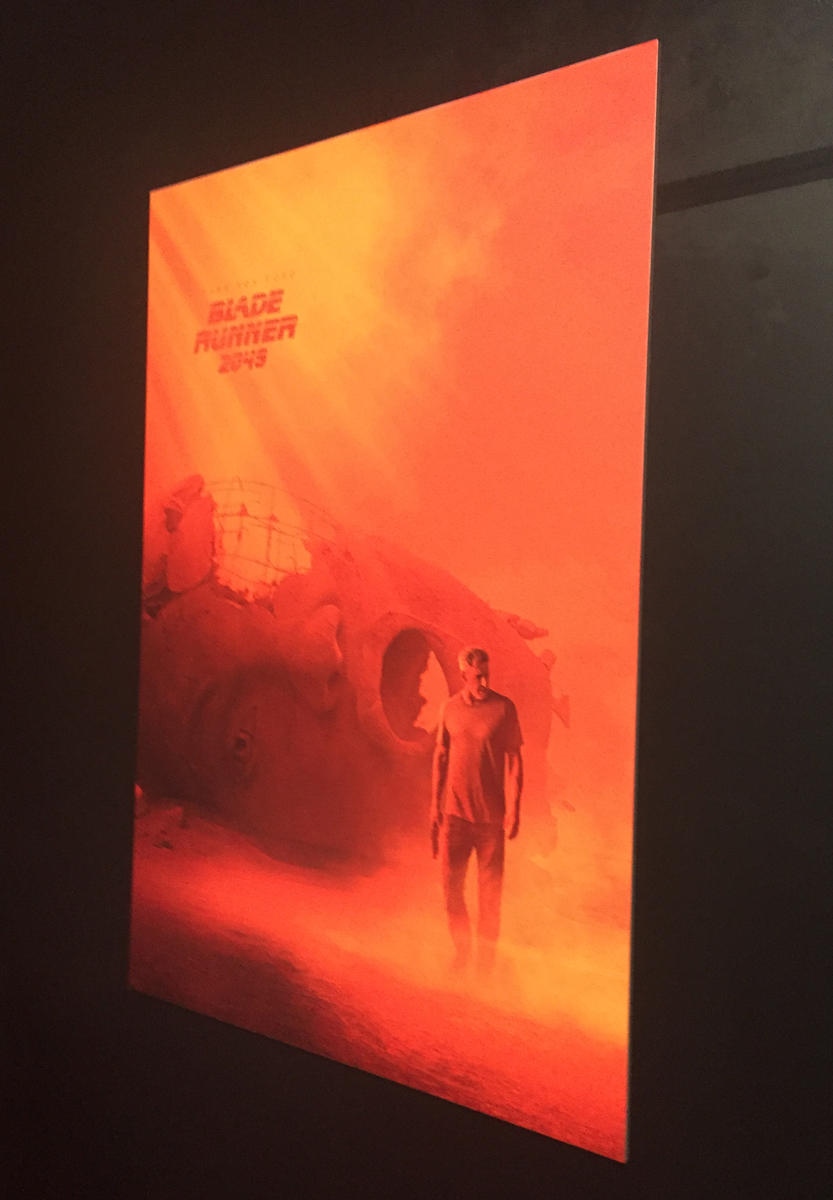
Some posters for the film.
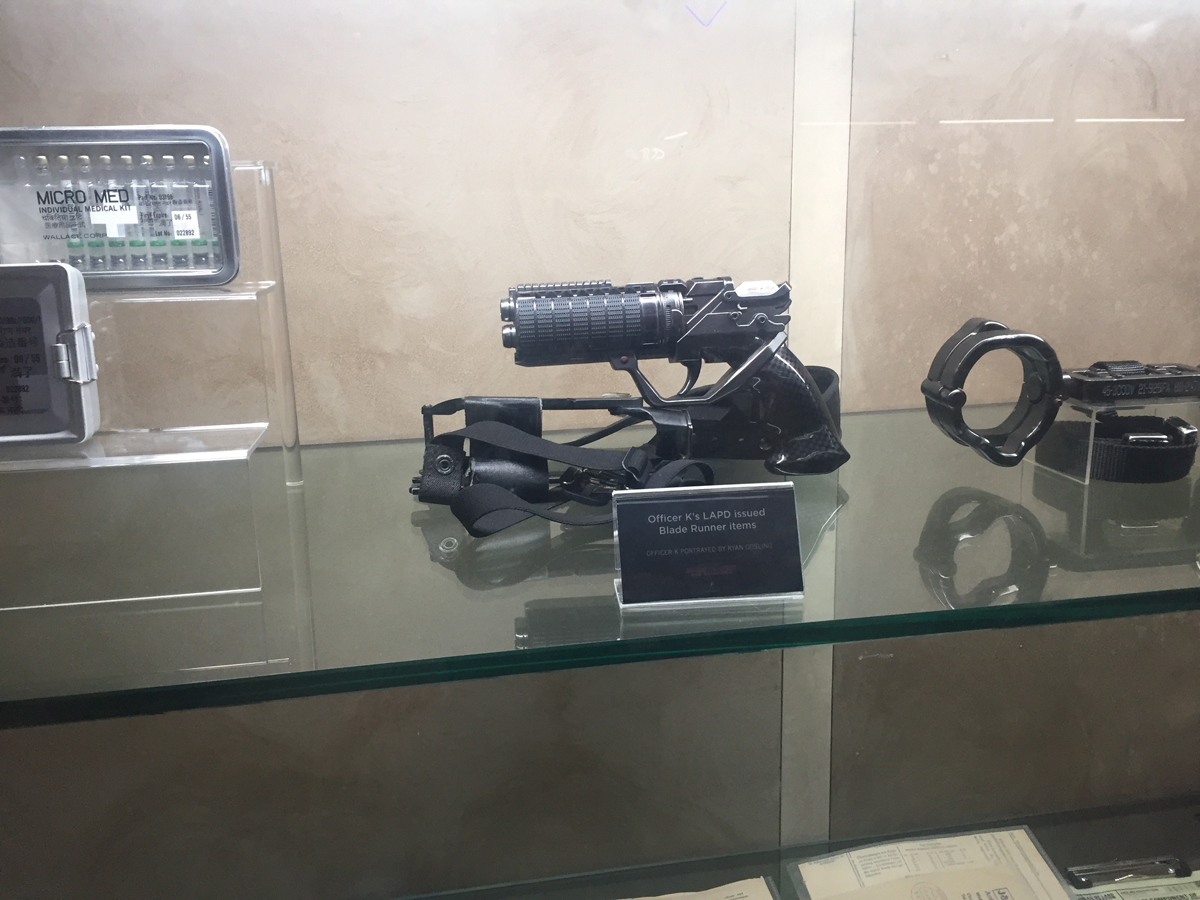
Numerous props from the film were on display. Here are some of Officer K’s, played by Ryan Gosling, LAPD issued Blade Runner items.
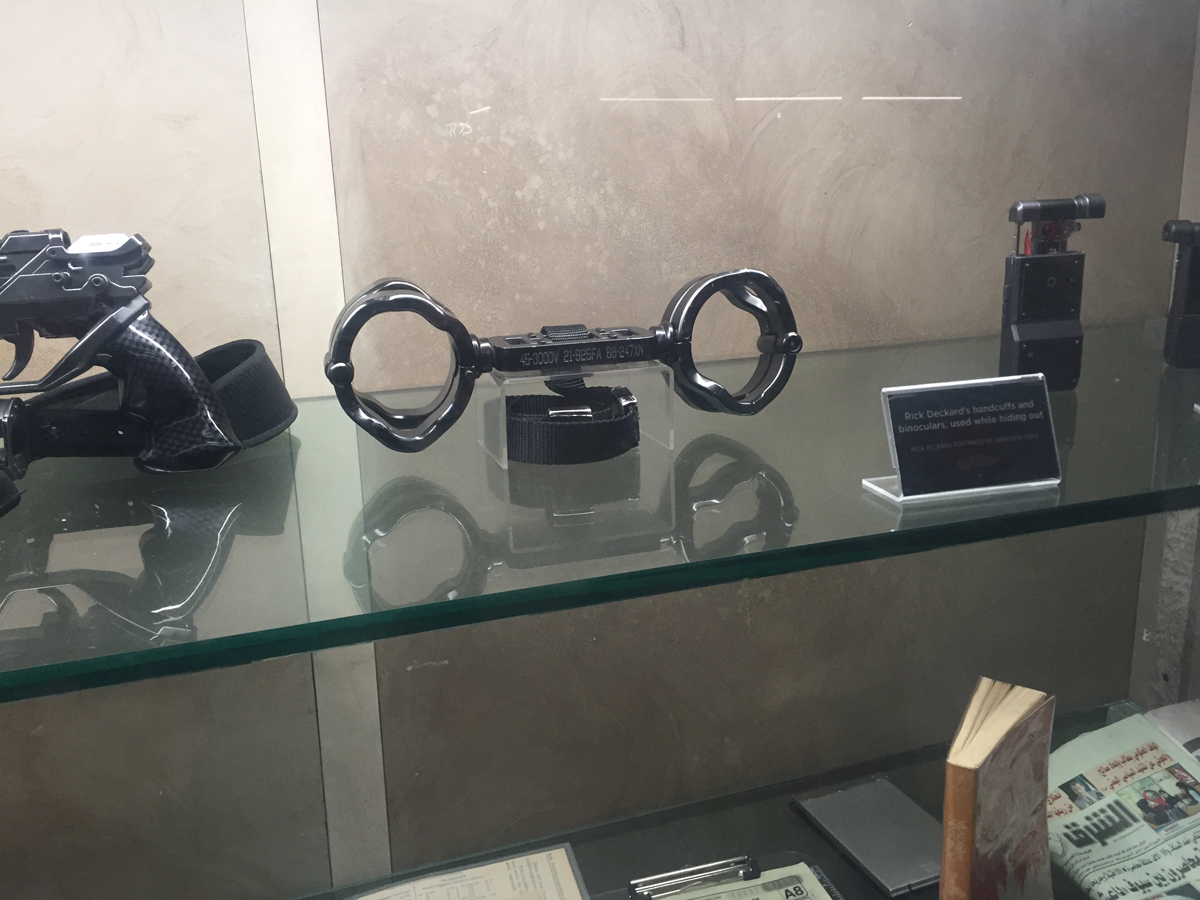
Deckard’s, played by Harrison Ford, handcuffs and binoculars, used while hiding out.
Eye scanner, used by Officer K to identify replicants.
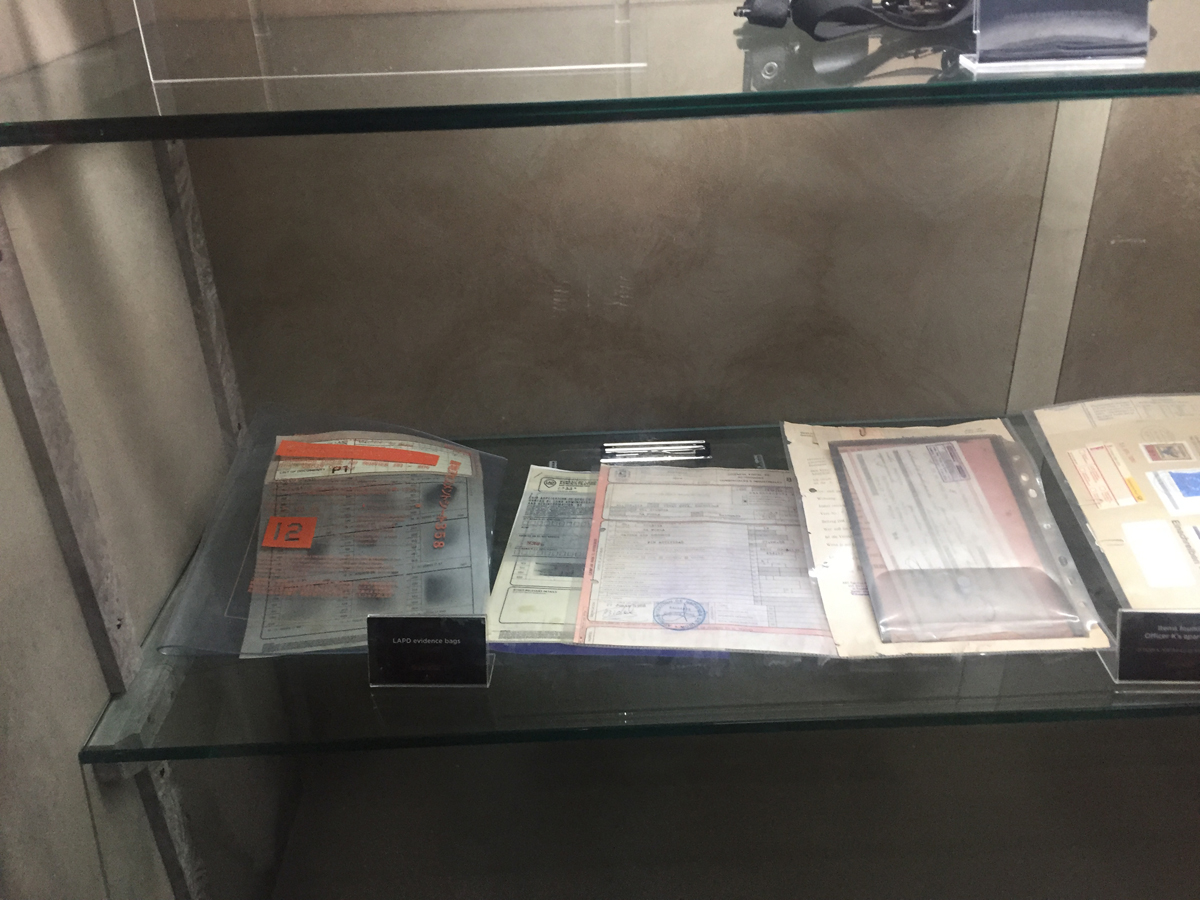
Some LAPD evidence bags.
Items found in Officer K’s apartment.
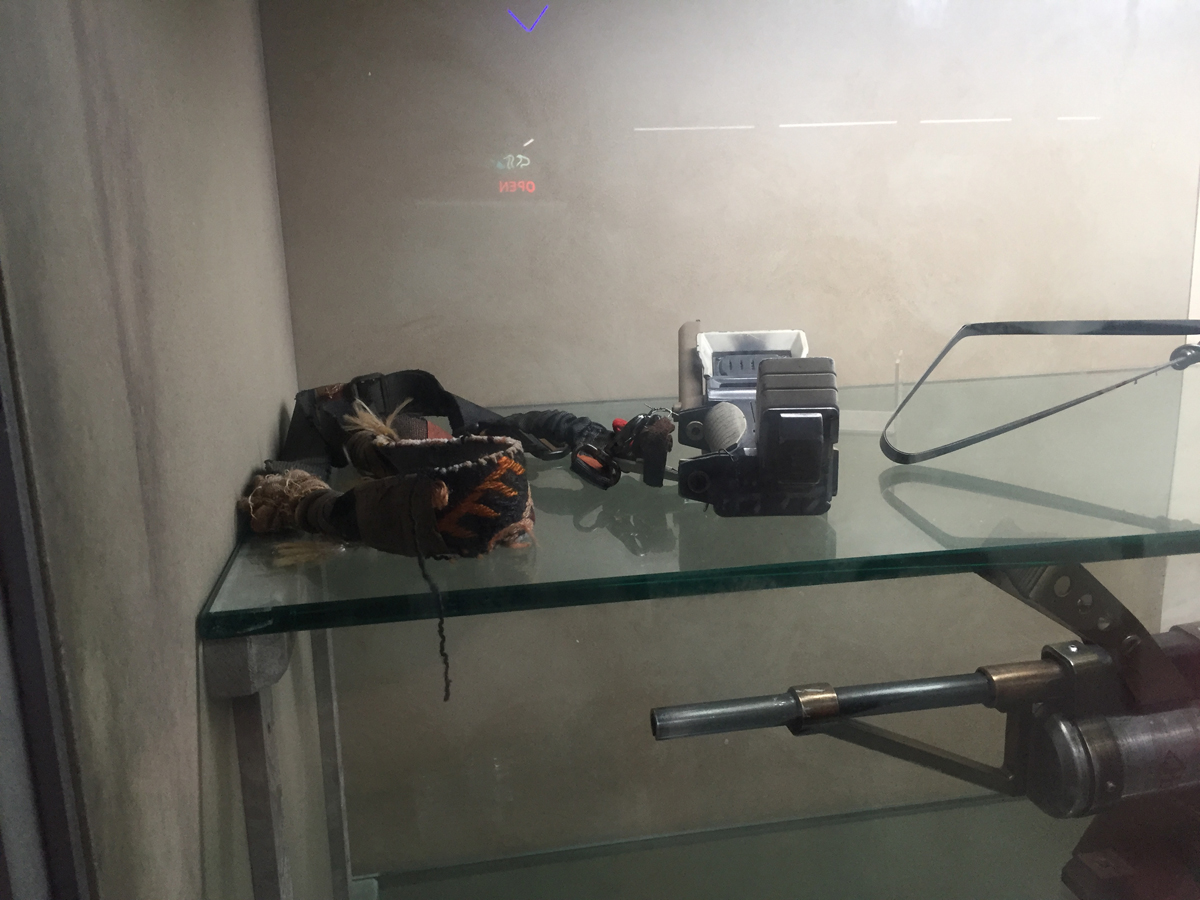
Some miscellaneous props used in a variety of scenes in the film.
Memory spheres used to store Voight Kampff tests to determine if one was a replicant or not in the original movie, along with some everyday tools used by manicurists in the sequel.
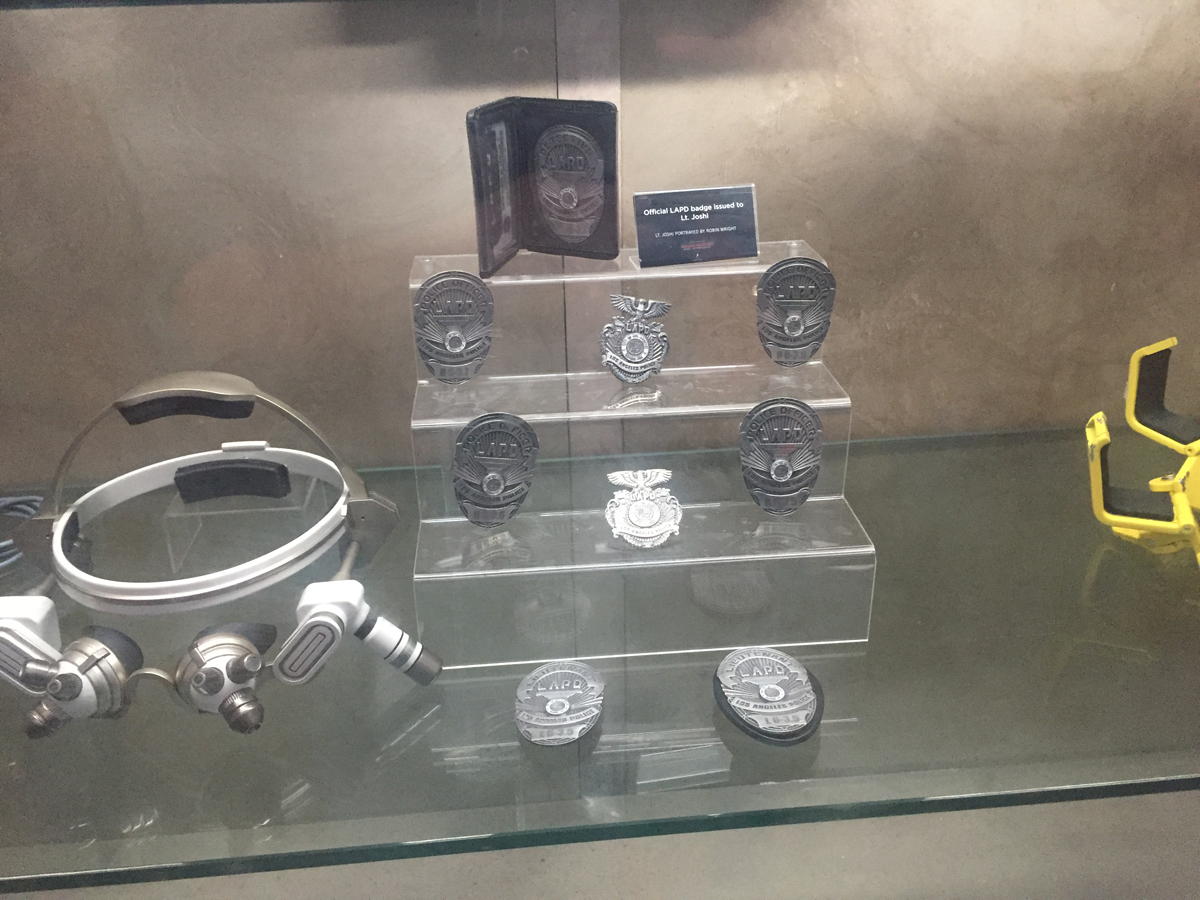
LAPD badges and handcuffs issued to officers.
Deckard’s blaster, used in both the original film and the sequel.
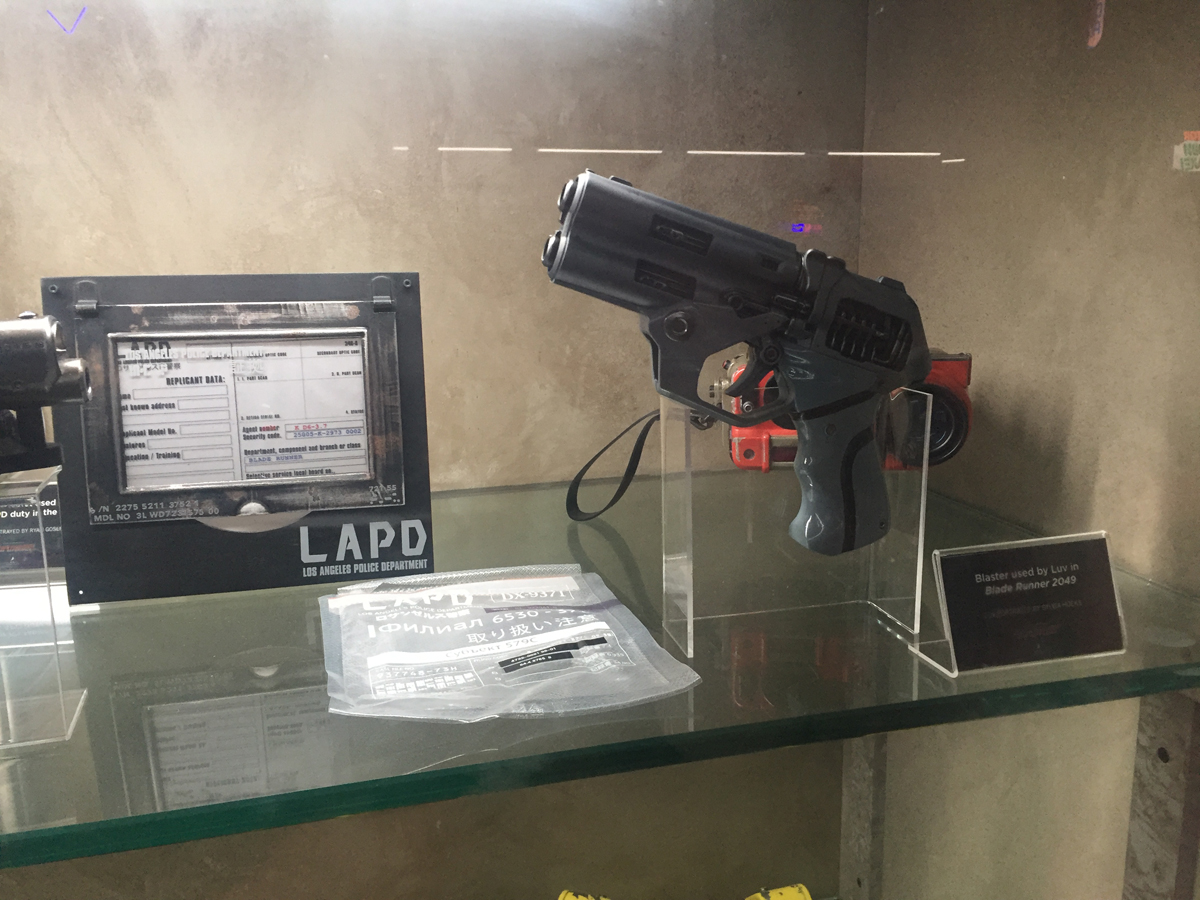
Luv’s blaster.
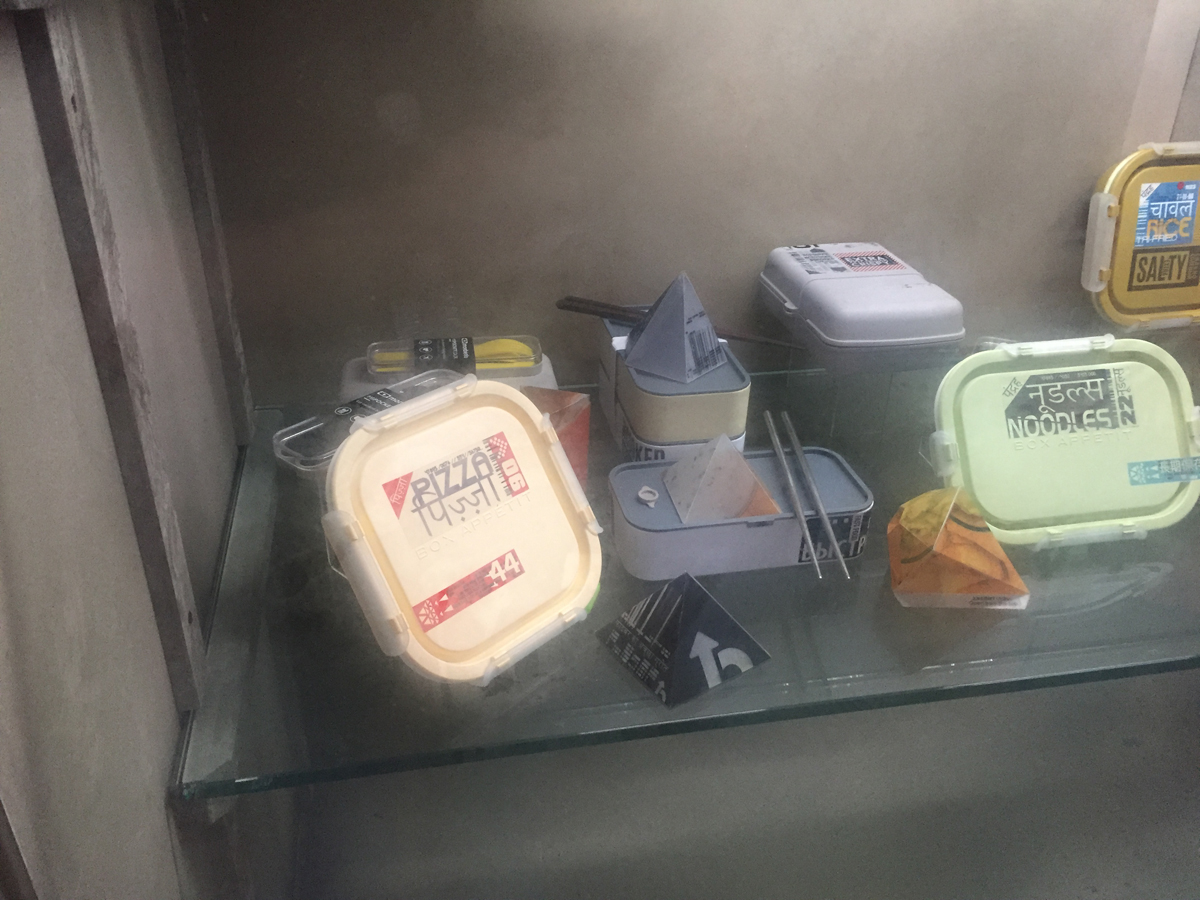
Items from the marketplace where residents gather to shop and eat.
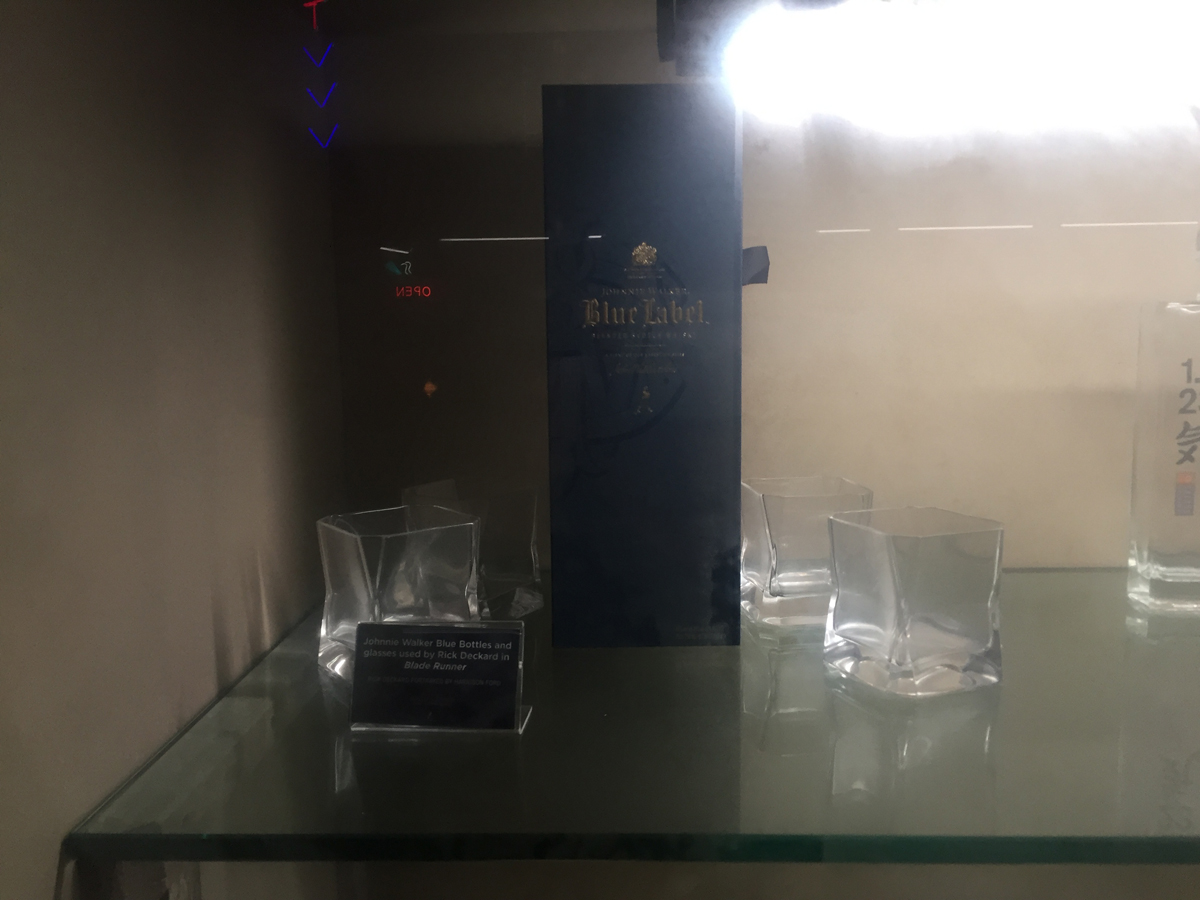
Cocktail glasses used by Deckard.
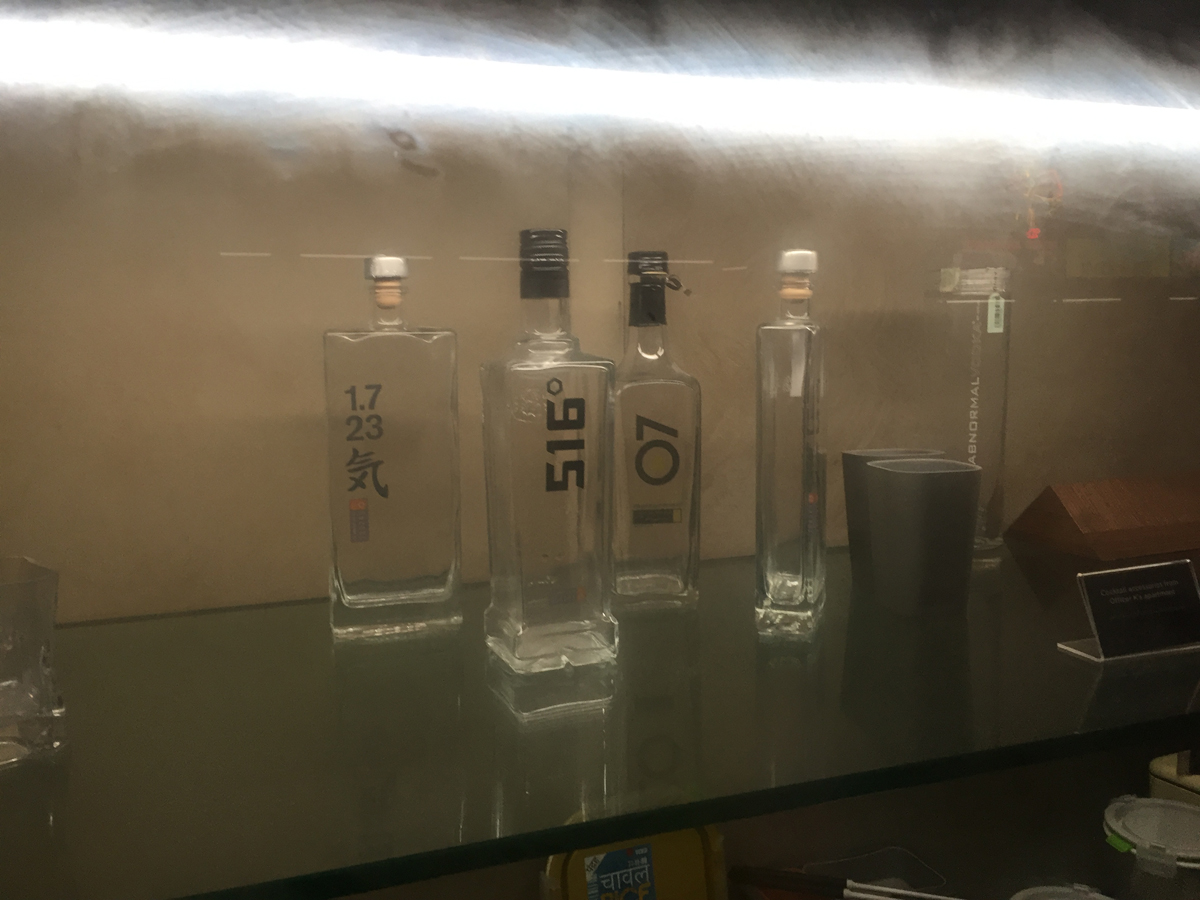
Cocktail bottles and glasses from Officer K’s apartment.
Decorative accessories used to adorn the office of Niander Wallace, played by Jared Leto.
Some costumes from the film. First, a hazmat suit, helmet and boots worn by Sapper, played by Dave Bautista, to protect him from the harsh atmospheric elements while farming.
Some sophisticated attire worn by Luv.
Some colorful clothing worn by Mariettte as she cruises Bibi’s Bar.
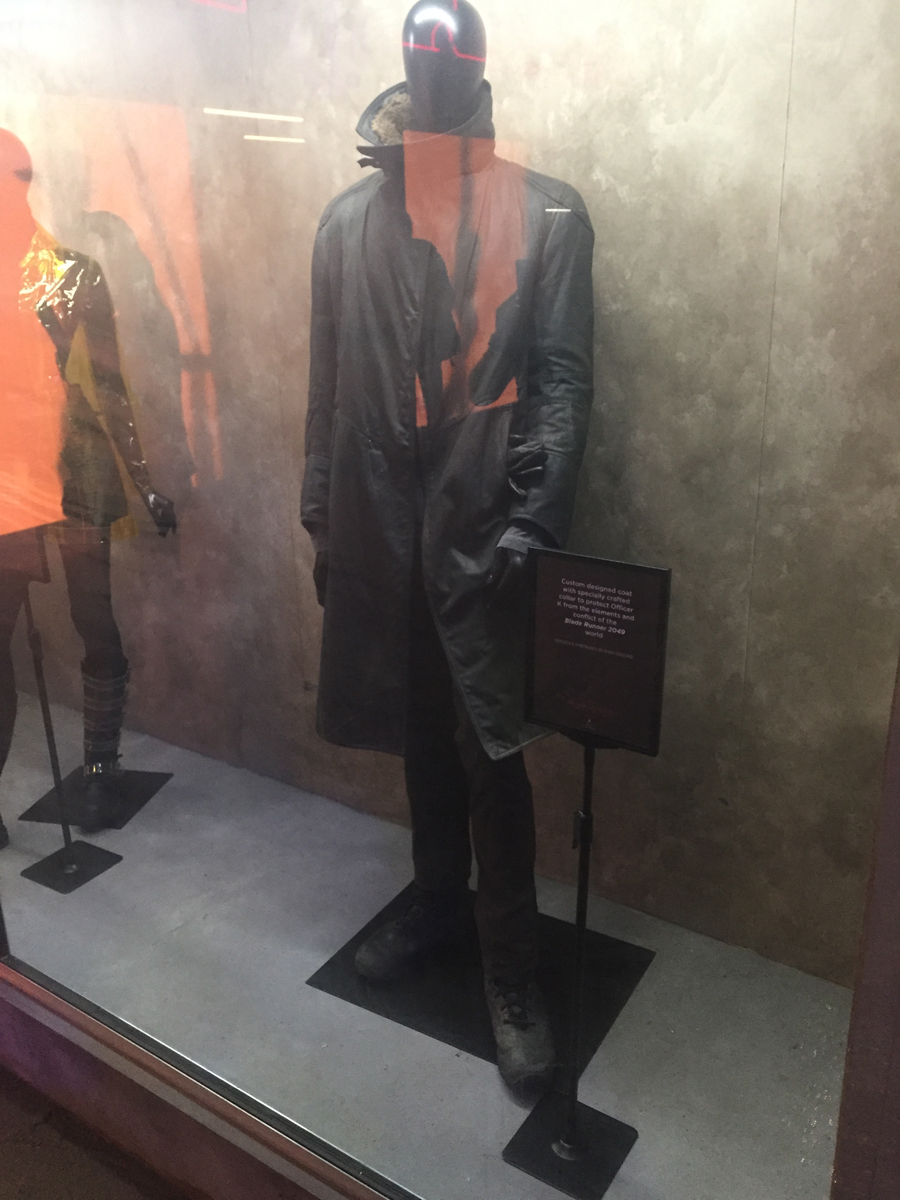
A custom designed coat with a specially crafted collar to protect Officer K from the elements.
Iconic yellow rain jacket made with readily available materials, worn by Joi.
Living a solitary life, Rick Deckard wears this casual t-shirt and pants.
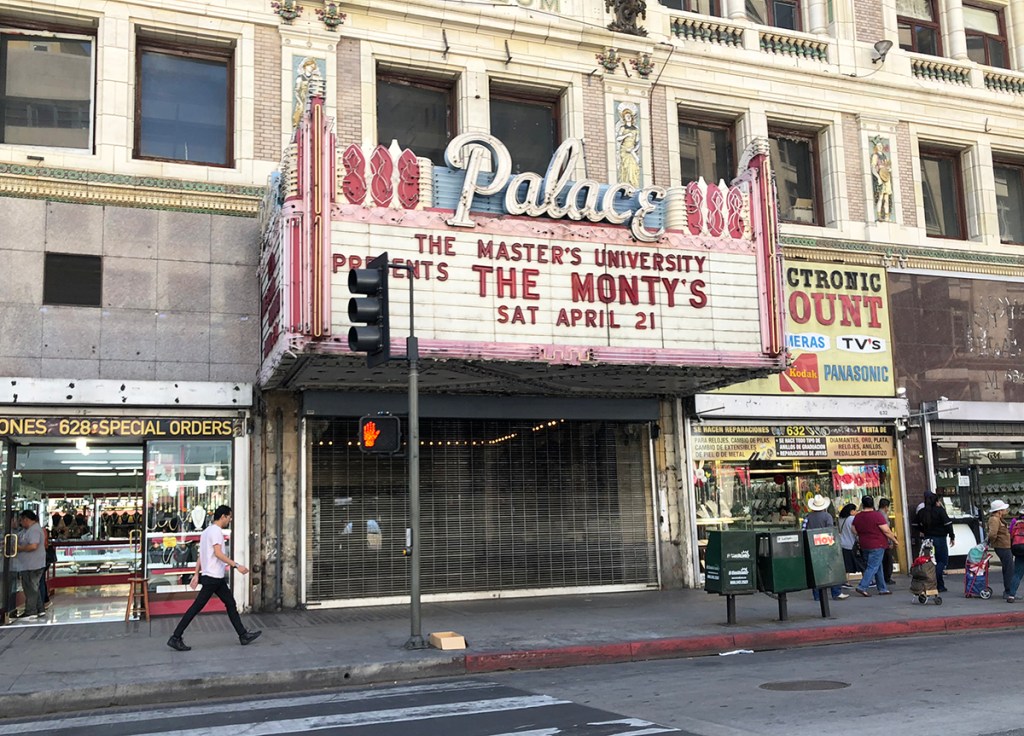
Michael Jackson’s classic music video for “Thriller” was filmed around Los Angeles, California. The exterior of the theater where Michael watches watches a film can be found in Downtown Los Angeles.
LOCATION: 630 S Broadway, Los Angeles, CA 90014
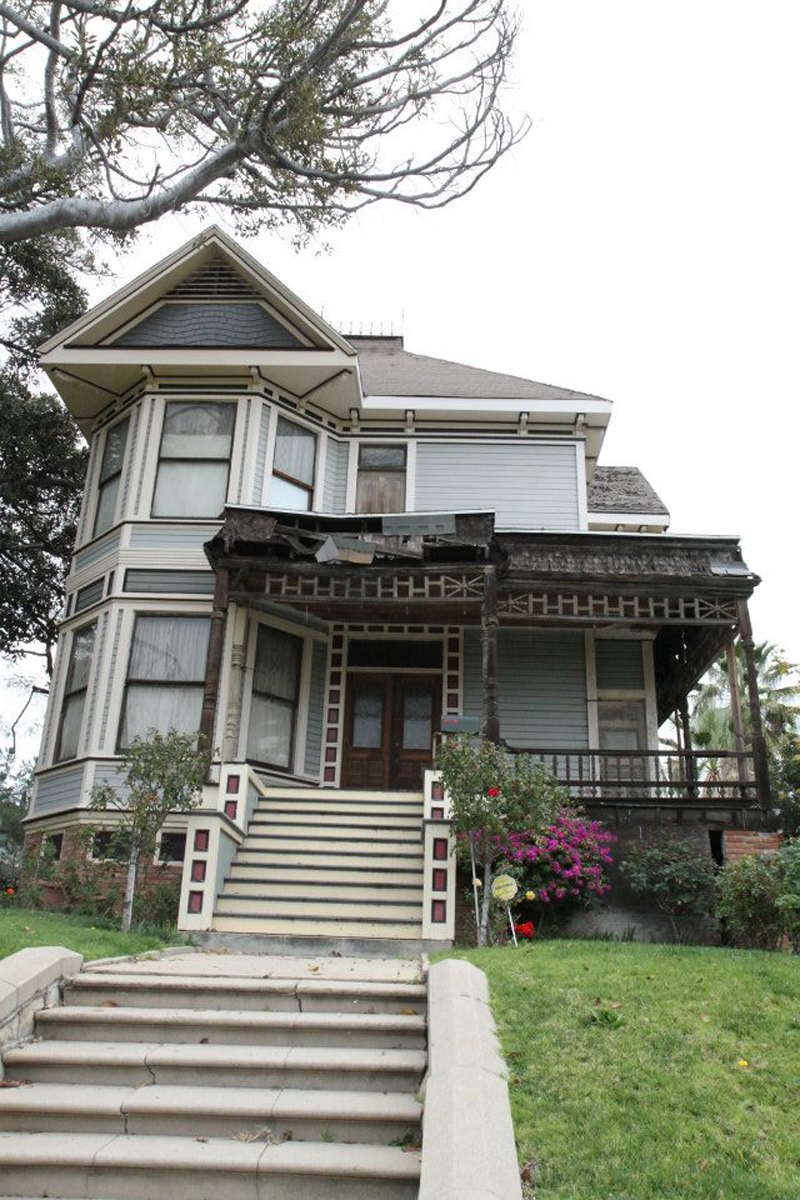
In the Angelino Heights neighborhood near Echo Park, you’ll find the house from the video. The same home appeared in the film “Teen Witch.” Just a couple doors down is the house from “Charmed” (also seen in “Deuce Bigalow: Male Gigolo”) and across the street is the house from “Grandma’s Boy.”
LOCATION: 1345 Carroll Ave, Los Angeles, CA 90026
The dance scenes in the street were filmed in Downtown Los Angeles. This area has since become heavily populated by the homeless.
LOCATION: Union Pacific Ave / Calzona St, Los Angeles, CA 90023
One of the most remote locations you’ll ever likely encounter is Barker Ranch in Death Valley, California. It was the last hideout of Charles Manson and the Manson Family. Getting there is no easy task and requires planning and caution, due to the extreme desert conditions. To begin, you’ll have to head to the virtual ghost town of Ballarat, California, located in Inyo County. There are a few scattered people who pass through Ballarat, who are usually deliberately attempting to stay on the outskirts of society. One of the few buildings you’ll see in the town is the Ballarat Trading Post.
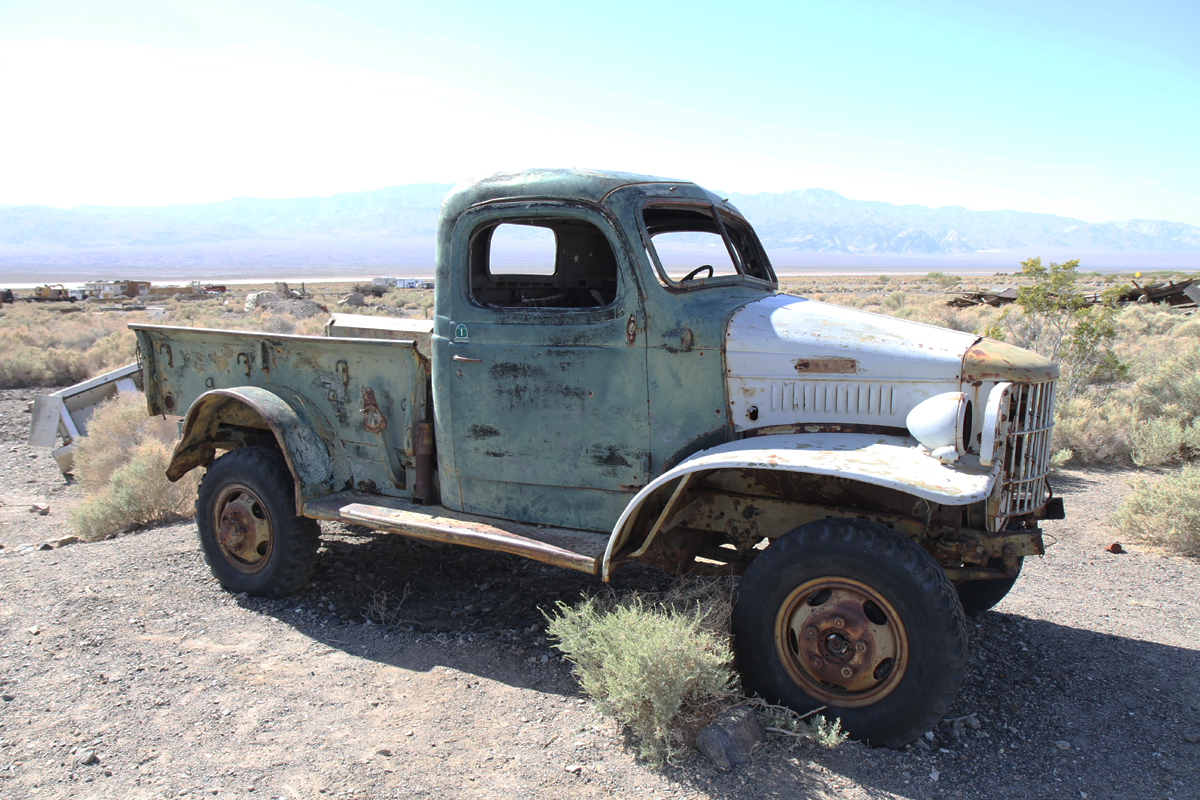
Directly in front of the Ballarat Trading Post is this truck, which for years has been rumored to have belonged to Manson Family member Charles “Tex” Watson. The rumor even got distorted one degree further, with some eventually claiming Charles Manson himself once owned it. The most common story is that when “Tex” fled Barker Ranch for Texas, he took this truck, which quickly broke down in Ballarat (Watson hitchhiked from there). However, according to locals, the actual truck “Tex” drove ultimately fell into the hands of another Ballarat local after it broke down, who was the caretaker of a nearby mining camp. He is said to have eventually dismantled the Watson escape truck. The one that sits in front of the trading post is similar, but locals claim it was never a Manson Family truck. However, the truck has sat in the same spot for quite some time and was likely in Ballarat at the time the Family was there, even if there is no direct connection. There is another truck, which is much more strongly argued to have belonged to “Tex” Watson, located at Barker Ranch itself.
Another old, rusty truck body, located near the Ballarat Trading Post.
To get to Barker Ranch, you will need to take a right at the Ballarat Trading Post, down Coyote Canyon Road. Surprisingly, most GPS systems, including Google Maps, can navigate you to Barker Ranch. However, it is strongly advised not to rely solely on GPS. Some GPS systems can be a bit off and cellular service is nowhere to be found in this region. So it is highly advisable to bring written or printed directions as well. There are no paved roads here, everything is dirt roads. Without a 4-wheel drive vehicle, Coyote Canyon Road is about as far as you will likely make it in a standard vehicle. Once you reach Goler Wash Road, you will likely traverse no further, unless its on foot or in a 4×4 vehicle. Here is a photo of the entrance of Goler Wash, which does not do justice to how rough the road truly gets.
Goler Wash is occasionally graded by the National Parks Service, which makes driving the road much easier. You can check online to see the various road conditions in a given season around Death Valley. Even with the road graded, its still difficult in certain spots. Even though it isn’t a long road, it will take you quite a long time to drive through it, due to the canyons becoming quite narrow at times (you can probably touch the rocky walls from your vehicle at various points). There is also a regular stream of water that runs through the wash. Depending on the season, this can be minor or significant. At one point along Goler Wash, you even need to drive up a small waterfall. Depending on the amount of water runoff, this can be fairly difficult. Another factor is simply all the loose rocks and gravel beneath you as you drive. It is recommended that an experienced off-road driver handle this road, but if conditions are agreeable in certain seasons, its possible for a first time off-road driver to handle it. Do your research and be careful if you do elect to attempt it.
Once you get through the war of attrition that is driving Goler Wash, you will finally arrive at Barker Ranch and Myers Ranch. Charles Manson first became aware of the ranches through Manson Family member Kathy Gilles, whose grandparents lived there. She brought Manson to the property, which he immediately liked for both its seclusion from society, as well as its perceived freedom from authority. Eventually, the Family began occupying both ranches, after Manson offered a Beach Boys gold record in exchange for permission to remain on the properties. While the Tate / LaBianca murders were planned from Spahn Ranch, it is Barker Ranch where Charles Manson and most members of the Manson Family were finally captured.
The path up to Myers Ranch and Barker Ranch.
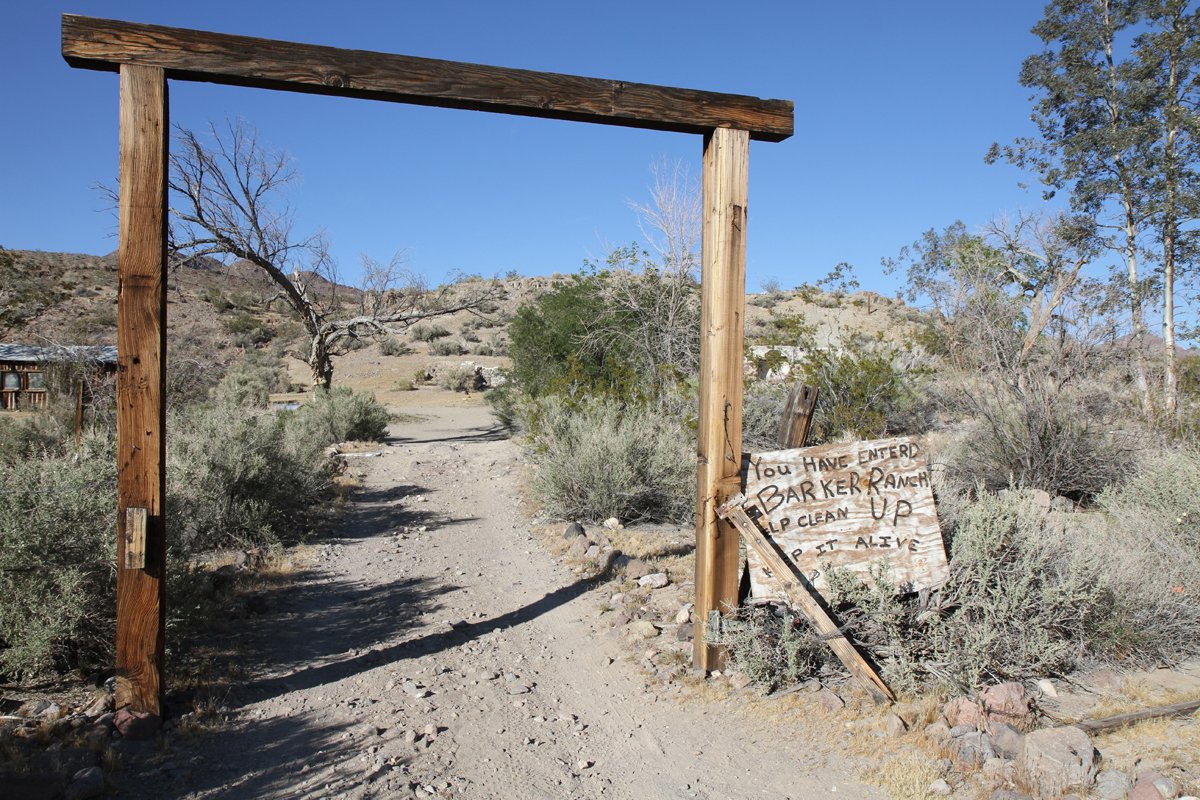
The gates of Barker Ranch.
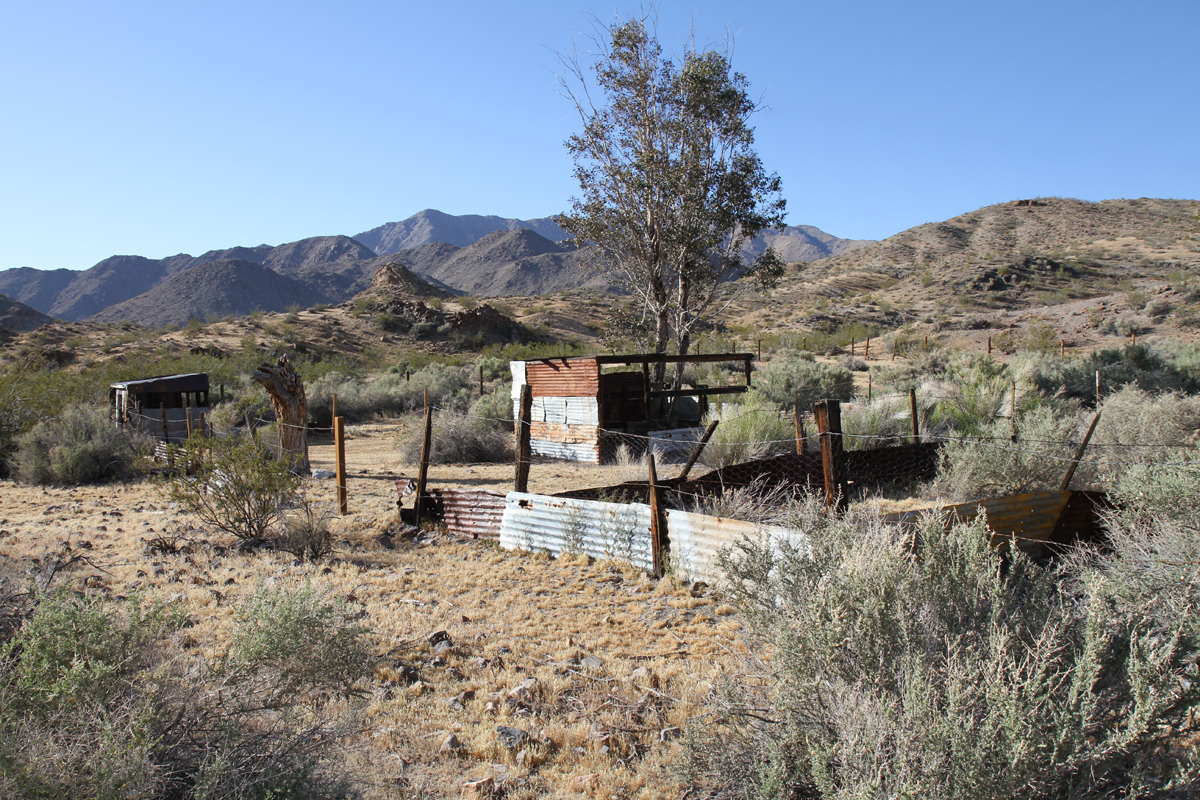
Some remnants of the outbuildings and stables at the ranch.
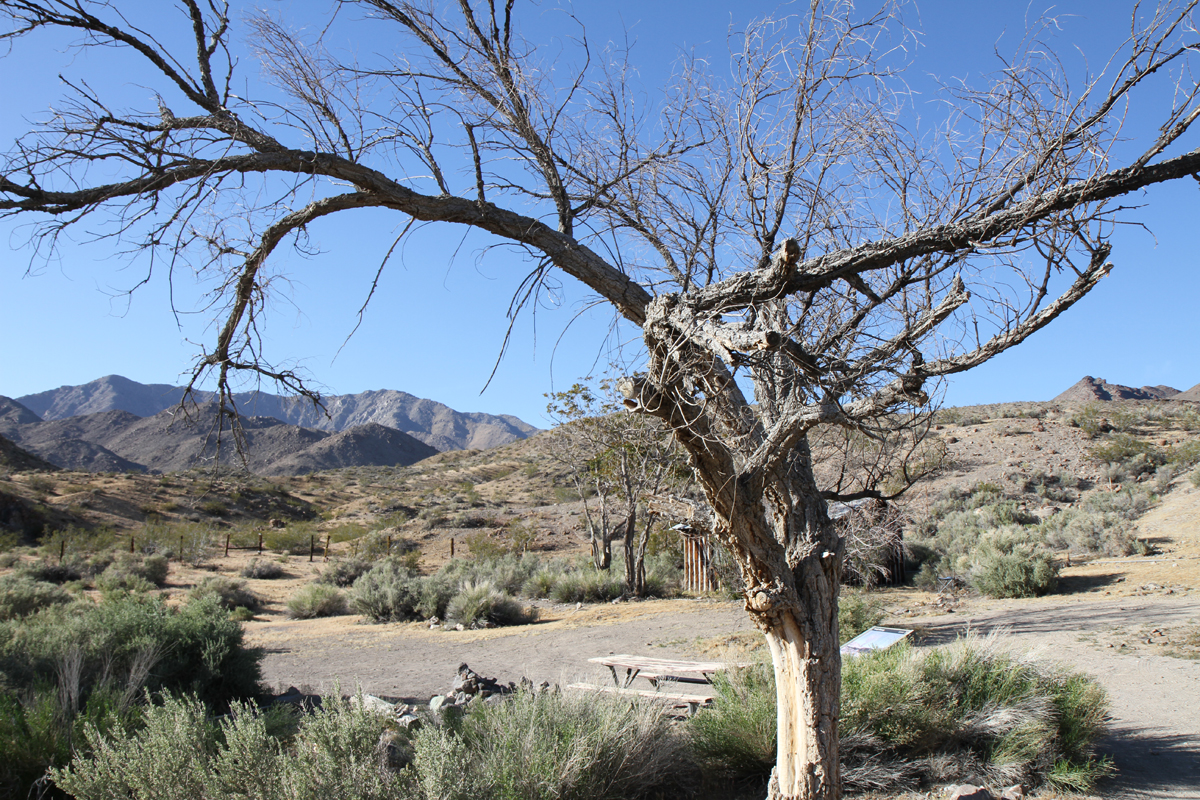
A plaque at the ranch, made by the National Parks Services, noting the history of the ranch. It shows a photo of what the ranch looked like before it was mostly destroyed by a fire. They also installed a picnic table beside it for travelers adventurous enough to make it out that far.
A view back towards the entrance, standing on Barker Ranch.
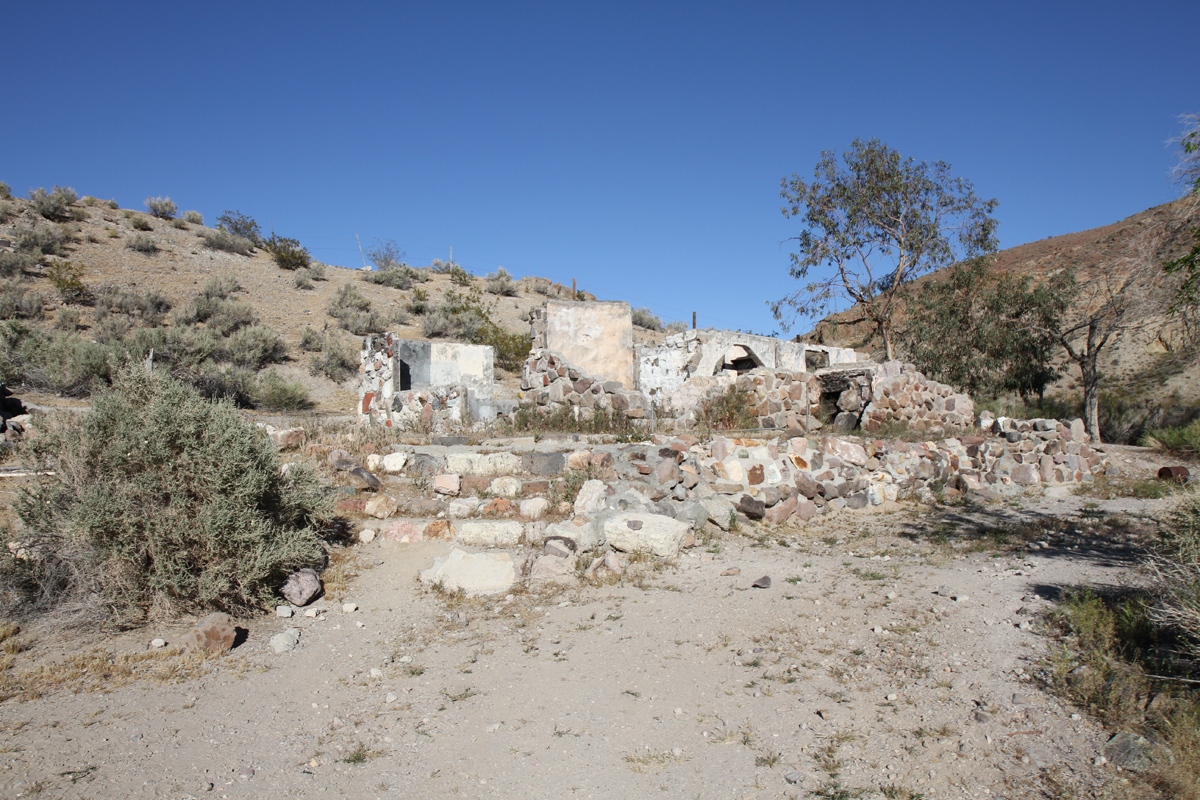
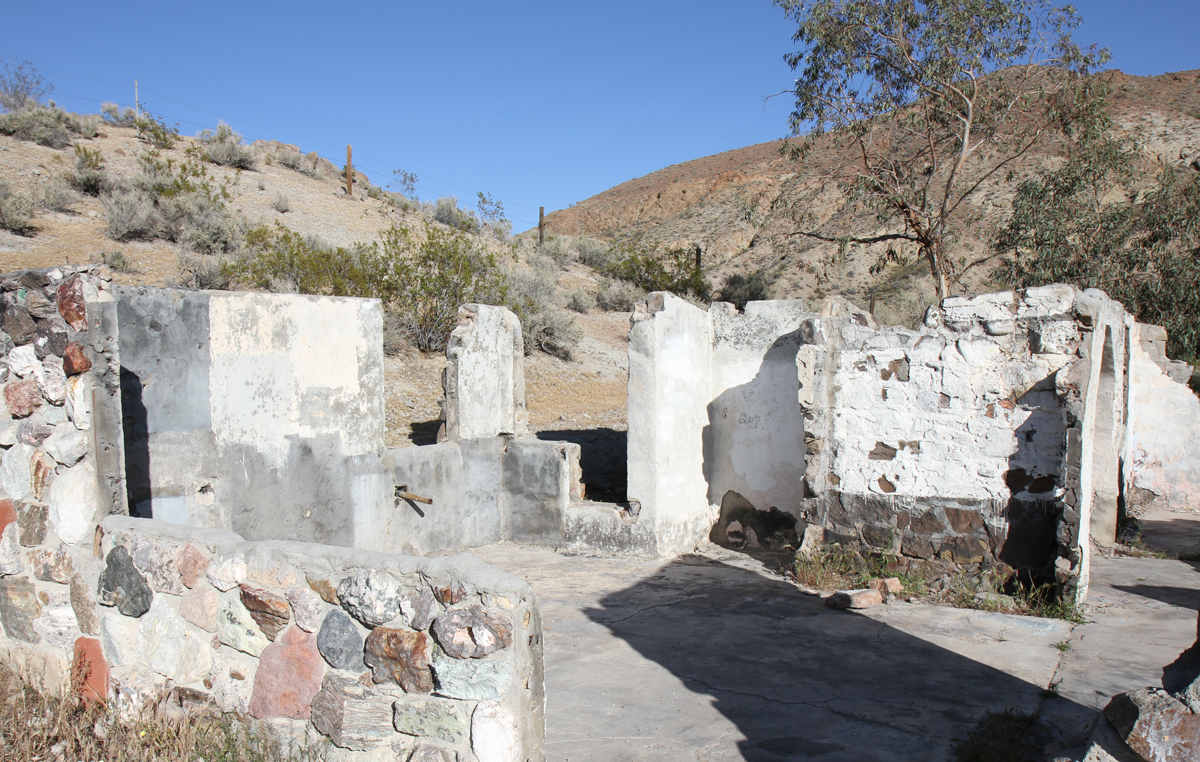
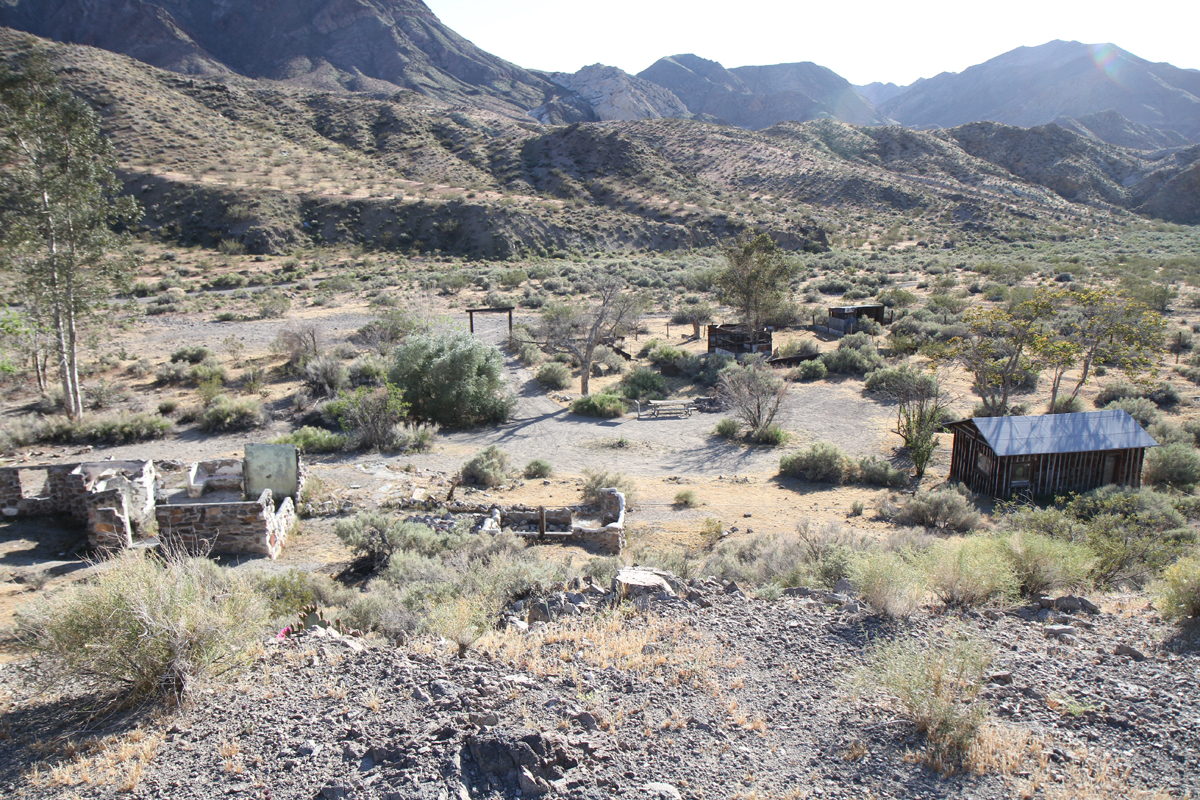
The remnants of Barker Ranch, as it is today. In 2009, a fire burnt down the majority of the building. However, the rock walls still partially remain, including the exact spot where Charles Manson was captured. The fire was reportedly accidental, when travelers passing through knocked over a grill. However, like so many things related to the Manson Family, this too has been called into question by some who believe it was intentional. In spite of the fire, it’s still fairly easy to identify each room in the remains of the ranch.
LOCATION: Just off of Goler Wash Rd., Death Valley National Park, Panamint, CA 93592 (easiest access is via Ballarat, CA, GPS coordinates: 35°51′34.57″N 117°5′18.76″W)
A closer look at the ranch, which was an extremely small building.
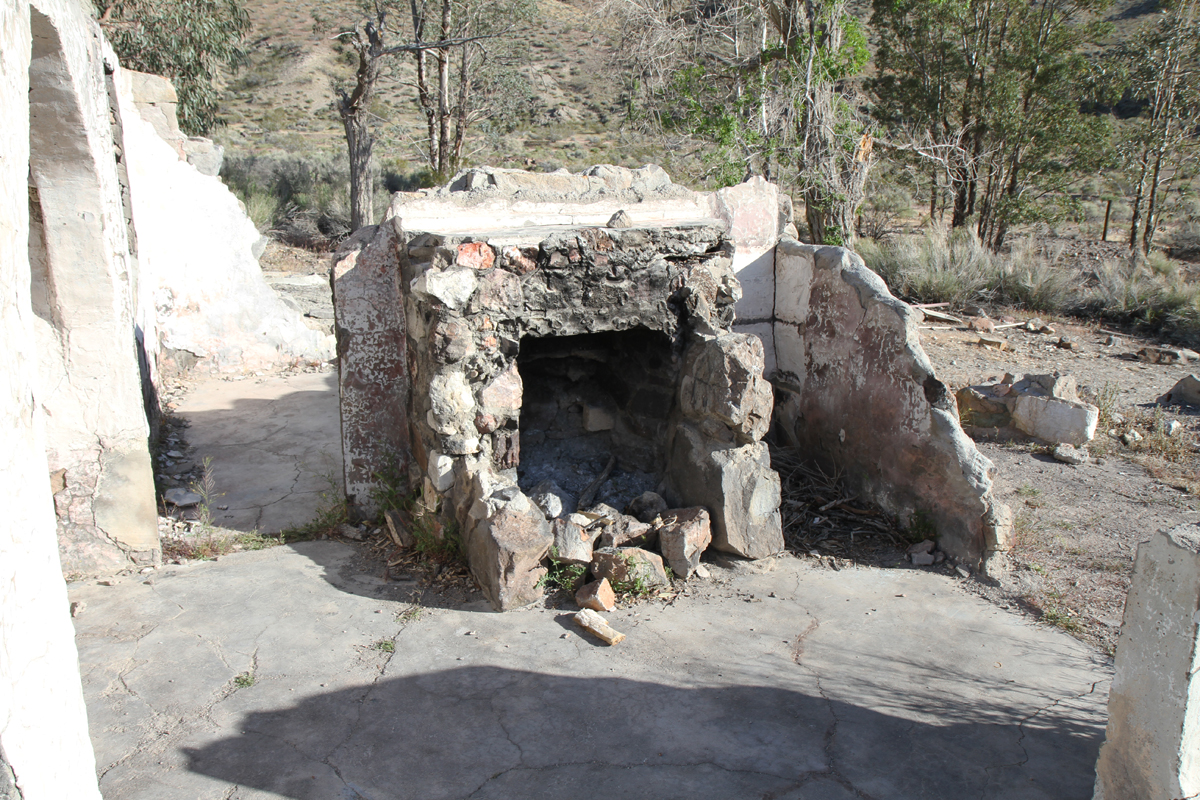
The fireplace, with a bedroom located behind it.
A seating area for eating.
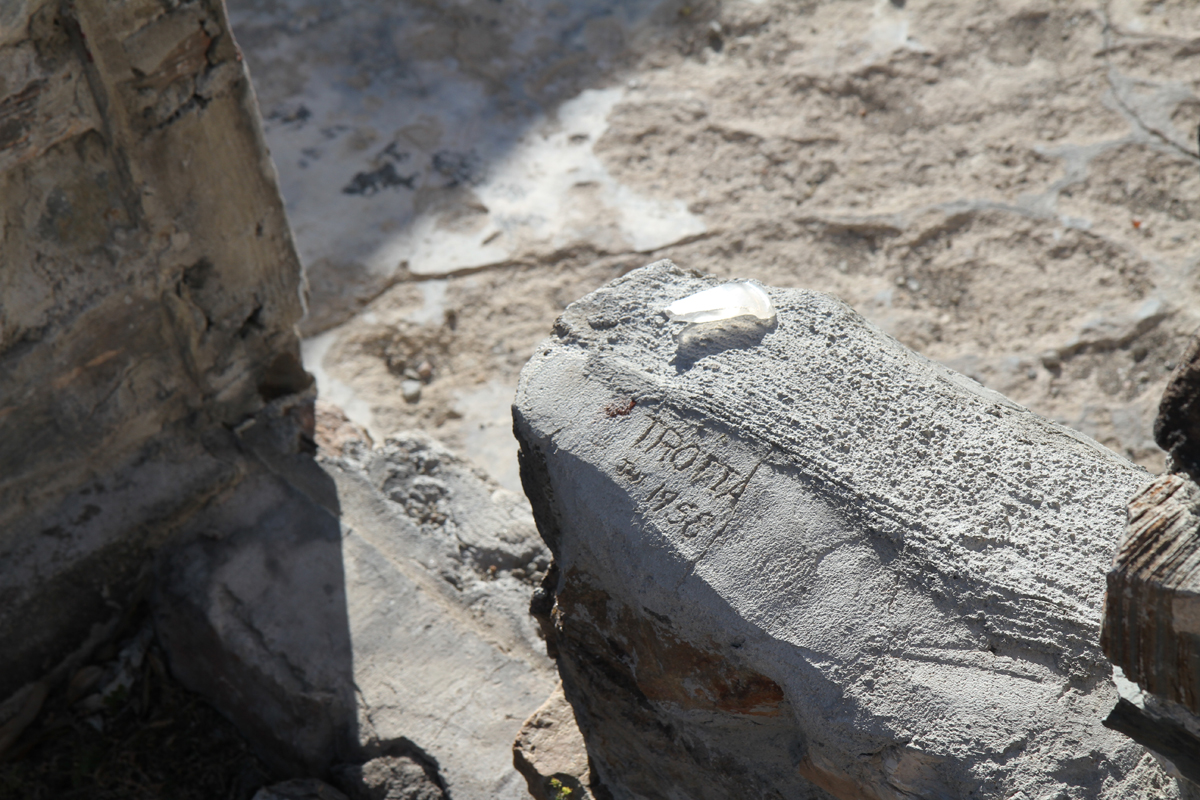
A spot where someone carved their name, circa 1958.
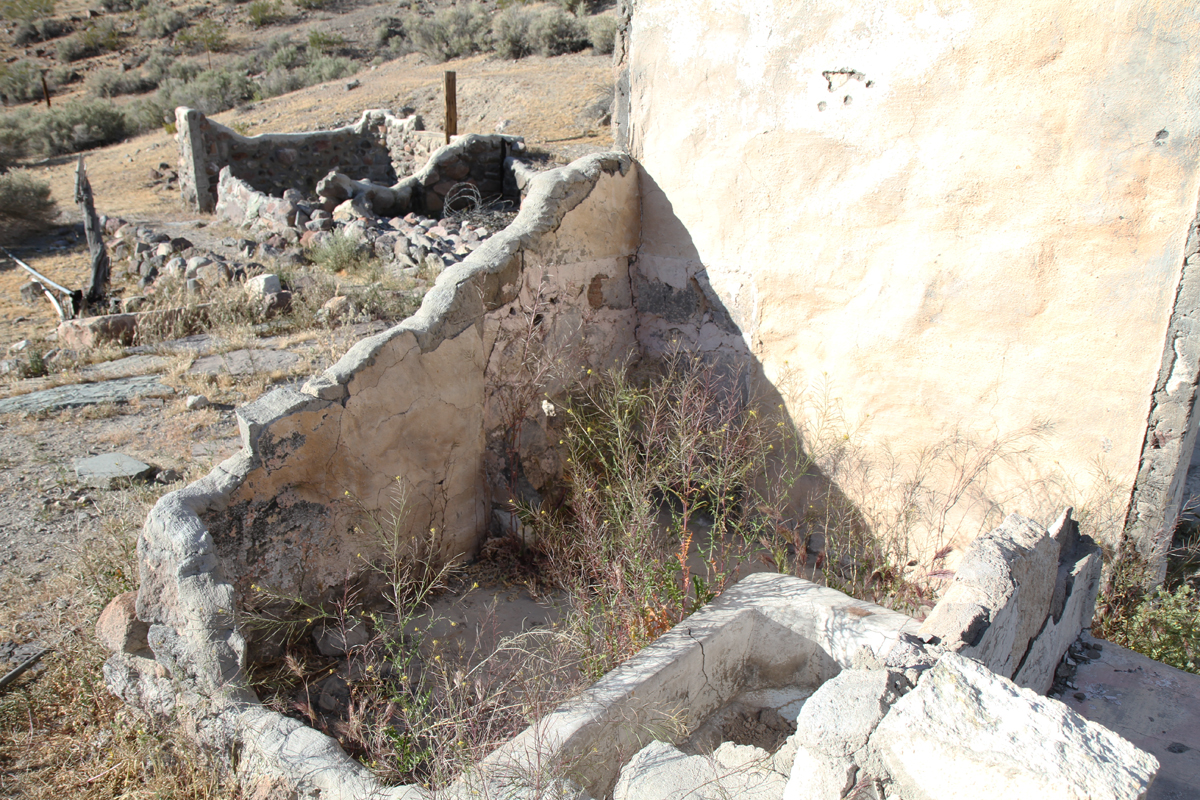
The bathroom, where Charles Manson was captured. The discoloration to the right is where the bathroom sink was located. Manson spent his last moments as a free man hidden in a cabinet beneath it, in a space so small the arresting officer claimed he would’ve never even thought to look inside of it, if not for a piece of Manson’s hair sticking out. Before he could open the cabinet door up, Manson opened it himself and crawled out and surrendered. The arresting officer was not aware at the time of the magnitude of his capture. Most of the Family was arrested on two separate raids of the ranch, on suspicion of vandalism to some nearby government-owned construction vehicles. Charles Manson eluded capture on the first raid, but was captured on the second raid. It was only during their holding in Inyo County that the Family’s connection to the Los Angeles murders was initially pieced together.
Another angle of the spot where Charles Manson was captured, showing how truly tiny the space was. Surprisingly, the ranch fire did not destroy this part of the building and it’s still clearly identifiable today.
One of the outbuildings on Barker Ranch. Manson Family members Paul Watkins and Brooks Poston stayed in this building. It was Watkins and Poston who told prosecutor Vincent Bugliosi of the “Helter Skelter” motive. According to Watkins and Poston, the murders were intended to start a race war between the blacks and whites. The Manson Family would hide out underground in the desert until the blacks won the war, then they would return to rule over the blacks, who they believed would be incapable of running a society themselves. Bugliosi used “Helter Skelter” as the primary motive in his case against Charles Manson, Charles “Tex” Watson, Susan Atkins, Patricia Krenwinkel and Leslie Van Houten and the theory became widely popularized as the motive for the murders. However, this motive has been disputed over the years. Many claim the murders were done as a copycat act, in an effort to make Bobby Beausoleil, who was a friend of the Family, appear innocent on the charges of killing Gary Hinman. Others still claim it was done as to instill fear into society, as an act of retribution for all the times those in power had rejected or imposed punishments upon the Manson Family. There are many different motives debated and the truth will likely never be conclusively agreed upon.
A view from behind the ranch. The most famous photos of the ranch from 1969 are from this angle, with the Manson Family bus parked to the center right of the frame. The bus was eventually dismantled and destroyed.
A swimming pool at the ranch, where members of the Family swam.
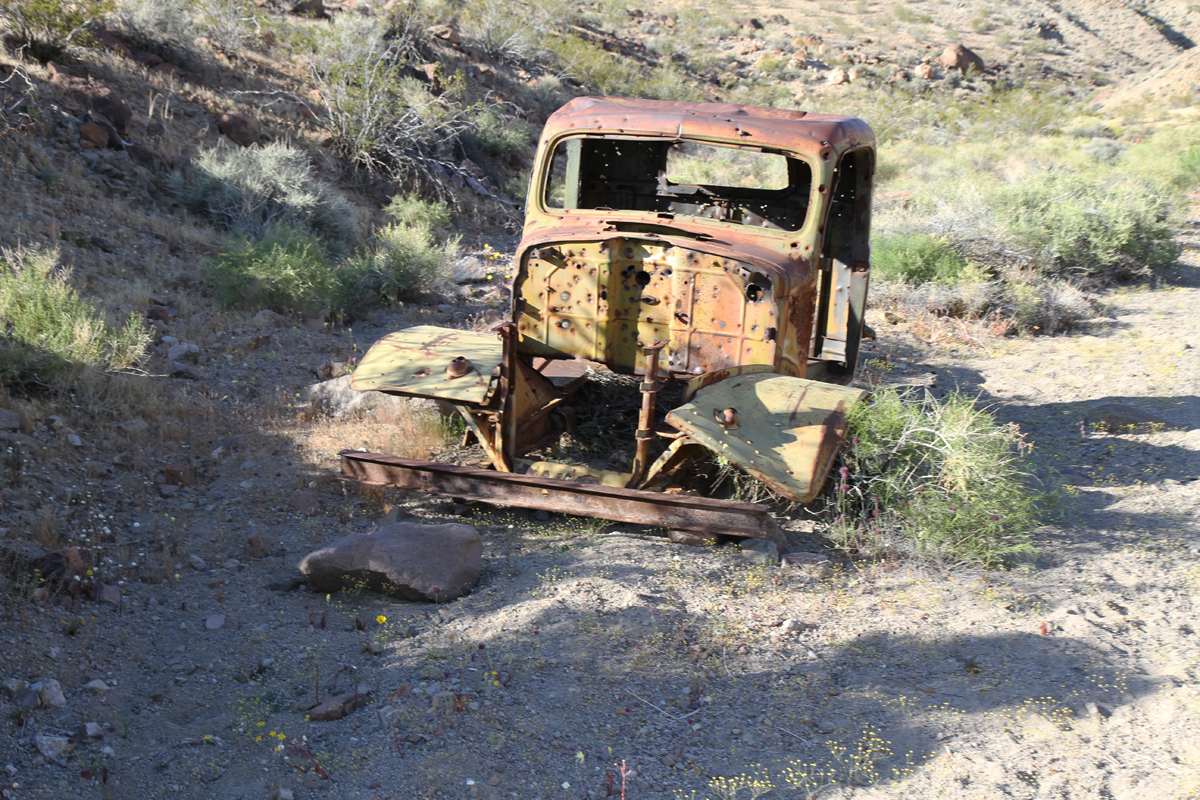
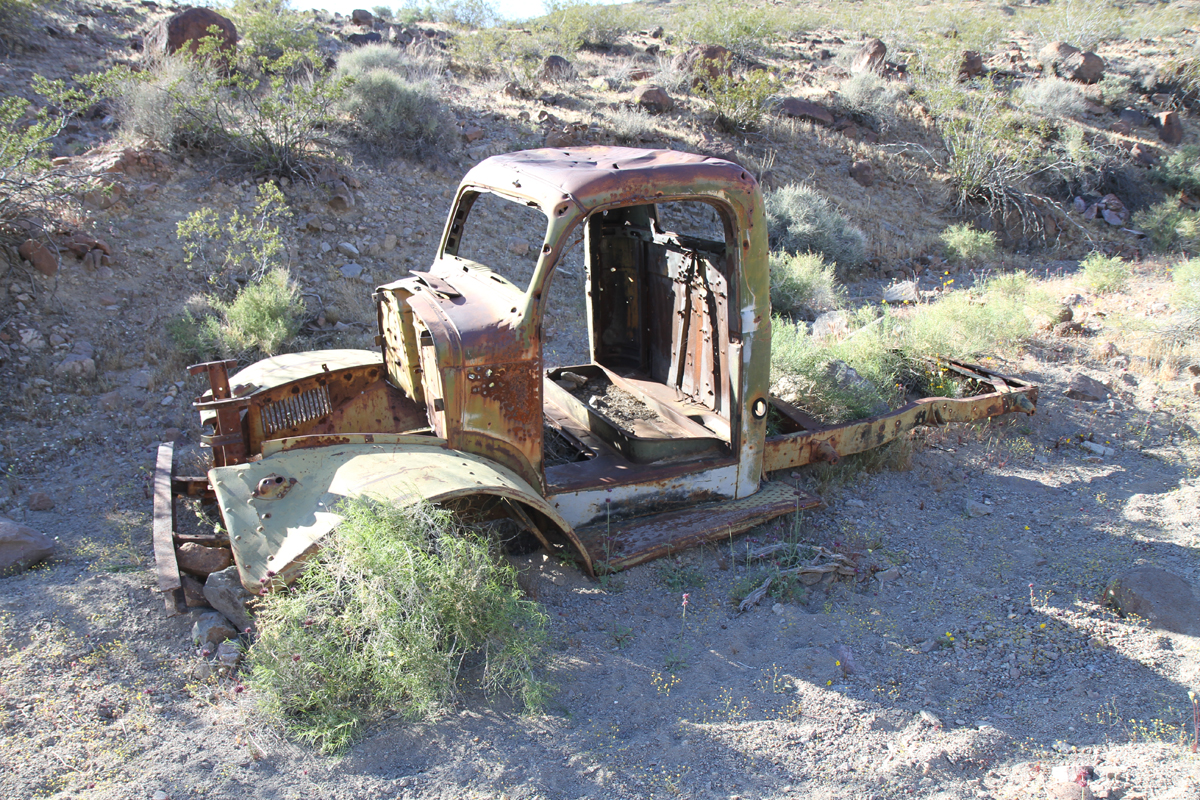
Many claim this is one of “Tex” Watson’s trucks, which is located behind the ranch. However, others dispute this as well. If you’re not familiar with the ranch, be careful in venturing back too far behind it, as it’s very easy to lose your bearings.
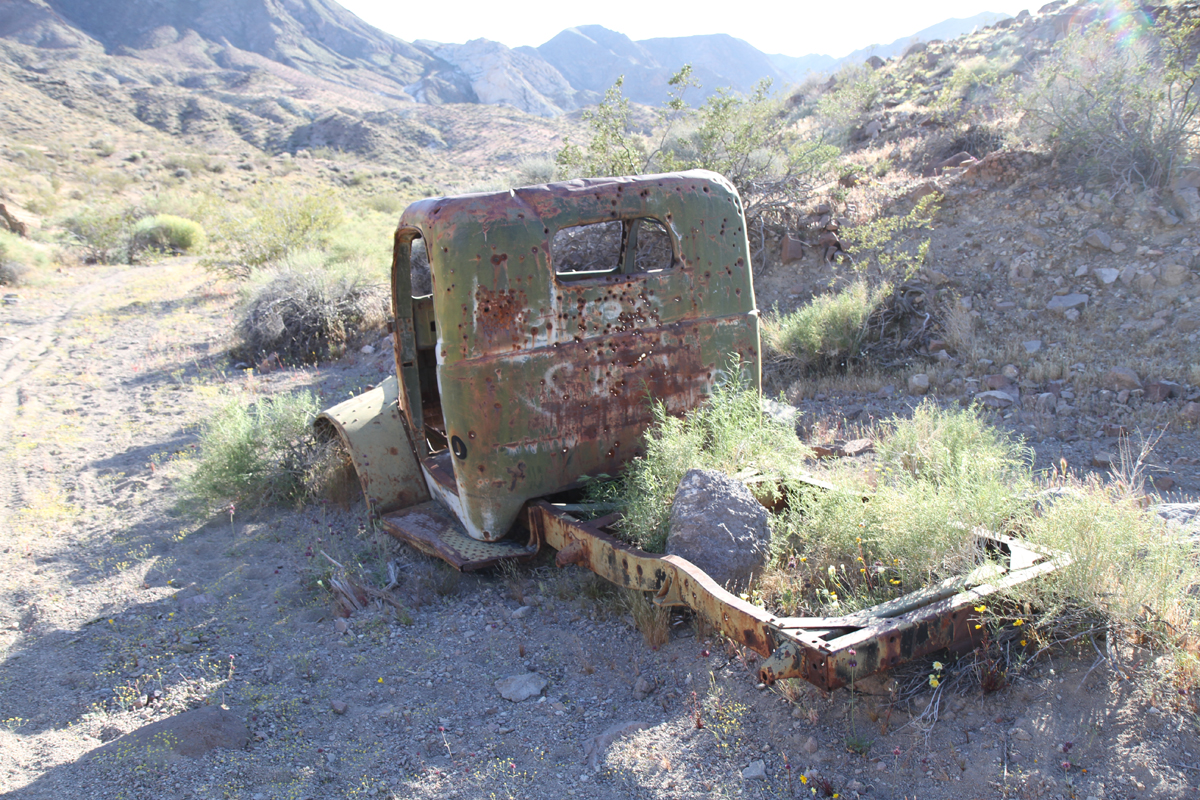
It’s difficult to make out through the rust and bullet holes, but the words “Helter Skelter” are written on the back of the truck.
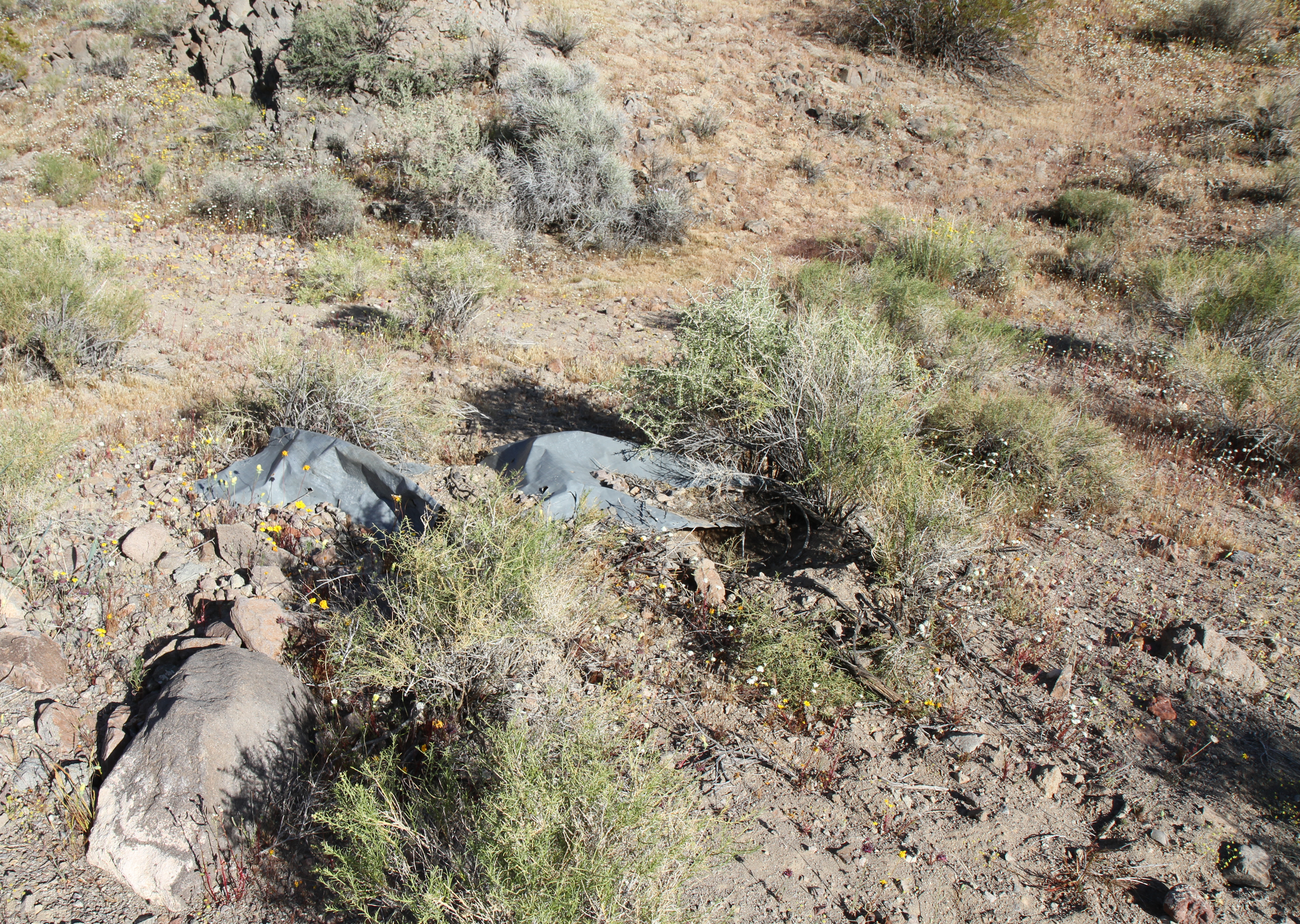
Behind the ranch is also where some of the women were captured and arrested. The women were hiding in a hole in the ground, which was covered with some loose debris. This photo is of that approximate area, but perhaps not exact.
Another view behind Barker Ranch. From here you can get a better idea of just how small the building was.
A look at the nearby Myers Ranch, as seen from Barker Ranch. Members of the Manson Family also stayed at Myers Ranch. Today, it actually remains a private, occupied residence, unavailable for public visitation.
Footage of some of the members of the Manson Family at Barker Ranch can be seen in the Robert Hendrickson documentary “Manson,” which was nominated for an Academy Award, as well as his sister documentary, “Inside the Manson Gang,” which is mostly comprised of unused footage from the first film.
Barker Ranch is one of the most desolate places in the United States and it’s easy to see how one might have felt they could escape the eyes of the law in such a remote place. Everything there is sun-baked, rusted or worn down. It’s a unique experience to visit, but clearly one that is not for everyone. We of course do not endorse any of the crimes committed by those that took shelter here. Our aim is to simply show a unique place in American history, as it appears today.
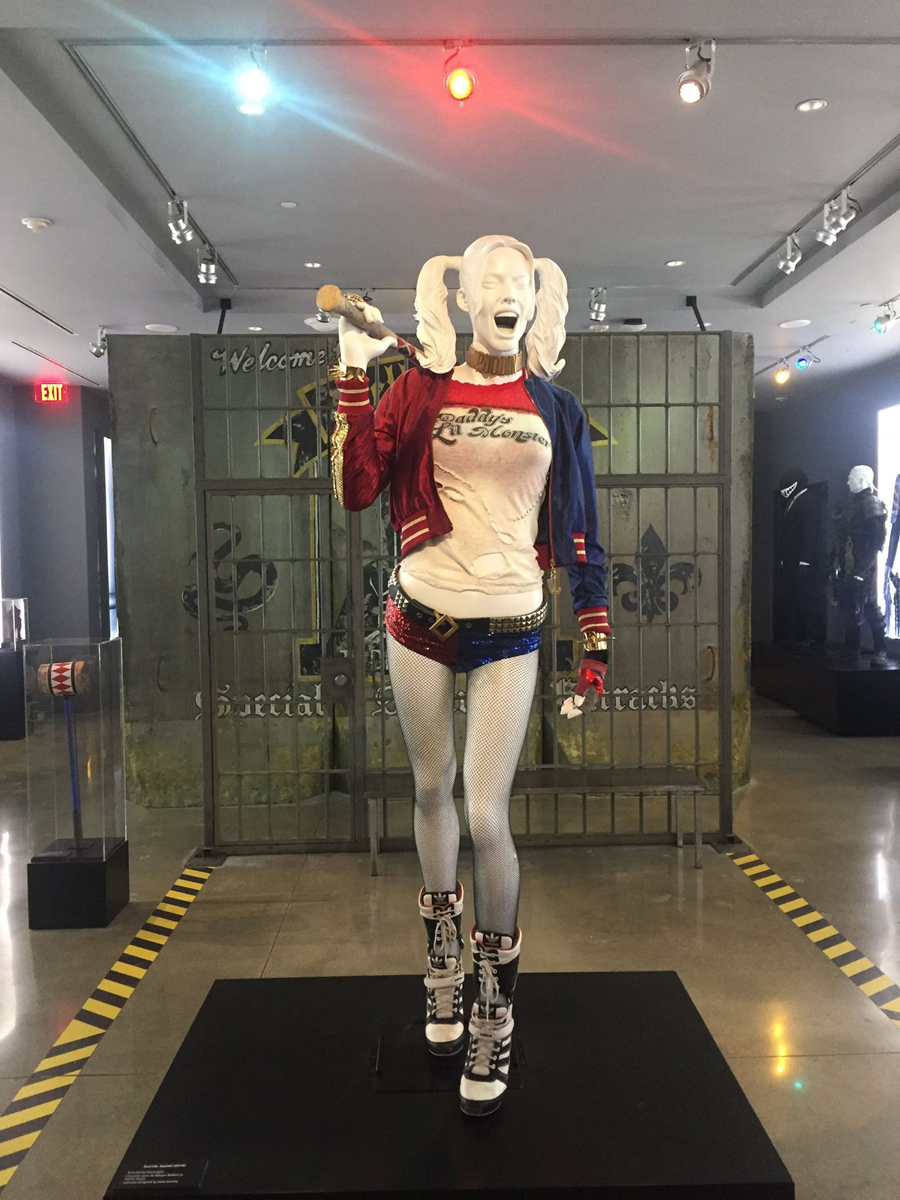
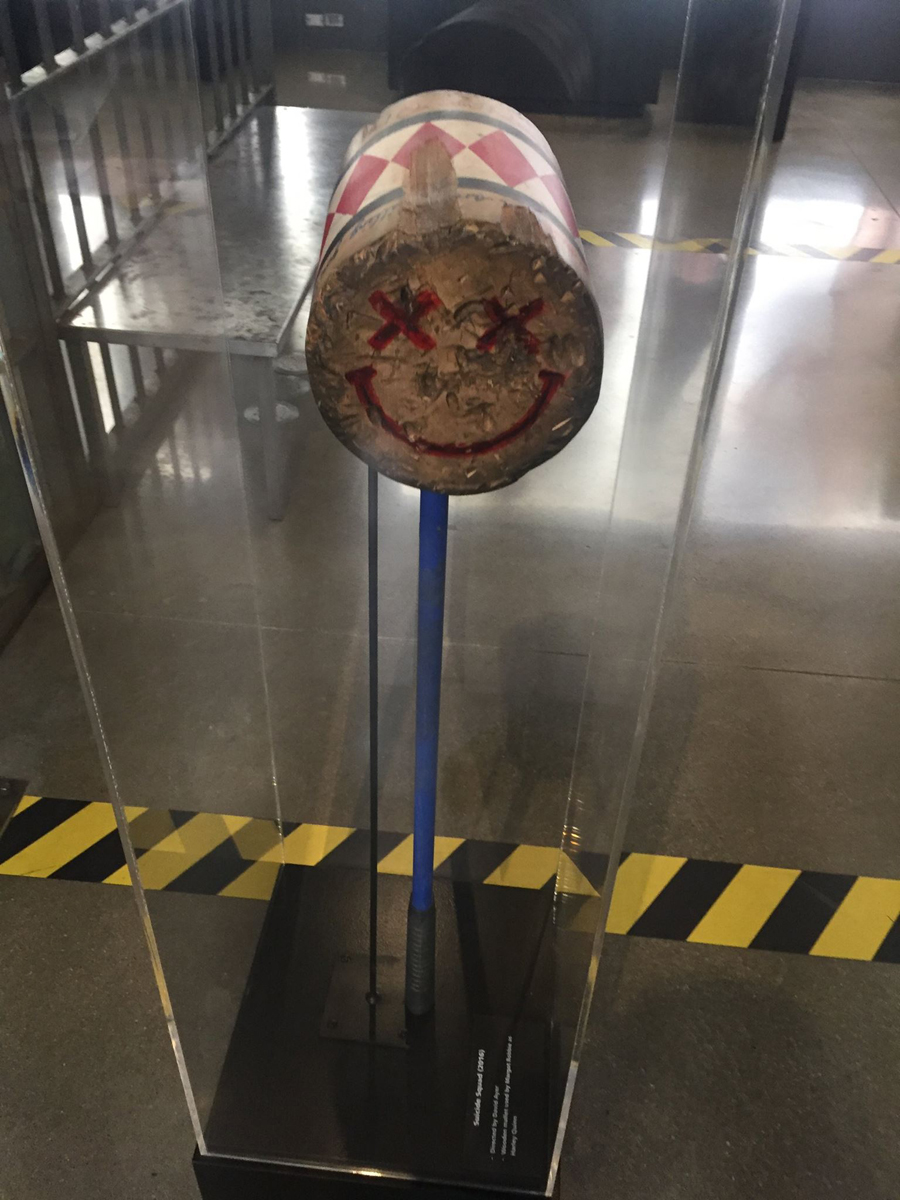
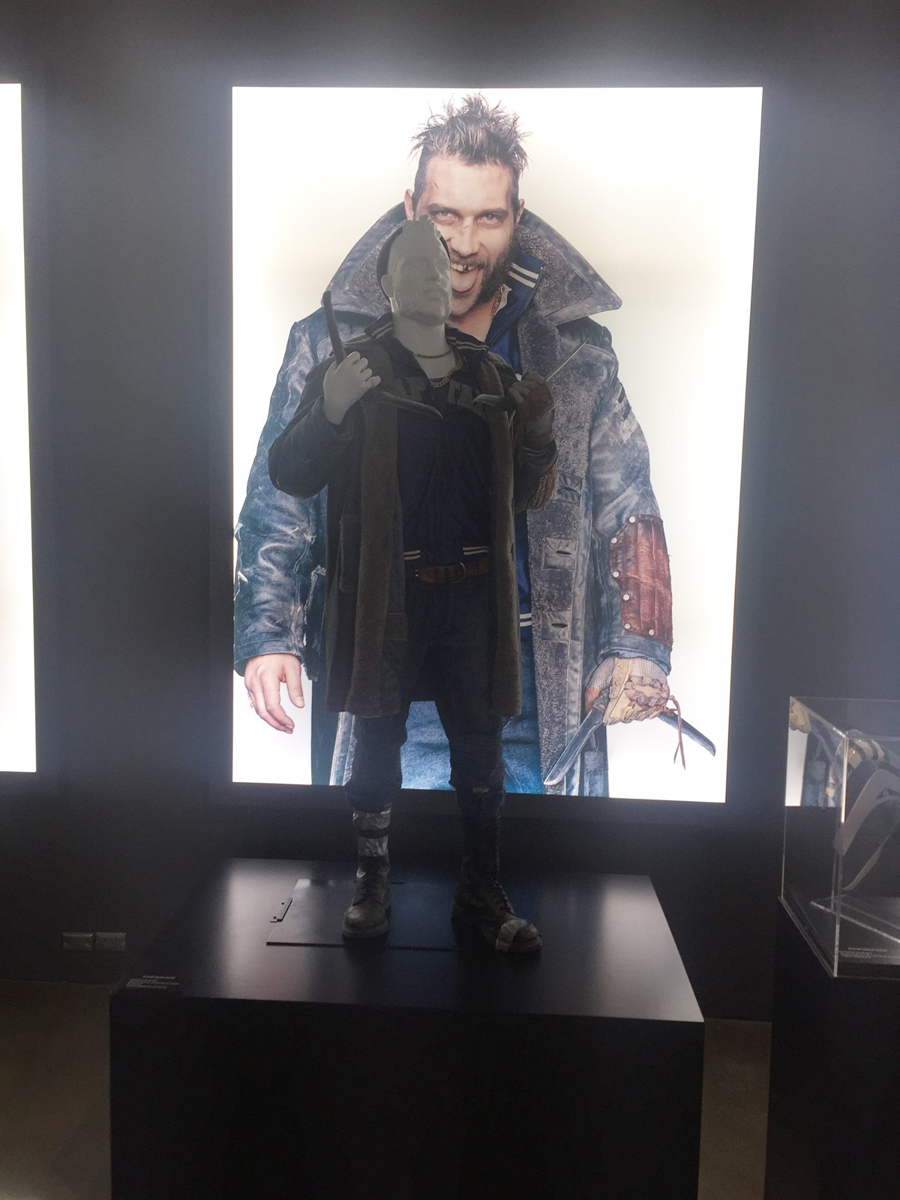
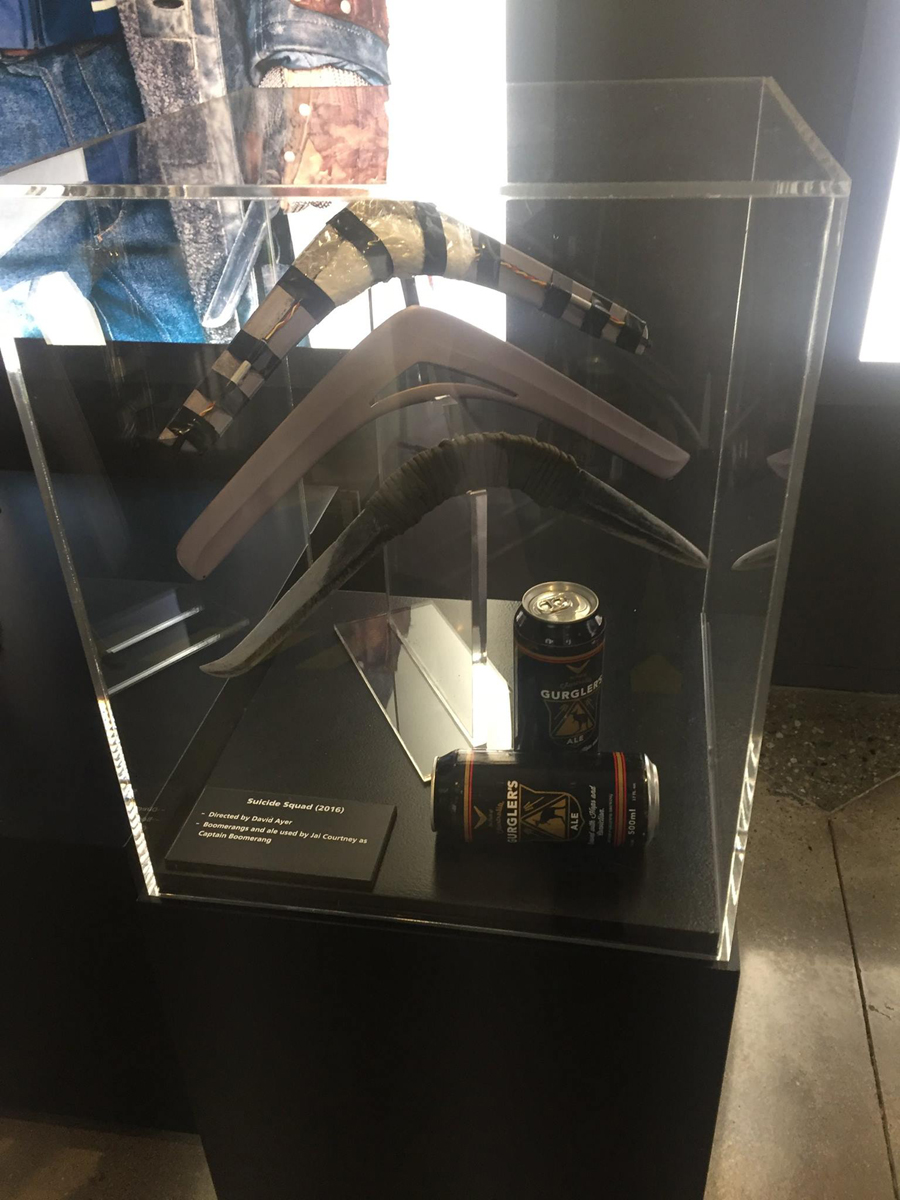
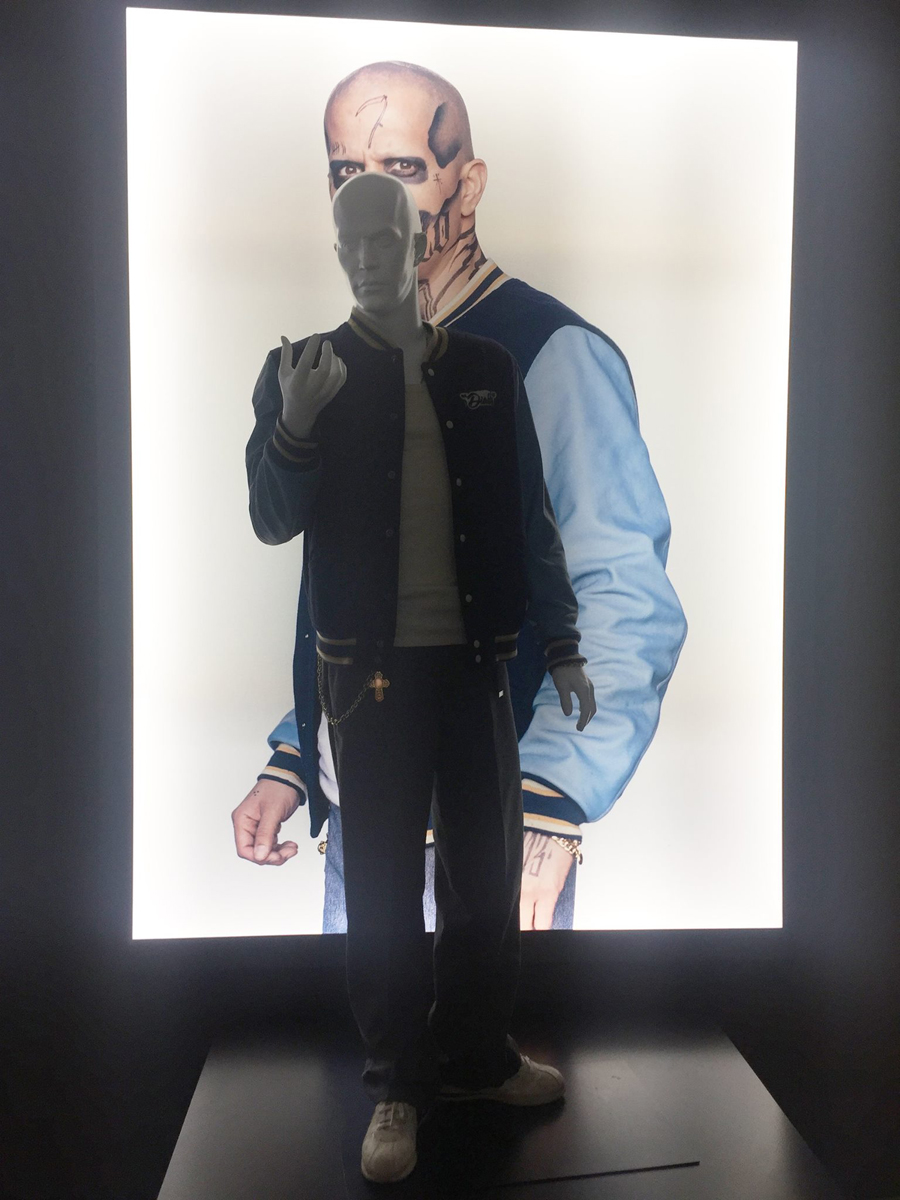
Rather than the usual film locations, for David Ayer’s 2016 anti-hero film “Suicide Squad,” which was mostly filmed around Toronto, Ontario, Canada, we’re instead going to cover some props and costumes from the film, which were on display as part of the Warner Bros. Studio tour.
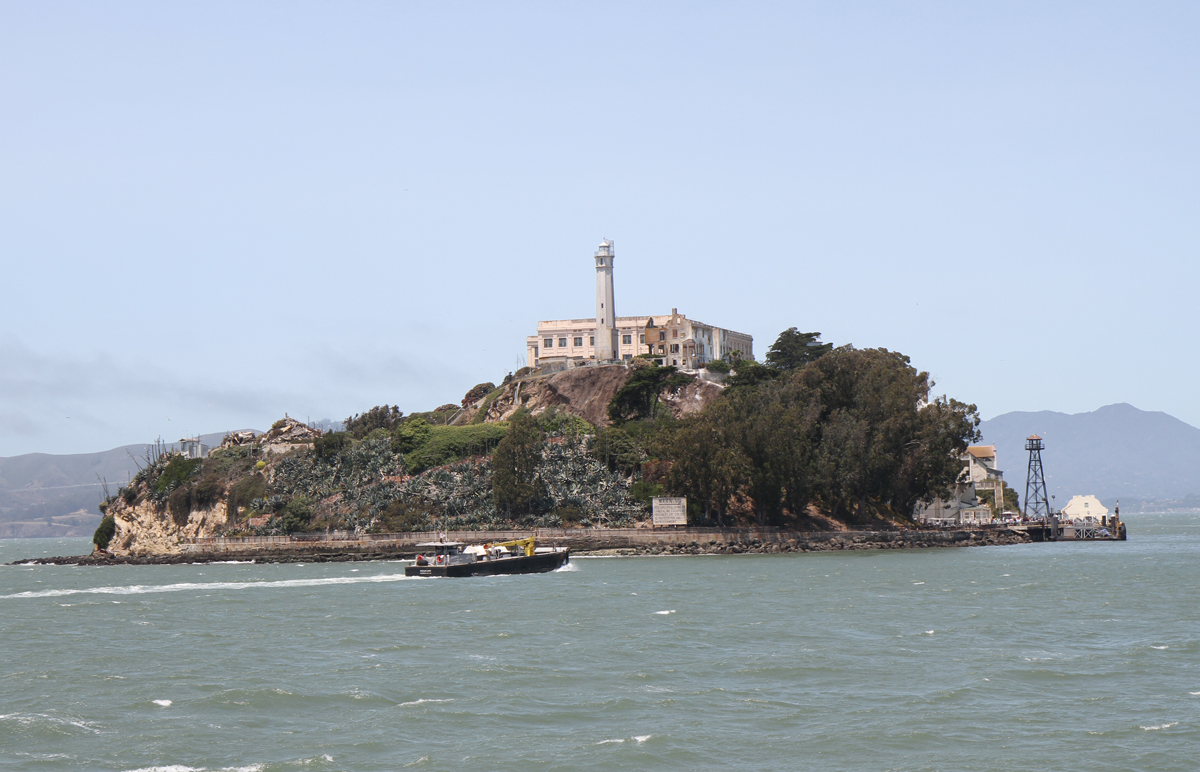
Sometimes a location itself overshadows any of the films that shot there, as is the case with Alcatraz Island. Located just over a mile offshore from San Francisco, the island is most well known for it’s decommissioned federal prison, which operated from 1934 until 1963. During it’s 29 years of activity, the prison was known for housing “the worst of the worst” criminals. The list included Al Capone, Robert Franklin Stroud (the “Birdman of Alcatraz”), “Machine Gun” Kelly, James “Whitey” Bulger and Alvin “Creepy” Karpis, amongst others. The penitentiary famously claimed that no prisoner successfully escaped. Due to the high operational costs, as well as salt water erosion to the buildings, the prison was shut down in 1963. Today, the island is operated by the National Parks Services and public tours are available.
The prison island has been seen in many films, such as “The Rock,” “Murder in the First,” “Escape from Alcatraz,” “Birdman of Alcatraz,” “X-Men: The Last Stand” and many more. Here we’ll take a closer look at the notorious island.
LOCATION: Alcatraz Island, San Francisco, CA 94133
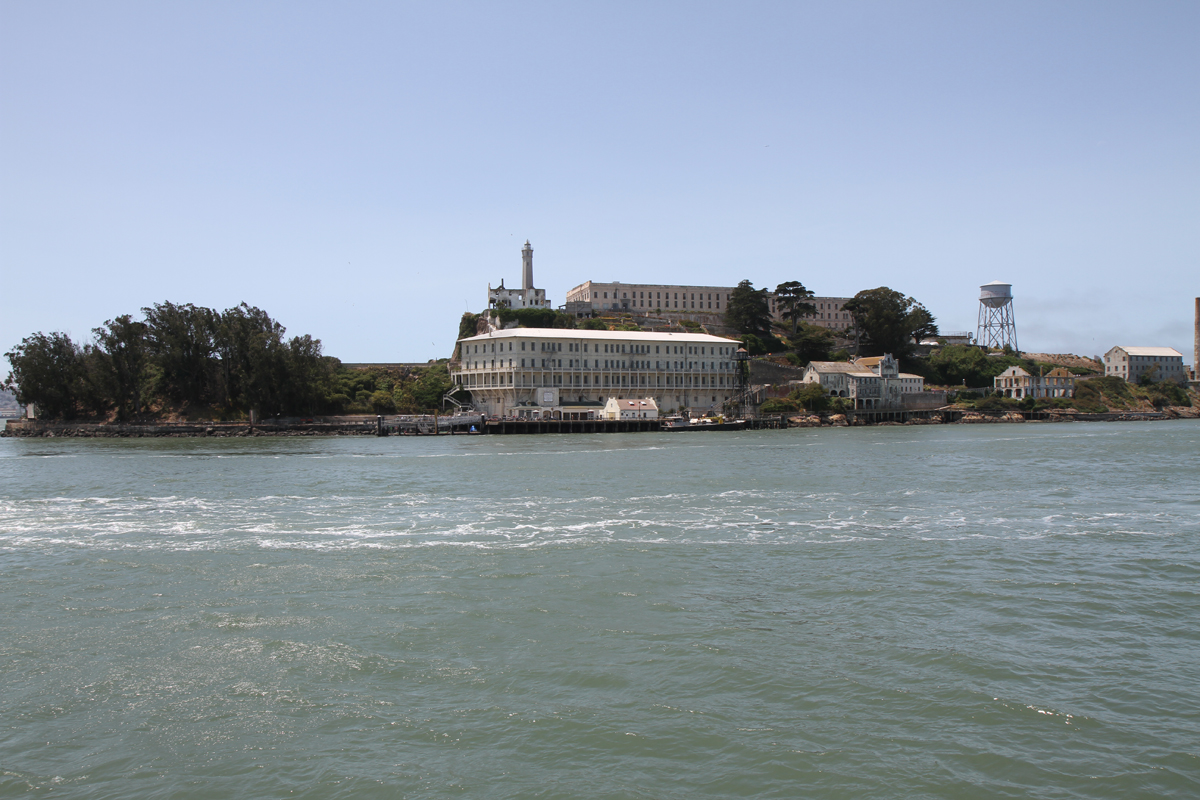
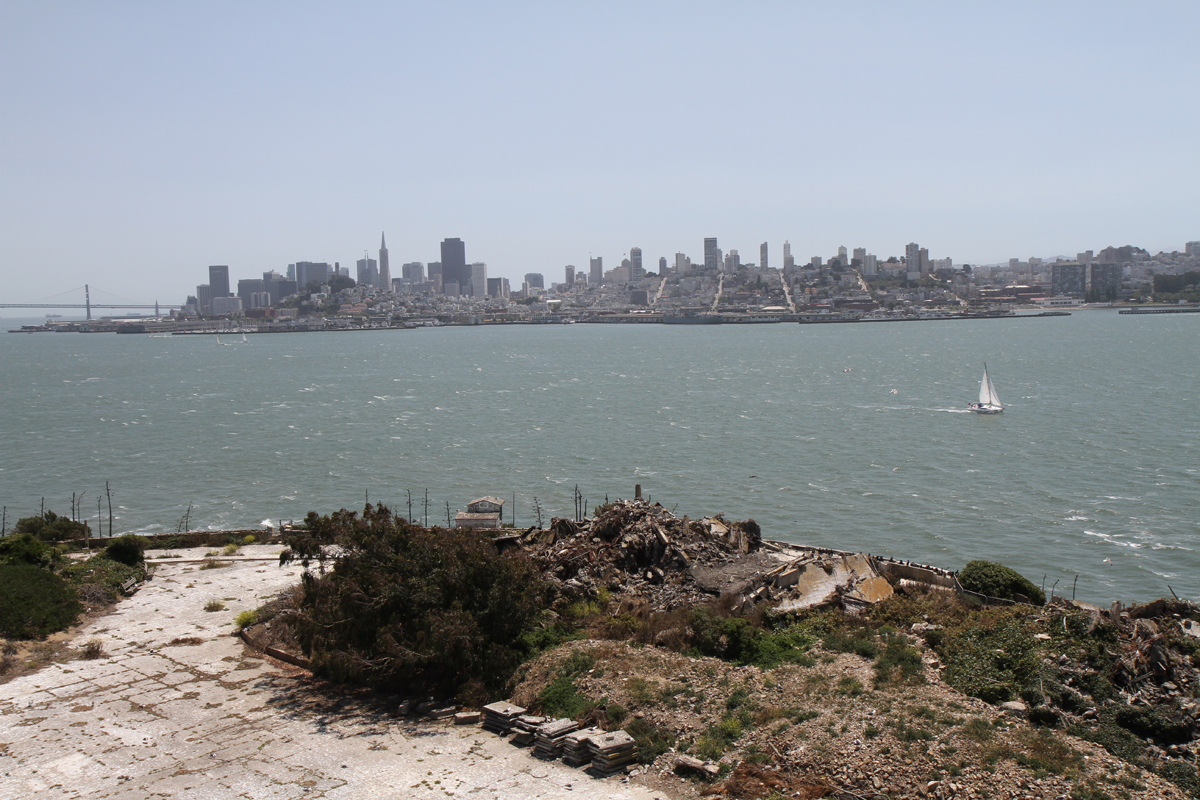
The island view from San Francisco.
Island view from the opposite side, where visitors dock.
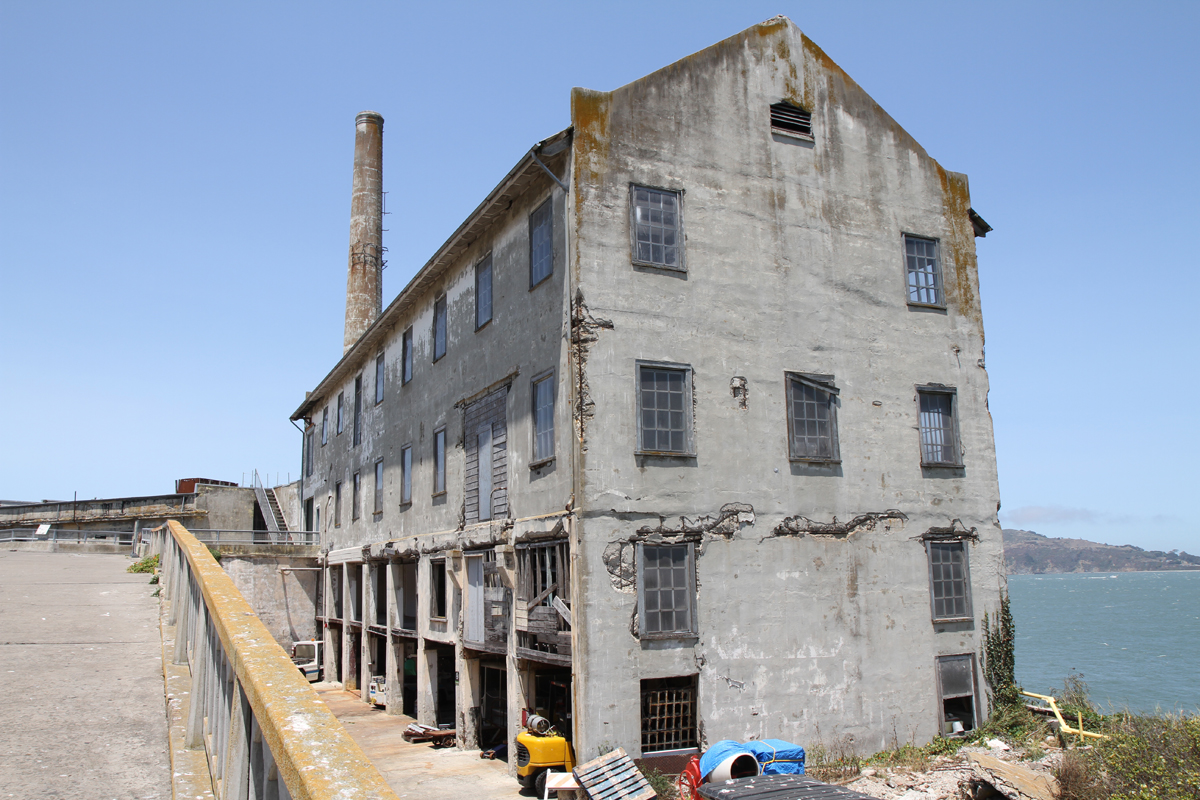
Utility house and power plant chimney.
A guard tower.
The water tower, which still has a message from a Native American occupation of the island, which lasted from 1969 to 1971.
The lighthouse tower.
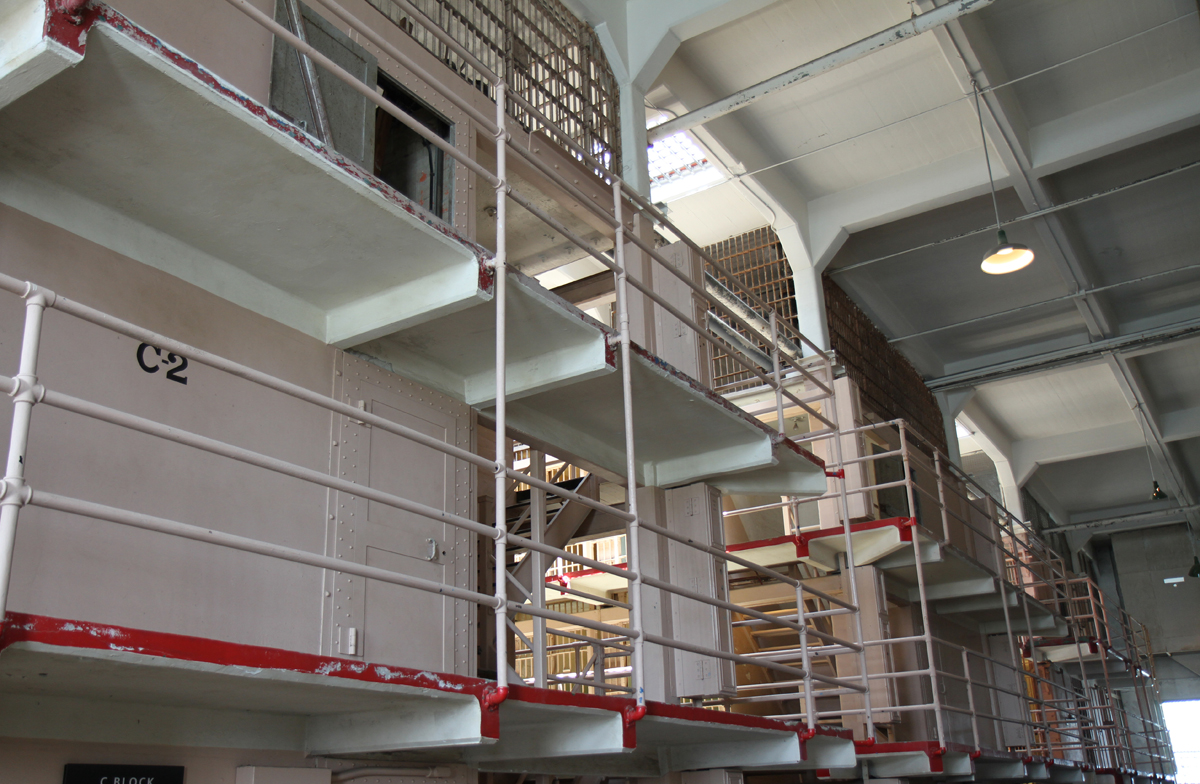
Some of the prison cell blocks.
One of the typical prison cells.
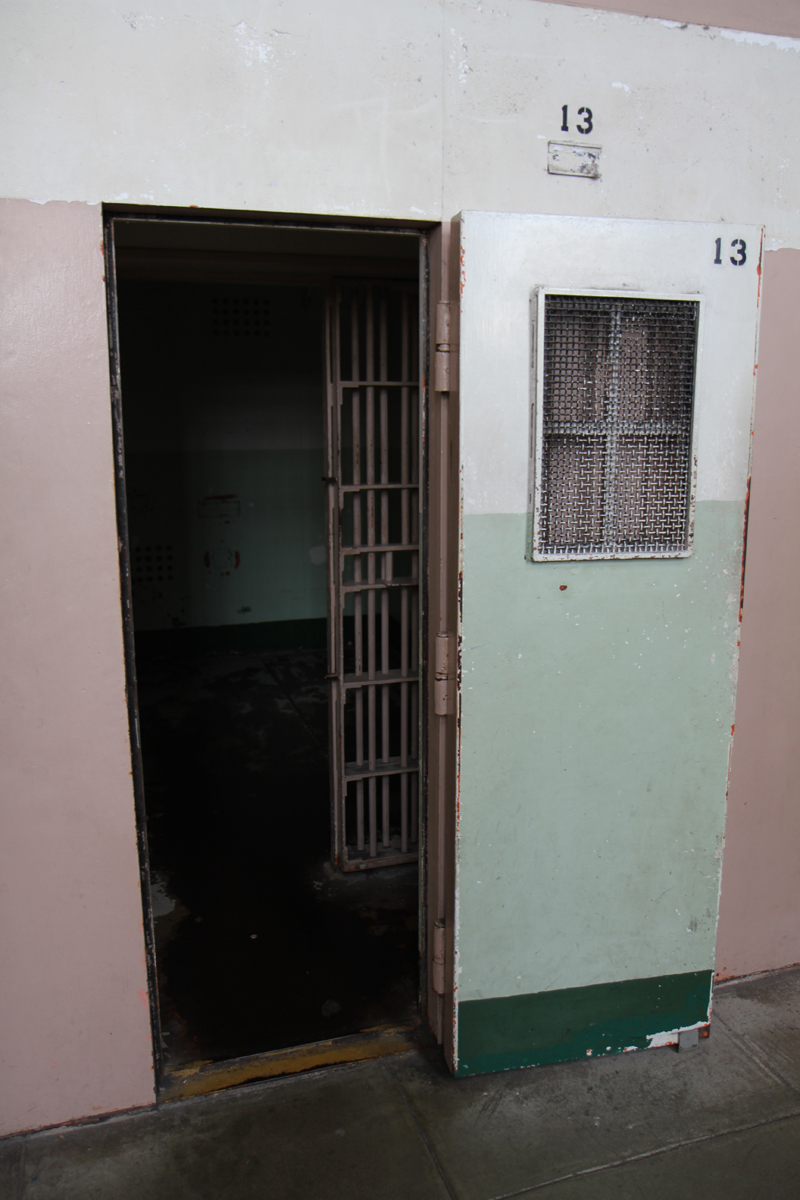
A solitary confinement cell.
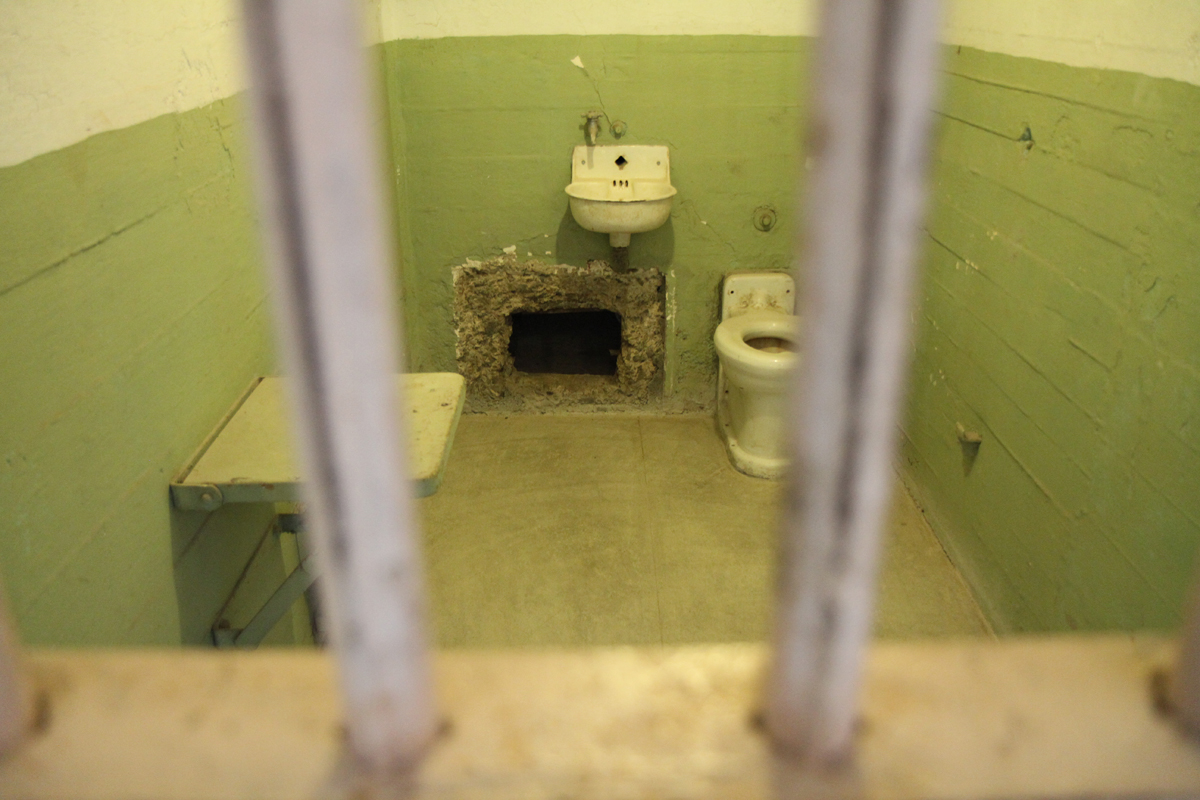
A cell where the most famous escape attempt was made, by widening a vent at the bottom of the cell.
The prison yard.
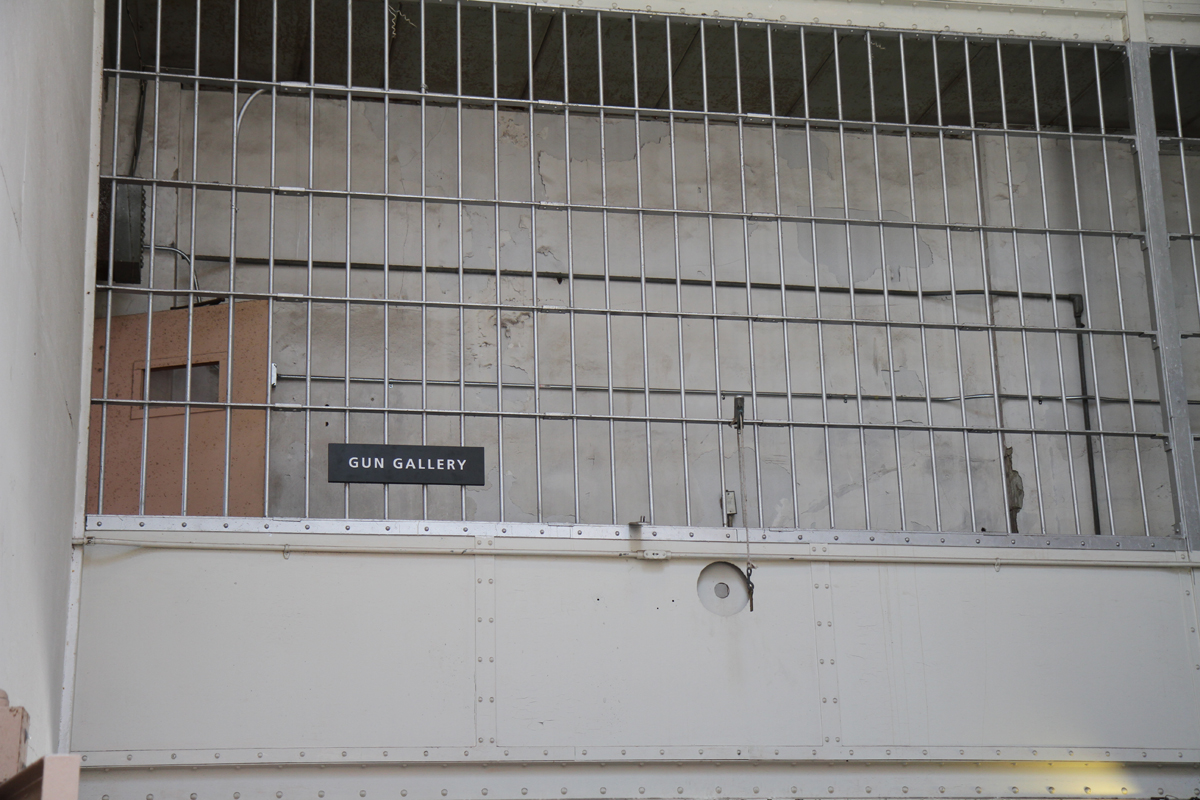
The gun gallery, where guards watched down over the prisoners. During one daring escape attempt, prisoners climbed up into this area and attacked the guards.
While once used a movie set, Spahn Ranch is mostly remembered for it’s notorious connections with the Manson Family during the late 1960s. It’s a unique and significant part of Californian and American history and we wanted to show it as it is today.
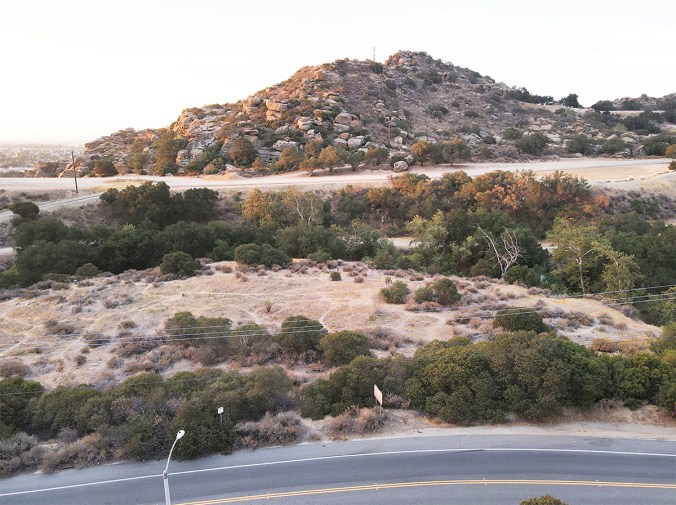
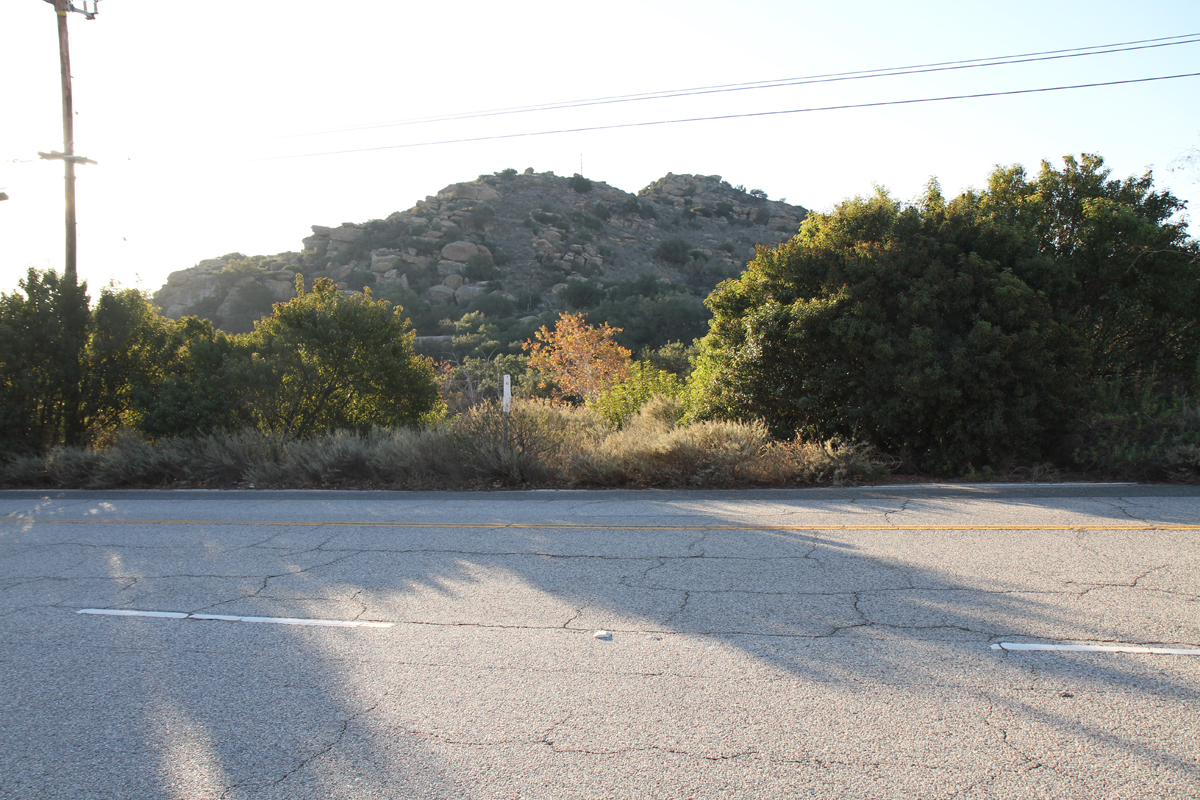
Located in Chatsworth, CA, about 30 miles north of Los Angeles near Simi Valley, you’ll find nothing more than empty land there these days. The property is currently part of Santa Susana State Historic Park, which is owned by the state of California and open to the public. Today, many joggers and bicyclists enjoy the scenic pass. This is what the land currently looks like.
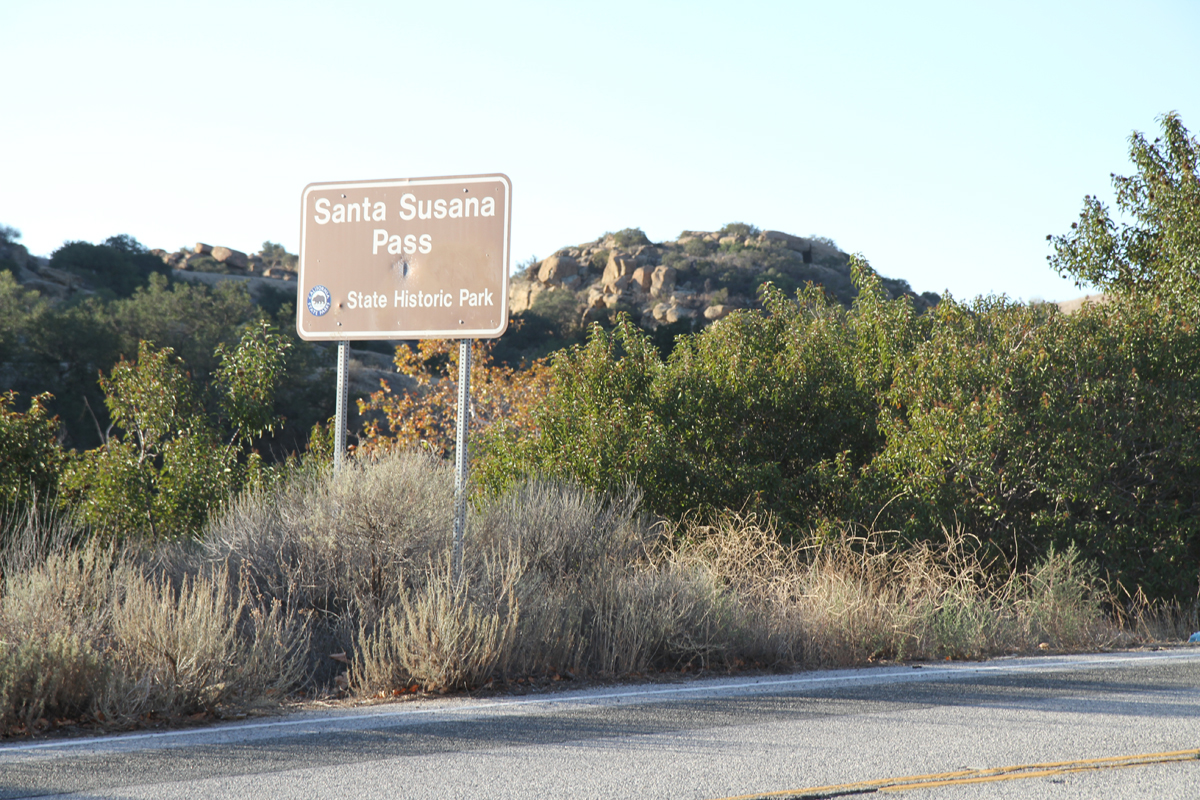
Here is the same area, as seen from Santa Susana Pass.
The property was once located at 1200 Santa Susana Pass Road, but that address has long since been retired. Today, the location is most commonly identified by the large, rocky hill in the background. There is a private road, which starts at a nearby gated entrance and runs behind the former ranch, along the foot of the rocky hill, which is not state property or open to the public. That land belongs to the Rocky Peak Church, which also owns the land across the street. As long as you do not go on the private road or up the rocky hill, the rest of the land, which includes the full area in which the ranch stood, is part of the state park and you are welcome to access it. There is additional land down a steep embankment, which is not visible from the road, which is also part of the state park.
Another way to quickly spot the land is the Santa Susana State Park sign, which is located almost immediately in front of the former ranch. If you’re looking to get there by using an address, the closest would be that of the Rocky Peak Church in Chatsworth.
LOCATION: *Formerly 1200 Santa Susana Pass Rd, Chatsworth, CA 91311 (now defunct), nearest present address is 22601 Santa Susana Pass Rd, Chatsworth, CA 91311
If you visit the park, be sure to avoid parking anywhere on Santa Susana Pass, which has moderate to frequent traffic and does not allow parking. Instead, parking is available nearby on Iverson Road. You’ll see a large parking lot on the left on Iverson, which is property of the church and not available for public use. Parking on the right shoulder of Iverson Road, however, is permissible and available to the public.
Before we get into what can be seen there today, we’ll first discuss the history of the land. Santa Susana Pass began as a transportation trail between the settlements of Los Angeles and Santa Barbara. By the 1860s, the trail had been expanded for the use of stage coaches. In 1897, a settler by the name of James Williams staked his claim to a section the land, part of which would eventually become Spahn Ranch. Silent film actor William S. Hart later bought the land and started using it to stable his horses, as well as using the ranch for movie productions. In 1948, the land was purchased by George Spahn. Spahn looked to continue to utilize the property as a movie and TV location and further developed the buildings, adding prop storefront signs, such as the “Longhorn Saloon” and the “Rock City Cafe.” Television series such as “Bonanza,” “The Lone Ranger” and “Zorro” all filmed at the ranch.
With the steady decline of the western genre, by the late 1960s, productions at the ranch had likewise diminished, with mostly low-budget, exploitation flicks filming there. Spahn began using the property primarily for families to take horseback rides around the nearby trails. He also staffed a ranch crew and a variety of mechanics for repairing cars (which included future Manson Family member Steve “Clem” Grogan). By 1967, the ranch had fallen into a state of disrepair. Manson Family member Sandra Good knew some of the mechanics at Spahn Ranch and would occasionally visit the property, eventually bringing Charles Manson with her during one of these visits. Manson immediately liked the site, due to it’s isolation, while still remaining adjacent to the greater population of Los Angeles County (the land is much closer to the freeways than you might expect).
By the time the Manson Family arrived at the ranch, George Spahn was 80 years old and blind. With his property in disrepair, Manson offered to have his group maintain the ranch, in exchange for free living quarters, which Spahn accepted. The Family then stole cars and would convert them into dune buggies, intending to take them to their other hideaway, Barker Ranch in Death Valley. Some of the cars are actually still located near Spahn Ranch, a bit further down Santa Susana Pass, where they were pushed down a steep canyon after they’d been stripped for materials.
In the summer of 1969, things reached a fever pitch at Spahn Ranch. The first significant step towards the Tate / LaBianca murders came when Manson Family member Charles “Tex” Watson arranged a drug deal with a pimp in Hollywood, only to rip him off. The pimp, known as Lotsapapa, called Spahn Ranch looking for “Tex,” but instead was put on the phone with Charles Manson, who was unaware of the situation up to that point. Lotsapapa threatened the Family and Watson’s girlfriend, which prompted Charles Manson to visit him in Hollywood, in an attempt to cool the situation. However, the situation instead escalated at the meeting, with Manson ultimately shooting Lotsapapa. Although Lotsapapa survived, Manson believed at the time that he had murdered him. After seeing news on the TV of an unrelated murder of a member of the Black Panther party, Manson mistakenly believed this to be Lotsapapa. Expecting retaliation from the Black Panthers, the Manson Family entered into a heightened state of paranoia and prepared for war at Spahn Ranch.
The next blow came when Bobby Beasoleil, a friend of the Family, murdered Gary Hinman. Bobby had sold some drugs to local bikers, who in turn claimed the drugs were bad and demanded their money back. Bobby had gotten the drugs from Gary Hinman, who insisted the bikers were lying and the drugs were good. With Bobby demanding money and Hinman refusing, the situation escalated, with members of the Family holding Hinman hostage in his house. Charles Manson paid a visit and threatened Hinman, slicing him with a sword. With other members of the Family present, Bobby Beasoleil eventually murdered Hinman. Soon after, Beasoleil was captured and arrested, which sent an already volatile Manson into further anger.
Just after the Beasoleil arrest, Manson Family members Sandra Good and Mary Brunner were also arrested for credit card fraud, after attempting to use stolen credit cards at a grocery store. With dead bodies accumulating, members of the Manson Family in jail and Manson himself believing he was a murderer and that others would soon come for them, be it the Panthers, police or others, Manson became enraged and ordered the first night of murders, which became the Tate murders. The women had suggested the murders be done to look like a copycat of the Hinman murder. Believing the women would not successfully carry out plans by themselves, Manson ordered Charles “Tex” Watson to lead them, insisting Watson owed him for Lotsapopa. It was at Spahn Ranch the murders were ordered and it was there the killers returned after the slayings.
Unhappy with the first night of murders, which Manson felt were not well-executed, he ordered a second night of random killings and went out himself, to show the others how its done. This lead to the LaBianca murders, although after he tied up the victims himself, Manson would leave back to Spahn Ranch, ordering the others to handle the killings instead.
Soon after, Spahn Ranch was raided by police, but not for the murders, which the police hadn’t yet connected to the Family. Instead it was for a car theft ring. Manson and others were all arrested at Spahn Ranch. However, all charges were later dropped after a clerical error on the date on the police warrant invalidated their raid and arrests. The Family then fled to Barker Ranch in Death Valley, where they were ultimately captured.
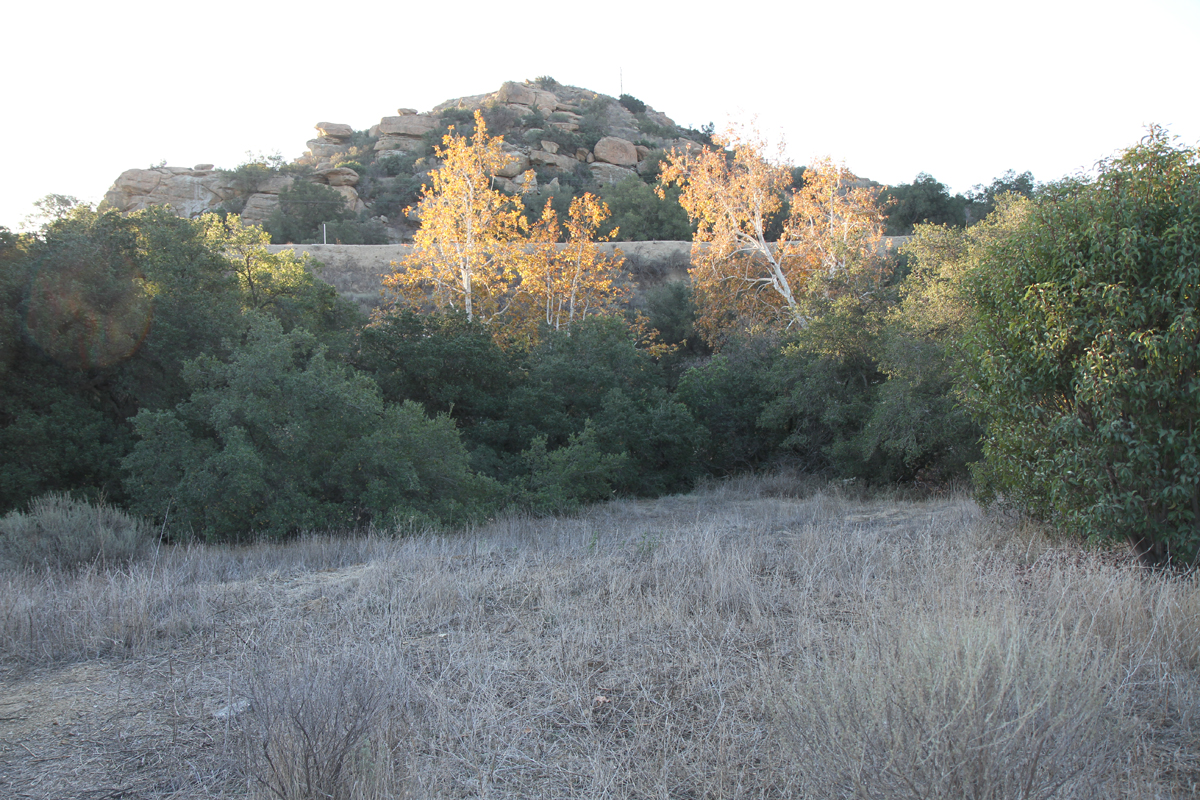
From here, we will cover a bit of what can be seen at the land today. First up is a view of the land where the ranch buildings used to stand. The entire area is much smaller than most people might expect. You can see the tree tops here, stemming up from the lower embankment, behind where the buildings once stood.
Here is a reverse view towards the street of Santa Susana Pass. The view of the road is obscured by overgrowth. It was towards the left where Manson Family member Susan Atkins posed barefoot on her toes in a pair of bell-bottom jeans, standing in the driveway near the mailbox at Spahn Ranch, for a well-known photograph. The famous photographs of the ranch itself were also taken from atop those rocks across the street.
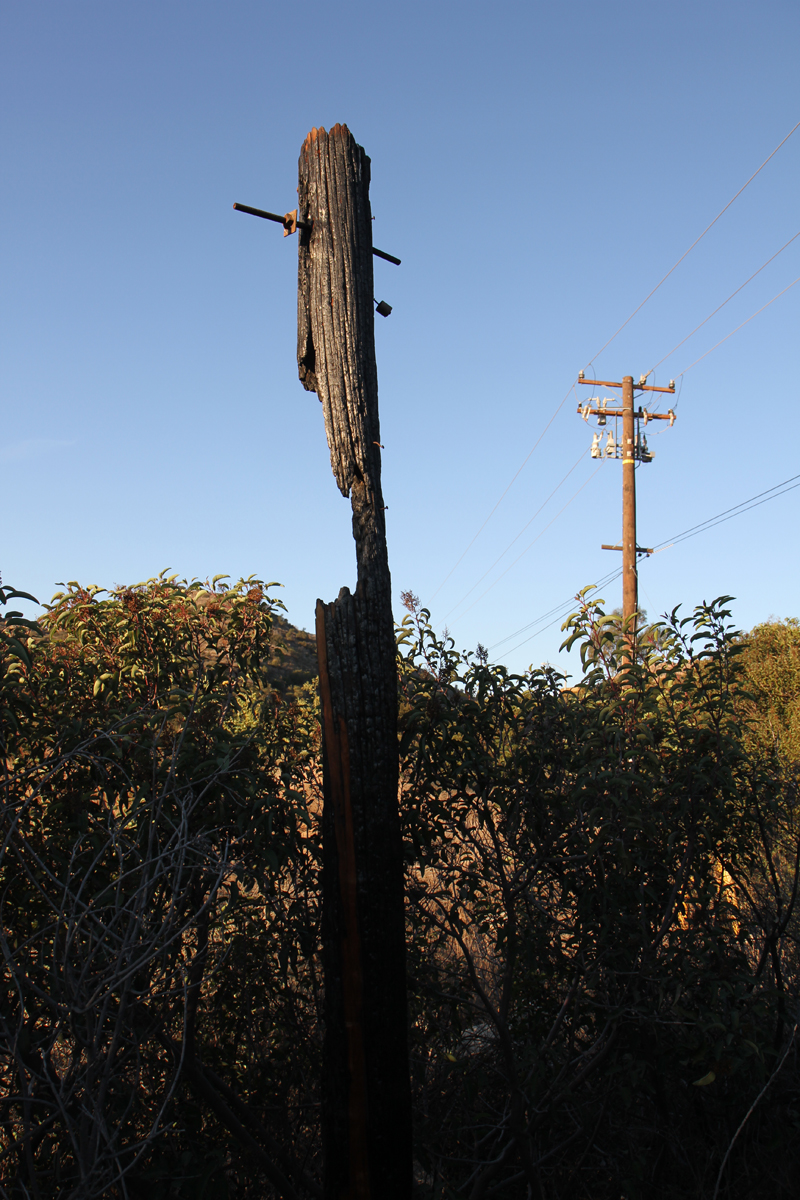
Towards the left side of the land (right if you’re facing the road) was the last remaining artifact of the original ranch. A wildfire in 1970 burnt down all of the buildings, but remnants of the telephone pole survived the fires and it stood for decades, albeit somewhat hidden in the brush. We managed to capture it while it was still there, but as of 2021, it was taken by unknown persons and no longer stands at the grounds.
On the right side of where the ranch stood, you’ll find a trail, which leads down the embankment to the area behind the ranch. Be sure to wear proper clothing if you visit, as there is a lot of poison oak in the area, as well as possible rattlesnakes. Just keep a keen eye as you walk and these things can be avoided. As you make your way towards the lower area, you’ll come across this open area, where the 1969 exploitation film “The Ramrodder” shot scenes. The cast of the film included Bobby Beausoleil, as well as Manson Family member Catherine “Gypsy” Share.
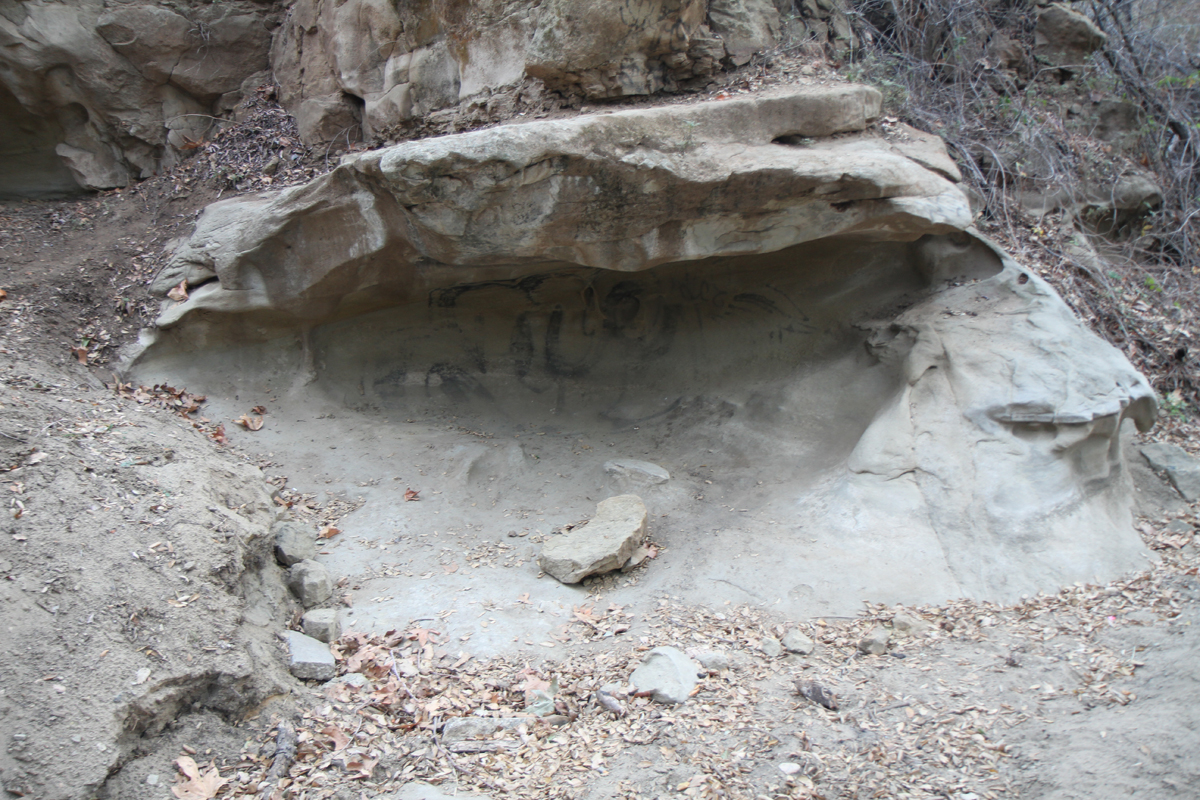
Once you’ve reached the bottom of the lower embankment, the first thing you’ll see on your left is the location of the most famous photo of the Manson Family. Several Family members gathered under this small cave rock for a photograph for Life Magazine. As you see in the photo, the cave occasionally gets tagged with graffiti, but park rangers are usually quick to clean it off.
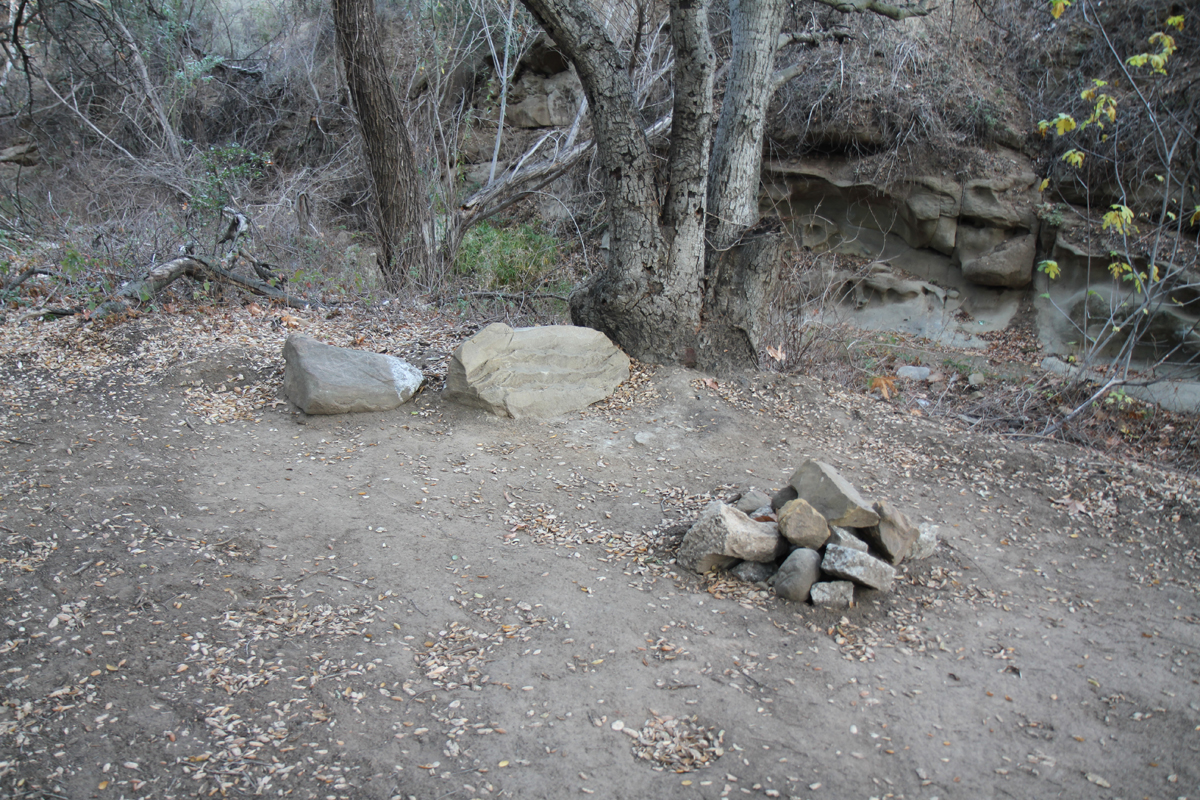
Just ahead on the right, you’ll see another location where members of the Family posed for Life Magazine, between these two trees, where a hammock was draped.
Charles Manson used to sit and play guitar on the large rock seen in the next photo. The rock has since been partially destroyed. It was here that Manson performed his audition for Terry Melcher.
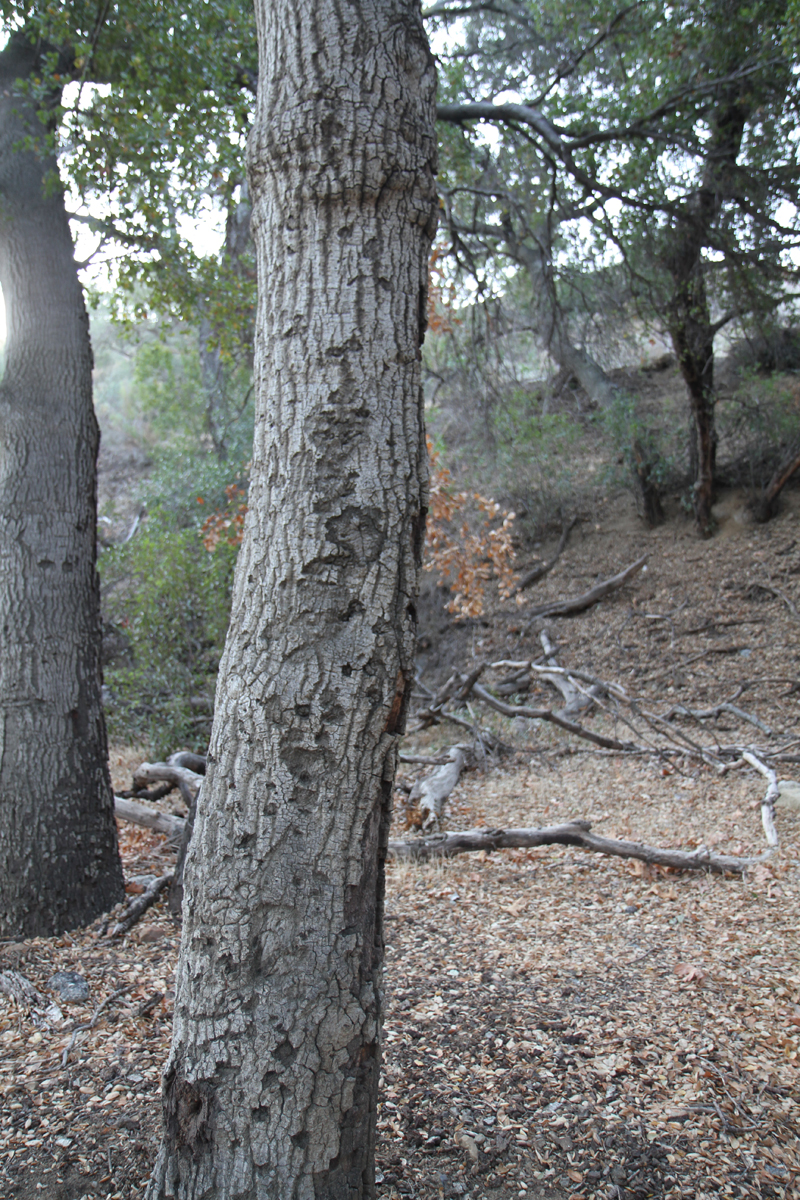
There are many trees throughout the lower area, which are littered with bullet holes, where Charles “Tex” Watson and Charles Manson practiced firing guns.
There are, of course, many more sights to be found here, the deeper you dig into the history of the place. Countless books have been written about it. Our intention here is not a comprehensive breakdown, rather a broad overview. If you’d like to see footage of the ranch from when the Manson Family lived there, we recommend the Robert Hendrickson documentary “Manson,” which was nominated for an Academy Award, as well as his sister documentary, “Inside the Manson Gang,” which is mostly comprised of unused footage from the first film. If you’re considering a visit to the area, just be prepared by dressing appropriately and bringing plenty of water. You’ll find it mostly calm and quiet today, but there is obviously a great deal of infamy surrounding the area, so its not for everyone. We simply aim to acknowledge what happened here and show it as it is.
The Doors are an iconic Los Angeles band and there are quite a few locations in Southern California closely tied to the band.
Lost in the decay of one of the more derelict areas of downtown Los Angeles sat the the former Morrison Hotel. In it’s heyday, the hotel was a place for transients, with rooms available at discounted rates. While the band originally asked permission to photograph on the premises, management declined. In typical Doors fashion, however, the band snuck inside anyways, when the clerk left the front desk. The famous cover photo was taken, without permission, on December 17, 1969.
For years, the building sat empty. On several occasions, a pop-up event was held, which restored the place to looking like it did in it’s prime. In 2024, a fire severely damaged the building.
LOCATION: 1246 South Hope St, Los Angeles, CA 90015
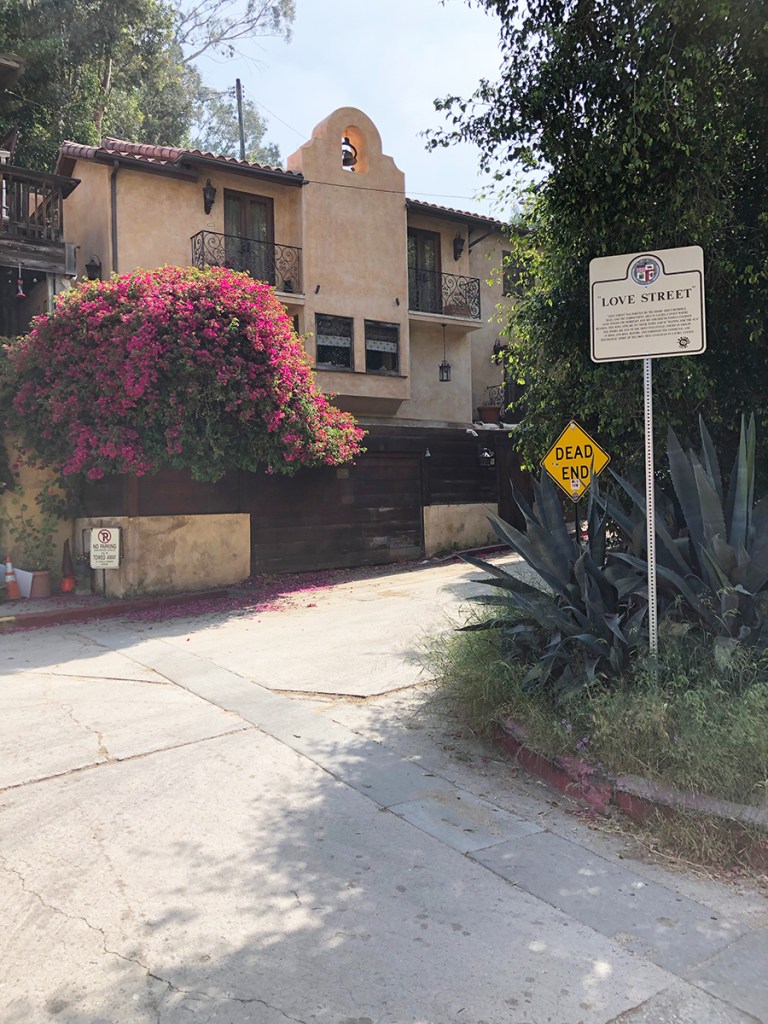
Over in Laurel Canyon, you’ll find the house where Jim Morrison lived with his girlfriend and penned the song “Love Street,” about Rothdell Trail and the surrounding neighborhood. Morrison would sit out on the balcony and watch hippies outside, which is where the song title is derived.
LOCATION: 8021 Rothdell Trail, West Hollywood, CA 90046
Located right beside the Jim Morrison house is the Canyon Country Store. The store is referred to specifically in “Love Street” as “this store where the creatures meet.” At the height of the 1960s counterculture movement, the Canyon Country Store served as a meeting place for musicians, such as Joni Mitchel, David Crosby and Mama Cass Elliot, all of whom penned songs about the neighborhood, with the latter even living in the basement of the store for a period. The store is still open today and remains a popular spot for locals.
LOCATION: 2108 Laurel Canyon Blvd, Los Angeles, CA 90046
The Doors famously served as the house band at the Whisky A Go Go in West Hollywood, until they were fired after performing the spoken word section of their song “The End.” The Whisky remains an active music venue.
LOCATION: 8901 Sunset Blvd, West Hollywood, CA 90069























































 Film Oblivion